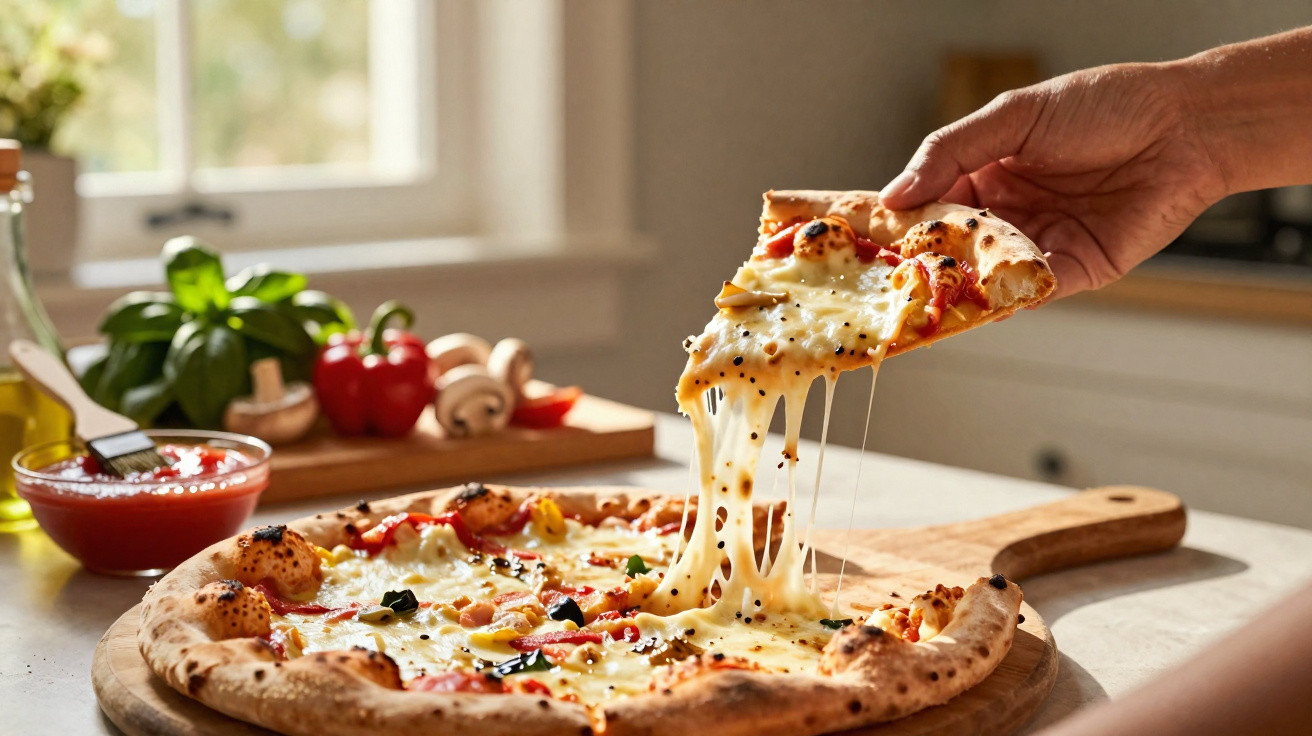
Imagine it: it is 9 pm on a Friday, and you are standing in front of the oven looking at the pizza that was meant to be your masterpiece. The toppings looked brilliant before baking – fresh mozzarella, neatly sliced tomatoes and perhaps some prosciutto you decided to treat yourself to. Now, though, the base is limp, drooping beneath all that tasty topping like a defeated sigh. We have all faced that point where pizza-making ambition runs into a soggy reality. You take a bite, expecting a satisfying crunch, but it is more like chewing a damp napkin. There is a remarkably simple explanation for this, along with an even easier solution that professional pizza makers have relied on for decades.
Why Your Pizza Crust Goes Limp
The problem is not the toppings themselves, but the moisture they give off. As vegetables, fresh cheeses and sauces heat up, they begin releasing water faster than a nervous candidate sweating through a job interview. With nowhere else to go, that moisture runs down into the carefully prepared dough, changing a crisp base into one that is disappointingly chewy.
Consider a generously topped vegetable pizza. Those attractive peppers, mushrooms and onions can give off up to 85% of their water content while baking. It is the equivalent of tipping a small glass of water straight on to the crust. Fresh mozzarella – the holy grail of pizza cheese – is even more troublesome, as it contains about 60% water. It is little wonder that the base can seem as though it is drowning.
The science behind this soggy outcome is fairly simple. Heat breaks down the cell walls of vegetables, allowing trapped moisture to escape. At the same time, cheese proteins begin to contract and force out further liquid. At the bottom of this moisture-heavy situation, the crust absorbs it all like a reluctant sponge.
The Professional’s Secret Weapon
This is where the useful trick comes in: pre-cooking your wet toppings. Professional pizza makers do not simply scatter raw vegetables over dough and hope for the best. They quickly sauté mushrooms, peppers and onions first, removing much of the excess moisture before it reaches the pizza. Think of it as giving the toppings an early advantage in the dehydration process.
Realistically, few people will do this every day when making a fast weeknight pizza. Even so, a low-effort version can make a huge difference. Dry fresh mozzarella with kitchen paper, or leave sliced tomatoes on a plate with a sprinkle of salt for 10 minutes. The salt pulls out the water, which you can then dab away. It is straightforward, yet remarkably effective.
The biggest difference, however, comes from what chefs call the “moisture barrier method.”
“I always put a thin layer of aged cheese directly on the dough first, then add my sauce and wet toppings on top. The aged cheese acts like a raincoat for your crust – it creates a protective layer that keeps moisture from soaking through.” – Marco Ricci, Executive Chef at Nonna’s Kitchen
Here is a step-by-step toolkit for fighting moisture:
- Pre-cook watery vegetables for 2-3 minutes
- Salt tomatoes and allow them to drain
- Pat fresh cheeses completely dry
- Use aged cheese as the base layer
- Avoid overloading the pizza – less is genuinely more when it comes to pizza toppings
Your Crispy Crust Revolution
The appeal of this approach is not limited to a crispier result; it also transforms how you think about making pizza. Rather than simply throwing ingredients together, you start approaching it like a chef. You begin to see that great pizza is about balance, rather than stacking on every ingredient you enjoy. Every topping becomes an intentional decision instead of an afterthought.
| Key point | Detail | Value for the reader |
|---|---|---|
| Moisture management | Pre-cook wet vegetables and pat cheeses dry | Prevents soggy crust disasters |
| Aged cheese barrier | Layer aged cheese directly on dough first | Creates protective moisture shield |
| Strategic topping order | Dry ingredients first, wet ones on top | Better texture and flavour distribution |

















Comments
No comments yet. Be the first to comment!
Leave a Comment