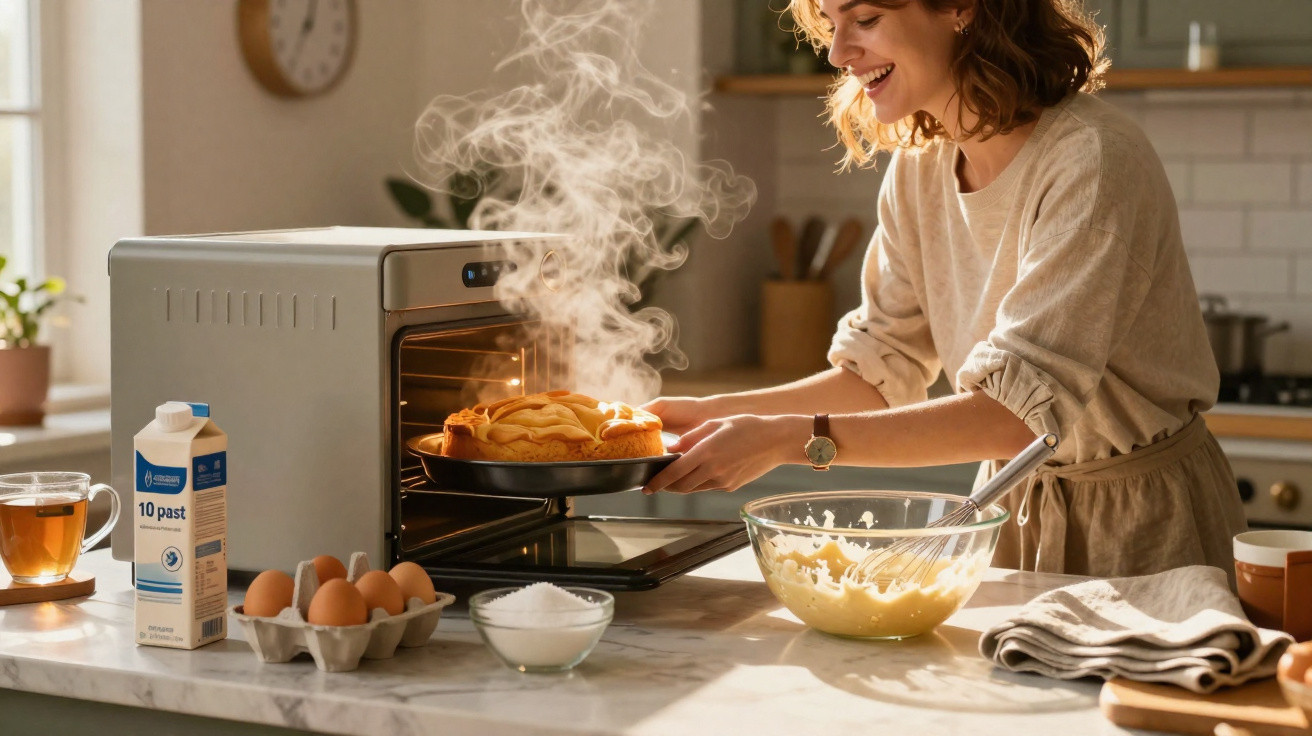
Some evenings demand a homemade dessert, without the pile of washing-up that usually follows.
Throughout France, a stripped-back chocolate cake is steadily becoming a favourite among time-pressed parents and weary workers. It needs just three everyday ingredients, a single bowl and less baking time than many streaming adverts. It may sound implausibly easy, but it produces a tender, gently wobbling cake with the flavour of something baked over an entire afternoon.
The “emergency cake” for hectic evenings
This exceptionally soft cake has become a reliable backup dessert in many French homes: the recipe to turn to when unexpected guests arrive, or when a difficult day calls for a quick sweet treat.
A hot, homemade chocolate cake on the table in around 10 minutes of active work is turning into a quiet weeknight phenomenon.
Its appeal is easy to understand. There are no kitchen scales surrounded by ingredients, no waiting period and no complicated techniques. Simply crack the eggs, melt the chocolate, stir in the sugar and bake. The middle remains softly unsteady, somewhere between a fondant and a delicate custard, while the outer edges become firm enough for slicing.
The 3-ingredient formula behind the trend
The core recipe is closer to a simple reminder than a lengthy list of ingredients: eggs, dark chocolate and sugar. Nothing else is required.
- 4 medium eggs, ideally at room temperature
- 200 g dark chocolate (52–70% cocoa)
- 50 g caster sugar
There is no flour, extra butter or baking powder. The chocolate’s own fat provides the texture and gives the cake its melt-in-the-mouth quality. Without starch, the crumb remains damp and nearly creamy. Lightly cooked eggs supply the structure, setting just enough to keep the cake together.
The cake sits at the crossroads between a dense fondant and a lighter chocolate flan, with an almost trembling heart when it leaves the oven.
How to make the 10-minute ultra-soft chocolate cake
The technique is simple, built for everyday home kitchens rather than professional pastry kitchens. It makes enough for 4–6 people, making it well suited to a small meal or an impromptu snack.
Basic method, step by step
- Heat the oven to 180°C. Line or lightly grease a 20 cm round cake tin.
- Finely chop the chocolate, then melt it in short microwave bursts or in a bowl over a pan of simmering water until glossy and smooth.
- Whisk the eggs with the sugar for one or two minutes, only until combined and slightly aerated.
- Gradually stream the melted chocolate into the egg mixture, whisking constantly until the batter is smooth and silky.
- Transfer the mixture to the tin, level the surface and bake for about 10 minutes.
The final stage is the key one: when the tin is gently shaken, the middle should still have a slight wobble. Leaving it in the oven until completely firm removes much of its softness. Allowing it to stand at room temperature for five minutes lets it set sufficiently while retaining its tender centre.
From basic to “restaurant-style” in under a minute
The plain cake is already deeply comforting for chocolate lovers, but many home cooks turn it into an effortless “showpiece” pudding with a few additions that take only seconds.
- Add a pinch of flaky sea salt to the melted chocolate to enhance its cocoa flavour.
- Scatter a small handful of chopped nuts over the surface before baking for a crisp contrast.
- Serve a warm slice with a scoop of vanilla ice cream for a hot-and-cold combination.
- Add fresh berries on the side for acidity and colour.
- Spoon caramel or fruit coulis across the plate for restaurant-style presentation.
What began as a three-ingredient survival cake easily doubles as a dinner-party dessert with the help of a few cupboard extras.
Why this cake is made time after time
Alongside its flavour, the cake has something recipe writers seek but seldom achieve: it is instantly memorable. The 4–200–50 ratio is easy to retain. After making it two or three times, many people no longer need to consult the recipe.
At a time when ingredient lists can stretch to 24 items, such simplicity feels particularly welcome. There is a psychological benefit too: if a pudding needs only three ingredients that most households already have, starting to bake feels far less daunting.
A lighter sensation without being “diet food”
Leaving out flour and added butter creates a different eating experience from a traditional sponge or brownie. It is rich but yielding, without quite the heavy, sickly feeling often associated with indulgent cakes. That does not turn it into a health food, but it does affect how people view serving sizes and treats.
| Style of cake | Main structure | Typical texture |
|---|---|---|
| Classic sponge | Flour + eggs + baking powder | Light, airy crumb |
| Brownie | Flour + butter + chocolate | Dense, fudgy |
| 3-ingredient ultra-soft cake | Eggs + chocolate fat | Moist, almost custardy centre |
Keeping leftovers soft and preventing common mistakes
Should any remain, the cake keeps remarkably well for one or two days at room temperature when covered or stored beneath a cake dome. Refrigeration generally makes it firmer and dulls its flavour, which is why many French home bakers prefer to leave it on the kitchen counter.
Microwaving a day-old slice for 10–15 seconds restores its softness by loosening the centre once again. It can also be served chilled, cut into small squares, as a coffee-time bite or part of a brunch table.
A few mistakes occur regularly:
- Baking it until the centre is completely firm, resulting in a drier, more brownie-like cake.
- Heating the chocolate too much, which may make it grainy and reduce the finished cake’s smoothness.
- Choosing very poor-quality chocolate, in which sugar and additives overwhelm the cocoa flavour.
What the cake reveals about changing home-cooking habits
The popularity of this 10-minute cake reflects a wider change in home cooking. On social media and recipe sites, desserts with very short ingredient lists and recipes made solely from cupboard staples are attracting increasing attention. People want the satisfaction of making something themselves, with the time commitment of a shop-bought snack.
Recipes of this kind can also teach inexperienced bakers some essential principles. They demonstrate, for example, that eggs alone can set a dessert and that the cocoa percentage of chocolate influences both flavour and texture. Chocolate with a higher cocoa content generally produces a more pronounced taste and a slightly firmer finish, whereas a sweeter bar with more sugar brings additional sweetness and a softer result.
Practical variations for real kitchens
For households managing allergies or particular diets, this cake raises some considerations. In its standard form, it contains no wheat flour, so it may work for some guests avoiding gluten, as long as the chocolate is checked for traces. It is unsuitable for vegans because eggs are fundamental to its structure; replacing them would call for an entirely different recipe.
In everyday use, the recipe suits a range of occasions:
- For a child’s sleepover, bake it in a square tin and serve it in brownie-style pieces.
- For a date night, bake the mixture in two small ramekins to make individual molten-style portions.
- For a bigger group, double the quantities and use a larger tin, extending the baking time slightly while ensuring the centre remains soft.
There is a comforting psychological element as well. Even when it lasts only 10 minutes, the scent of baking chocolate changes the feel of a home. Within French food culture, that ritual often represents care and togetherness, even on a tight schedule. A straightforward three-ingredient cake may not compete with elaborate patisserie, but it offers something that many people quietly want on weeknights: a modest, achievable pleasure that fits between emails, homework and washing up.

















Comments
No comments yet. Be the first to comment!
Leave a Comment