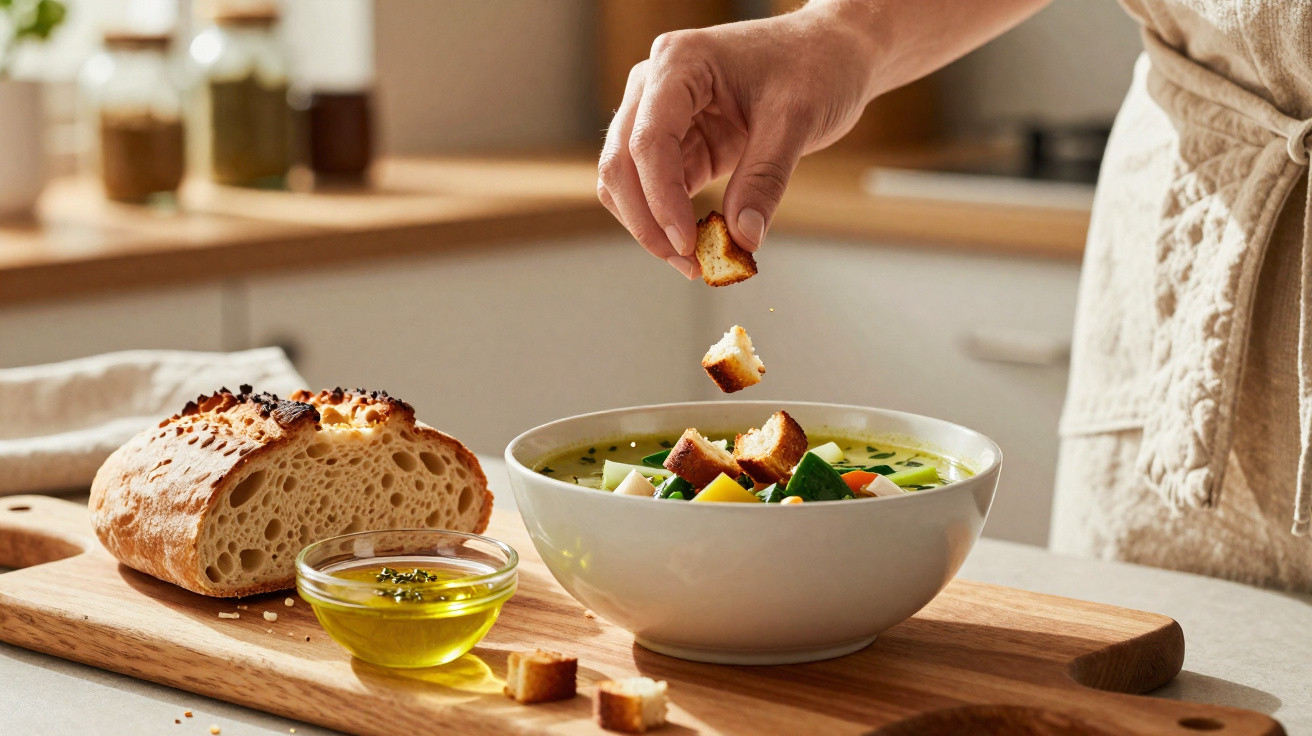
No texture, no sparkle, no reason to linger over a spoonful. On the worktop sat a weary bread end in the bread bin-slightly leathery, slightly sad, but not mouldy yet. On a whim, I cut it into cubes, coated them in olive oil, salt and a pinch of something aromatic, then put the tray in the oven. A few minutes later, the kitchen carried a little fantasy of garlic and toast. Once the cubes scattered across the soup, the whole bowl took on a new character-livelier, bolder and more fun. This is your crunchy rescue mission. That bread was asking for an encore.
Why stale bread makes the best croutons
Fresh bread acts like a sponge, while stale bread behaves more like a container. As a loaf dries out, its starches settle and create tiny spaces ready to absorb fat and flavour. This is why older bread becomes croutons with a glassy crunch and deeply toasted edges, instead of turning soft and oily.
I once saved a Monday-night meal with a tired baguette and a tin of tomato soup. Rosemary and garlic croutons landed on top, and suddenly the bowl tasted like something from a café rather than the back of the cupboard. Food-waste researchers estimate that roughly a third of household bread is left uneaten, which is unfortunate when a few cubes can deliver a five-minute improvement.
The principle is simple: less moisture produces fewer bursts of steam, allowing the cubes to dry evenly before they brown. Oil transports flavour into the crumb and encourages Maillard magic on the crust. Smaller cubes improve the bread-to-gold ratio, creating more crisp surface area. It is one of those rare kitchen wins that is quick, inexpensive and dramatic.
Stale bread croutons: from day-old loaf to shatter-crisp cubes
For an easy one-bite crunch, cut the bread into 1–1.5 cm cubes. Combine 4 cups of cubes with 3 tbsp olive oil, a pinch of fine salt, freshly ground pepper and 1 tsp of your preferred spice blend. Arrange them on a baking tray without crowding, then bake at 160°C for 14–18 minutes, stirring once. Take them out when the edges are caramel-coloured and the middles feel dry when touched. While still warm, finish with a light grating of garlic or lemon zest for a bright final note.
We all know the situation: the soup is ready, the bread is past its best and there is no time to spare. Choose a lower temperature and a longer bake instead of fierce heat, which burns the outside while leaving the middle tough. Realistically, no one follows that rule perfectly every day. Keep the process straightforward-season in the mixing bowl, taste one cube, then add extra oil or salt if it needs more gloss or crunch.
Treat heat as a dial rather than an on-off switch. Choose low and slow heat to dry the cubes first, then let them brown.
“Croutons should crackle, not shatter,” says a bistro cook I trust. “If they echo when they hit the bowl, you nailed the dryness.”
- Classic: olive oil, garlic powder, parsley and black pepper.
- Smoky: paprika, cumin, chilli flakes and a drizzle of melted butter.
- Herby: thyme, rosemary, lemon zest and sea salt.
- Cheesy: coat hot cubes in grated Parmesan so it melts into tiny sheets.
- Bold: curry powder, coriander and a little honey to create a glaze.
Common mistakes, gentle fixes and quick alternatives
Too much oil creates a greasy chew, whereas too little leaves the bread dry and dusty. Start with around 1 tbsp of fat for each packed cup of cubes, then adjust according to how they feel. If the loaf is exceptionally stale, add a teaspoon of water per cup before the oil; this small amount of rehydration helps the centre become crisp rather than splintering.
Overfilling the tray quietly ruins crunch. Let every cube have its own patch of space, so escaping steam does not get trapped. Season lightly with salt before baking, then add another pinch at the end; flavour develops in layers, while the final grains offer a distinct pop that you can genuinely taste.
Using a frying pan instead? Cook over a medium heat in a wide pan for 8–10 minutes, tossing regularly. Using an air fryer? Set it to 150–160°C for 6–8 minutes and shake the basket twice. When a cube tastes too pale, bake it for another two minutes-colour carries flavour. Add sticky seasonings that might burn at the end. This lets you season at two moments-before baking for depth and afterwards for sparkle.
Serve, store and adjust the flavour of croutons
Croutons do more than garnish a dish; they control the rhythm of eating it. Add them at the table so they sing rather than sink, and place a small bowl alongside for extra crunchy top-ups. Tomato soup suits garlicky cubes, potato soup works well with herby ones, and carrot-and-ginger soup welcomes citrus zest and sesame. For more drama, toss warm croutons with a tiny splash of vinegar-the delicate sharpness makes creamy soups feel taller.
| Key point | Detail | Benefit for the reader |
|---|---|---|
| Right size, right heat | 1–1.5 cm cubes baked at 160°C | Even drying, gentle browning and no scorched edges |
| Two-stage seasoning | Light salt before baking, then finish with flaky salt or zest | Layered flavour with a clean, satisfying pop |
| Fat as a carrier | 1 tbsp oil per cup of bread, adjusted by feel | Crunch without greasiness; flavours travel into the crumb |

















Comments
No comments yet. Be the first to comment!
Leave a Comment