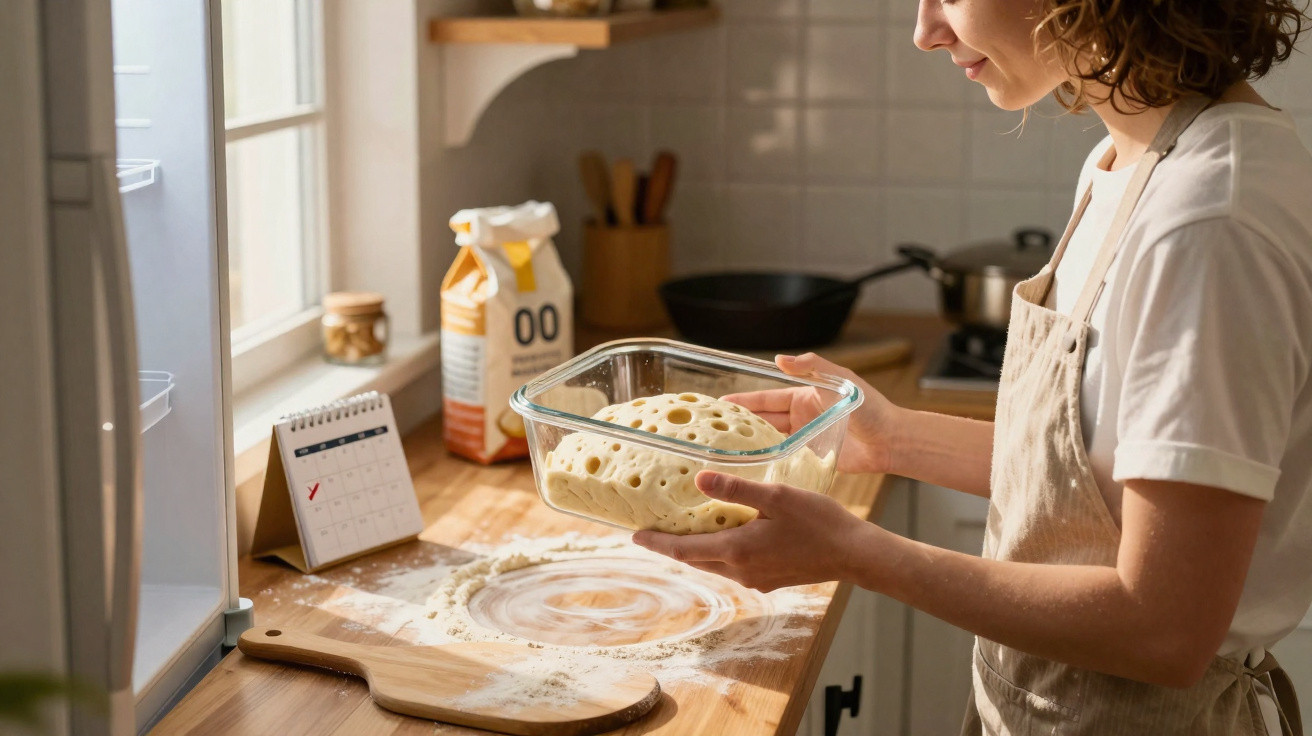
Sarah stands at her kitchen worktop, flour coating her fingers, as another batch of pizza dough refuses to behave. It is Friday evening, the children are hungry, and she has already spent 20 minutes battling what ought to be straightforward bread dough. The recipe claimed to offer “easy homemade pizza”, yet the outcome resembles a stubborn, heavy pancake rather than a proper pizza base.
She is far from the only person facing this problem. Visit almost any home kitchen at the weekend and the same situation is likely to unfold: keen cooks with good intentions, quality ingredients and well-liked recipes, but without the crucial element that turns everyday dough into a restaurant-quality pizza crust.
The answer is not specialist flour or costly kit. It is simply time.
The Cold Truth About Perfect Pizza Dough
Professional pizzaiolos have understood this for generations, yet home cooks have somehow missed the message. The gap between average and exceptional pizza begins with the patience to wait three days. Leaving pizza dough in the fridge for 72 hours does more than preserve it – it changes the dough at a molecular level.
Last month, food scientist Dr. Peter Reinhart carried out a blind tasting with 200 people, comparing pizza dough made that day with dough fermented for 72 hours. The findings were striking: 89% chose the long-fermented dough, calling it “more complex”, “easier to digest”, and saying it had “that authentic pizzeria taste.” The other 11% noticed no meaningful difference, but no participant favoured the hurried version.
Across those essential 72 hours, enzymes convert complex starches into simpler sugars, producing richer flavour compounds. The gluten proteins loosen and rearrange themselves, leaving the dough remarkably supple and easier to handle. Slow fermentation also partly pre-digests certain proteins, helping explain why many people who find ordinary bread difficult can tolerate long-fermented pizza more comfortably.
Mastering 72-Hour Pizza Dough Through Strategic Waiting
The method is remarkably straightforward, although it does demand forward planning. Prepare the dough with roughly 25% less yeast than most recipes recommend – about ¼ teaspoon for every three cups of flour. Combine the ingredients only until mixed, then put the whole bowl straight into the fridge, without allowing any extra proving time at room temperature.
Everyone knows the feeling: Friday comes around and a craving for homemade pizza suddenly appears. It is tempting to speed things up, particularly once hungry family members begin hovering around the kitchen. This is where many home cooks go wrong: they add more yeast, raise the temperature or knead for longer. None of these shortcuts can reproduce what a slow fermentation achieves on its own.
“The best pizza dough is made when you’re not thinking about pizza at all,” says Marco Canora, chef and owner of Hearth restaurant in New York. “Tuesday’s dough makes Friday’s perfect dinner.”
Thoughtful home bakers remember the following essentials:
- Mark dough containers with the date – 72 hours can arrive sooner than expected.
- Choose a bowl large enough to allow for gradual expansion.
- Cover it with a damp cloth instead of cling film to stop a skin from forming.
- Arrange pizza nights three days in advance, just as you would any other important plan.
Beyond Technique: A New Relationship With Cooking
This method encourages a fresh way of thinking about cooking itself. Rather than seeking immediate results, you are putting effort into enjoyment later on. The 72-hour rest improves not only the dough’s flavour and texture, but also the way we plan meals and approach creativity in the kitchen.
At first, some home cooks may find planning this far ahead daunting. In truth, few people are considering Tuesday’s dinner while writing Sunday’s shopping list. Yet those who adopt the routine often find an unexpected benefit: cooking feels calmer and more purposeful. Pizza night becomes an occasion to look forward to, rather than a frantic last-minute task.
The benefits reach well beyond pizza. After seeing what time can do for one recipe, you begin to spot similar possibilities elsewhere: overnight oats are more enjoyable than five-minute versions, marinated meat develops deeper flavours, and even a basic salad dressing improves after time to rest.
| Key point | Detail | Value for the reader |
|---|---|---|
| Enzyme action | Starches convert to sugars over 72 hours | Naturally sweeter, more complex flavour without additives |
| Gluten development | Proteins relax and reorganise slowly | Easier stretching, no tearing, perfect texture |
| Reduced yeast quantity | Less yeast works longer for better results | More digestible, less bloating, authentic taste |

















Comments
No comments yet. Be the first to comment!
Leave a Comment