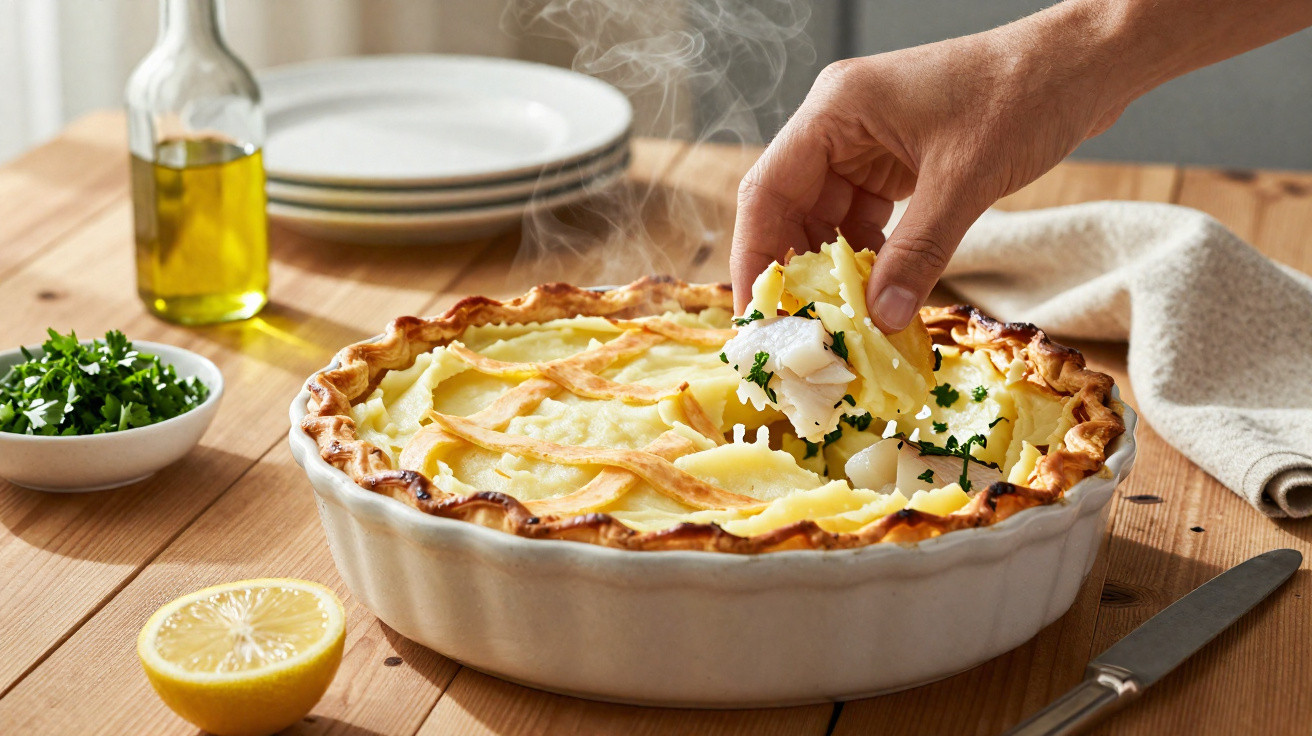
The first time I replaced the pastry on a fish pie with mashed potatoes, it was an act of panic disguised as inspiration. The puff pastry block I was certain I had in the fridge had somehow disappeared, my guests were already enjoying their second glass of wine, and the poached fish seemed to be staring back at me as if to say, “Well?”. I reached for a bag of potatoes, dropped them into boiling water and crossed my fingers for a modest kitchen miracle.
When the dish emerged from the oven, its top was golden and lightly ridged from the fork, while creamy sauce bubbled around the edges underneath. Steam drifted upwards, everyone went quiet for a moment, and then the cutlery began moving at remarkable speed.
That was when I understood: mashed potatoes do not merely save a fish pie. They transform it.
Once you have tasted that gentler topping, returning to pastry is difficult.
A softer, more homely fish pie that still feels special
There is something wonderfully comforting about breaking through a mashed potato topping rather than pastry. A spoon does not have to crack through anything; it simply sinks in. The crust gives a faint crunch before yielding to fluffy potato and tender fish in a fragrant, milky sauce. It feels less like restaurant cooking and more like a hug.
That contrast is what makes this fish pie so moreish. Pastry can occasionally take over with its butteriness and flakes, whereas mash moves quietly aside and lets the fish shine. The soft topping makes every mouthful a layered spoonful, rather than a knife-and-fork battle with flakes of crust scattering across the plate.
Imagine a weeknight when everyone reaches the table slightly weary and distracted. Phones are set aside, with a few unfinished conversations from the day still hanging in the air. You place a baking dish on the table, its potato topping browned, with a few darker ridges where the heat lingered. The room smells unmistakably warm: fish, cream, a touch of leek or onion, and the faintly toasted scent of potato.
Someone serves the first portion, and a slow “ohhhh” comes from one end of the table. The mash parts to reveal generous chunks of salmon, perhaps some white fish, maybe one or two stray prawns. It is not extravagantly fancy, but it feels as though you have genuinely cooked for the people gathered around you.
This version works so well for a reason. Mashed potatoes absorb flavour in a way pastry seldom does. You can stir through grated Cheddar, Parmesan or even a spoonful of cream cheese. Chives, spring onions or a little mustard work beautifully too. Every addition seasons the top layer without taking attention away from the filling.
Potatoes are forgiving in practical terms as well. They make a small quantity of fish go further, serve more people and can make leftovers taste almost better the following day. Beneath the topping, the sauce has room to bubble and reduce, rather than turning the underside of a pastry lid bland with steam.
How to make the perfect mashed potato fish pie
Begin with the potatoes, as they quietly determine the entire dish. Choose a floury variety that turns velvety when mashed: Maris Piper, Yukon Gold, King Edward, or whatever your local packet marks as suitable for mash. Peel them, cut them into similarly sized pieces and simmer in generously salted water until they are tender enough to slip easily from a knife.
Drain the potatoes completely, then place them back in the hot pan for a minute so excess steam can escape. This small step stops the mash from becoming watery over the fish. Mash with butter and a little milk or cream until smooth but not loose. It needs to hold its form when spooned over the filling, rather than flowing like soup.
As the potatoes cook, gently poach the fish in milk with a bay leaf, several peppercorns and perhaps a slice of onion. Avoid a rolling boil; you only need a gentle shimmer around the pan’s edge. The fish should become opaque and begin to flake. Cooking it too much at this stage will leave you with dry, stringy pieces later.
When the fish is ready, lift it out and reserve the aromatic milk. It becomes the liquid gold for your sauce. Make a quick roux in another pan, whisk in the warmed milk, then season with salt, white pepper, a squeeze of lemon and, if you wish, a teaspoon of Dijon. The result is a sauce that coats properly without becoming gluey. Add peas, spinach or chopped herbs if desired, then fold in the fish in large, generous flakes.
The assembly is the stage at which many home cooks begin to worry. Spoon the fish and sauce into an ovenproof dish, spreading it evenly and nudging fish towards the edges so every portion contains some. Leave it to rest for a few minutes; if the filling is lava-hot, it will push fiercely against the potato topping and bubble over.
Add the mash in spoonfuls instead of tipping it on all at once. This helps prevent the layers from mixing and gives you a light, even covering. Spread it with a fork, roughening the surface to form small peaks that catch the heat and caramelise. Cheese scattered over the top is optional, but honestly, hardly anyone turns down a cheesy crust.
“The first time I did this, I was convinced it would be a poor cousin to the ‘proper’ pastry version,” laughs Marie, a home cook who now batches these pies for her freezer. “Now my kids call the old one ‘the crunchy one’ and complain it’s too hard to cut.”
- Choose floury potatoes and drain them thoroughly for a light, stable topping.
- Poach the fish gently in milk, then use the same milk to make a rich, flavoursome sauce.
- Allow the filling to cool a little before adding the topping, preventing leaks and sunken mash.
- Scrape the potato surface with a fork to create extra-crisp, golden edges.
- Bake until the top is deeply coloured and sauce is bubbling around the sides.
A classic comfort dish, quietly reimagined
Once you begin baking fish pie with mashed potatoes rather than pastry, it gradually changes your idea of “comfort food”. It remains indulgent and cosy, and still has the power to make a grey Monday feel like a small celebration. But it is easier on the stomach, gentler on the budget and unexpectedly flexible. You can tuck in more vegetables, use smoked fish for extra depth or keep it very simple with white fish and a handful of peas.
Changing the topping changes the meal’s character, too. Pastry can make dinner feel like an occasion; potatoes feel more like an invitation. Serve it in one large sharing dish, or make individual ramekins that travel straight from oven to table. Leftovers are easy to spoon into lunchboxes and reheat without becoming soggy or tough, which solves half the challenge of a busy week.
There is a quieter pleasure in how little pressure this dish involves. There is no dough to chill, nothing to roll out and no hope required that the pastry will not shrink. A few lumps in the mash will not concern anyone. If the top splits slightly in the oven, it simply looks rustic. We all know that moment when dinner needs to forgive the kind of day you have just had.
This fish pie does precisely that. It asks for no finesse, just patience and a little stirring. Once it reaches the table, it appears as though you made far more effort than you really did. That might be the best kitchen secret of all.
You may even discover that this softer mashed topping makes the dish appealing to more people. Children who avoid flaky pastry often tuck in because the texture is familiar, like their favourite mashed potato side dish surrounding something new. Friends who usually pass on heavy pies return for seconds because the whole dish eats more like a creamy bake.
The next time you are looking at a packet of fish and wondering whether you have the energy for a “real” pie, remember that this version does not demand perfection. All it needs is a pan of potatoes, a gentle approach to the heat and a willingness to let comfort stay simple. Once that first serving reaches the plate, the rest usually looks after itself.
| Key point | Detail | Value for the reader |
|---|---|---|
| Mashed potato topping | Swaps pastry for a soft, golden, ridged layer of seasoned mash | A lighter texture, easier digestion, and a more forgiving cooking method |
| Gentle fish poaching | Fish is simmered in milk, which is then used to make the sauce | Maximises flavour while keeping the fish moist and flaky |
| Family-friendly comfort | A one-pan bake that reheats well and makes ingredients go further | Cuts food waste, saves time, and turns simple fish into a cosy meal |

















Comments
No comments yet. Be the first to comment!
Leave a Comment