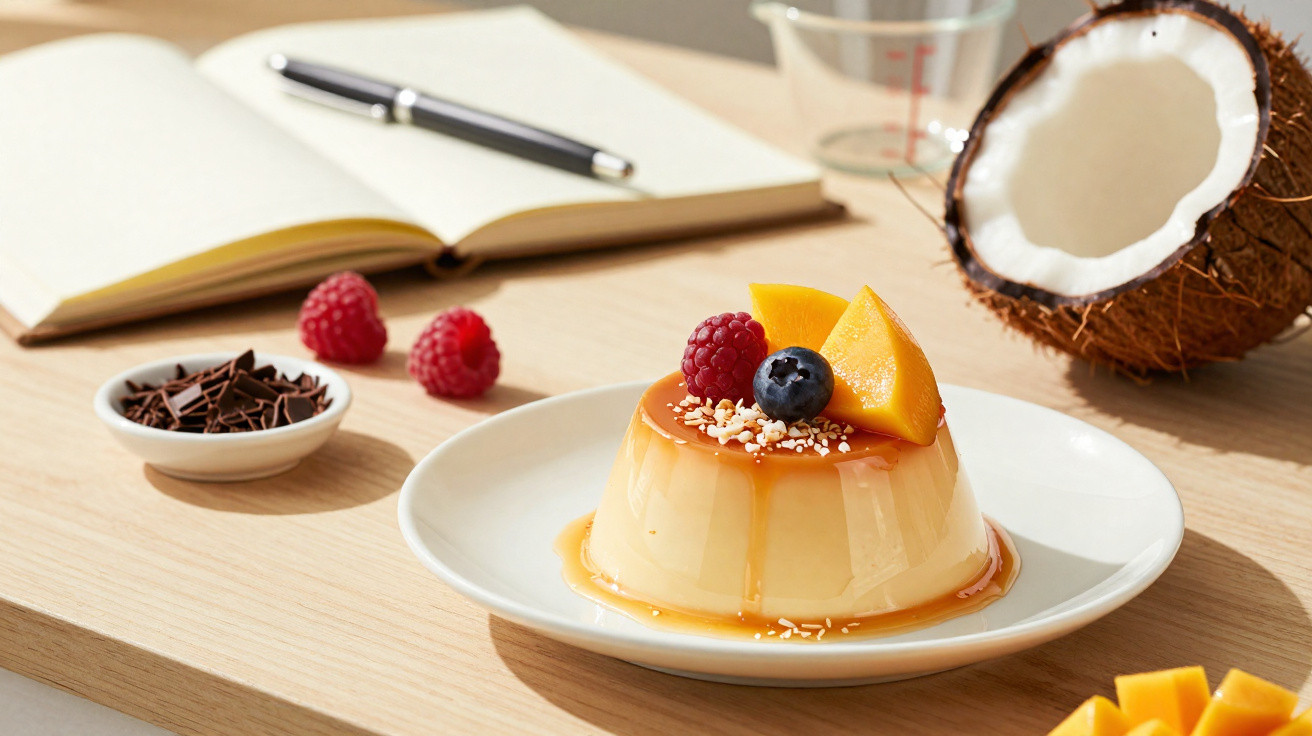
Sun-drenched flavours, a silky consistency and a subtle note of coconut make this dessert feel indulgent while remaining remarkably light on the waistline.
French home bakers are discreetly replacing the traditional Caribbean-style flan with a lighter alternative that preserves its tropical character without relying so heavily on rich ingredients. This updated recipe comes from a nutrition expert who has adapted it for ordinary days rather than reserving it for celebrations.
A tropical classic with medieval British roots
The history of this well-known coconut flan reaches far beyond beaches, palms and Caribbean islands. Before it arrived in Guadeloupe or Martinique, the predecessor of this custard-based dessert was served at royal tables in England.
During the Middle Ages, the “custard tart” was already popular throughout Britain. Historical accounts indicate that it featured at King Henry IV's coronation feast in 1399. The baked custard later made its way to France, where pastry chefs adjusted the recipe and developed its texture further.
As mainland French recipes travelled to the Caribbean during colonisation, island cooks exchanged part of the usual dairy for coconut milk and incorporated local tastes. In this way, custard tart evolved into what is now widely called flan antillais: a coconut custard flan with caramel and frequently a touch of rum.
The Caribbean coconut flan is essentially a globetrotter: born from British custard, polished in France, transformed under the Caribbean sun.
Why traditional Caribbean flan is so calorie-dense
Classic Caribbean flan is both luxurious and comforting, although it is also particularly rich. Its usual preparation uses equal quantities of coconut milk and sweetened condensed milk, the latter being concentrated in sugar as well as fat.
Eggs make the custard even richer, supplying protein and body while increasing its total energy content. Naturally high in fat, grated coconut contributes texture and reinforces the dessert's sumptuous mouthfeel. Vanilla and dark rum are also commonly added, creating its familiar holiday-style flavour.
The custard is placed in a caramel-lined mould before being gently cooked in a bain-marie. This produces a fragrant, velvety and satisfying dessert. However, it is also one that people often avoid when watching their blood sugar, cholesterol or everyday calorie consumption.
Traditional Caribbean flan delivers unforgettable flavour, but the mix of condensed milk, coconut and caramel pushes it firmly into the “treat” category.
The nutritionist’s coconut flan: familiar flavour, lighter texture
French dietitian Jade has created a version that retains the coconut flavour while considerably reducing sugar and fat. Rather than imposing strict restrictions, her method relies on well-chosen ingredient swaps.
The lighter ingredient list
Rather than using condensed milk as a heavy base, Jade prepares a far leaner custard with:
- 2 medium eggs
- 20 g coconut sugar
- 15 g cornflour
- 150 ml coconut milk
- 2 portions of very low-fat fresh cheese (0% fat), or about 50 g skyr
- ½ teaspoon vanilla powder
The fresh cheese or skyr brings protein and creaminess while keeping fat to a minimum, and also makes the texture lighter. If neither is available, she recommends replacing it with 50 ml semi-skimmed milk, though the finished flan will be a little less dense.
By keeping the eggs and coconut milk but swapping condensed milk for lighter dairy, the dessert keeps its soul and loses a large chunk of its calories.
Method: from bowl to fridge
Jade intentionally keeps the process simple, making it suitable for busy weekday evenings as well as relaxed weekend baking.
She begins by whisking together the eggs, coconut sugar and cornflour until smooth and lump-free. This brief stage helps the custard set properly in the oven and avoids a grainy result.
Next, she incorporates the coconut milk, fresh cheese, skyr or milk, followed by the vanilla. The mixture is then transferred to a small square oven dish. There is no need for a bain-marie, caramel coating or any elaborate preparation.
Bake the flan at 180°C for around 20 to 25 minutes. When using individual ramekins, it cooks a little faster, so Jade advises checking from 15 minutes onwards. It is ready once the edges are firm and golden, while the middle still trembles slightly when the dish is moved.
After baking, leave the flan to cool at room temperature before refrigerating it for at least one hour. This resting time lets the dessert firm up fully and gives the flavours time to develop.
Fruit, spices and chocolate: serving ideas without guilt
Rather than finishing the flan with a traditional shiny caramel layer, Jade opts for a topping that provides freshness and vitamins. She adds small pieces of kiwi to the chilled dessert, bringing acidity, colour and a substantial amount of vitamin C.
For anyone seeking a festive touch without losing the lighter approach, she suggests three optional additions:
- Grated coconut for added aroma and texture
- Dark chocolate shavings for a bittersweet contrast
- A light dusting of cinnamon for warmth and depth
Each topping gives the dessert a slightly different personality. Coconut maintains its fully tropical profile, while chocolate makes it feel more indulgent and suited to a Saturday evening. Cinnamon creates a comforting, almost autumnal flavour.
Simple toppings like kiwi, grated coconut or cinnamon turn this everyday flan into a flexible base for multiple moods and seasons.
Health considerations: what a lighter flan changes on your plate
Nutritionally, the main difference is that this recipe omits both sweetened condensed milk and caramel sauce. As a result, it contains notably less added sugar and saturated fat. Fresh cheese or skyr also raises the protein content, which can support satiety. Compared with a sugary jelly or sorbet, a small serving can help keep you fuller for longer.
Although coconut sugar still provides calories, its glycaemic index is lower than that of white sugar. It leads to a more gradual increase in blood sugar, which many nutritionists view as preferable, particularly for people with insulin resistance or those managing afternoon energy slumps.
Fresh fruit such as kiwi also adds fibre, vitamins and antioxidants. These nutrients contribute to digestion, immunity and overall wellbeing, and can help integrate the dessert into a normal eating pattern.
Tips for adapting the recipe at home
This flan-style dessert can be adapted easily according to what is in the fridge or individual dietary requirements. For example:
- Replace kiwi with mango, pineapple or berries for a sweeter topping.
- Choose light coconut milk for an even leaner flan, while accepting a slightly less creamy finish.
- Swap coconut sugar for a small quantity of maple syrup, adjusting the cornflour so the custard remains firm.
- Mix in a little lime zest for a sharper, more Caribbean-inspired flavour.
Parents may also find this recipe a gentle way to introduce children to baking. Its stages are uncomplicated, and the mixture is safe to handle under supervision. Children can whisk the eggs, add the toppings and see whether the middle still “wobbles”. Taking part in the process often encourages them to become more interested in their food.
Understanding custard-style desserts and balanced eating
Flan, crème caramel and custard tart belong to the same dessert family: eggs and liquid cooked gently until they are just set. The balance of eggs, sugar and fat, together with the cooking technique, decides whether the final dessert is rich and thick or light and delicate.
These desserts are often associated with restaurant meals and family occasions. Yet worrying about “forbidden foods” can encourage cycles of binge eating, moving between strict avoidance and uncontrolled cravings. A lighter coconut flan such as this occupies a middle ground, offering enjoyment in a form that can fit more readily into a balanced week.
A small slice served after a vegetable-rich main meal and with fresh fruit can form part of a varied diet. The objective is not perfection but consistency: mostly nourishing food, plenty of plants and treats that no longer feel like dietary sabotage.
When flan changes from a rare, guilt-heavy event to a simple, portion-controlled dessert, it becomes easier to maintain healthy habits over time.
For those who enjoy batch cooking, this coconut flan can be made ahead and stored in the fridge for a couple of days. Keeping a reasonably light dessert ready to eat may reduce the appeal of ultra-processed snacks and pastries bought on the way home. Ultimately, it is not only about a coconut dessert, but about allowing pleasure and health to share the same spoon.

















Comments
No comments yet. Be the first to comment!
Leave a Comment