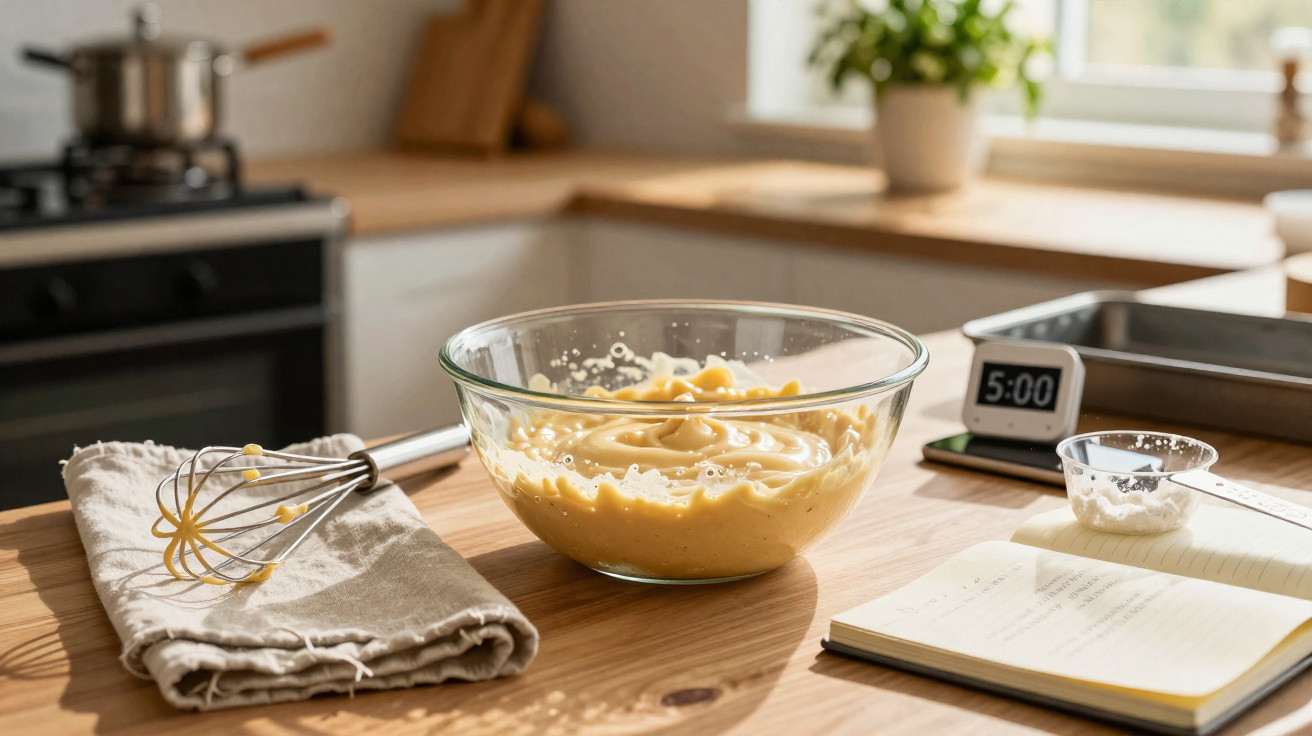
You tip the cake batter into the tin, put it straight into the oven and peer through the glass, waiting for the magic to happen. Twenty minutes later, the kitchen smells wonderful, yet the first slice is a little dense. The edges are slightly rubbery. It is not the light, cloud-soft crumb you had hoped for.
Then there is that friend who claims they “barely bake” but arrives at every gathering with a perfectly tender sponge. You are certain you used the same recipe, oven and ingredients. So what happens in that small window between mixing the batter and baking it?
Often, the answer is the quiet five minutes you leave out.
What happens during those quiet minutes before baking
Cake batter can feel urgent. Once it has been mixed, surely it needs to go straight into the oven? The clock is running, the baking powder is “activating”, and any delay will ruin everything. That is the idea many of us were taught.
But watch a skilled home baker on an unhurried Sunday. They combine the batter, scrape down the bowl and then… step away. They let the oven heat thoroughly, tidy the worktop or perhaps wash a few dishes. Meanwhile, the bowl of batter remains on the side, thickening so subtly that you may barely notice. When the cake emerges, it has a calm, even tenderness that makes a second slice very tempting.
Imagine making a straightforward yoghurt cake for a birthday while children race about and your phone goes off every few minutes. You quickly whisk the ingredients together, pour the batter, bake the cake and light the candles. Everyone enjoys it, but the texture is merely “fine”, rather than impressive. The next time, you use the same recipe amid the same chaos, but a phone call distracts you and the batter rests on the worktop for around 10 minutes before it goes into the oven.
The result is a more evenly baked top, a smoother crumb and fewer stray air tunnels inside. There is no new mixer or expensive tin involved. You simply gave the batter a brief chance to breathe. That small pause can discreetly solve issues you did not realise were there.
The science behind that interval is quite simple. The flour carries on hydrating, absorbing the liquid so the batter becomes more unified and less lumpy. Small air bubbles created during mixing have time to spread out, helping the cake rise more evenly. Gluten activated by stirring is also able to relax, reducing the chance of a chewy, bread-like crumb.
Meanwhile, chemical raising agents such as baking powder begin their first reaction when they come into contact with moisture. Putting the cake in the oven immediately can make some of that activity erratic and uneven. Allow the batter a few minutes, and its structure settles more effectively, rather like an audience taking their seats before a performance. The oven can then complete the process with less disorder.
How to rest cake batter without spoiling your recipe
The ideal approach is straightforward: once mixed, leave your cake batter on the worktop for roughly 5 to 15 minutes. Do not leave it for an hour or overnight; it only needs a short break. Loosely cover the bowl with a plate or clean tea towel to prevent the surface drying out, then leave it at room temperature while the oven completes its preheating.
This rest is particularly useful for uncomplicated butter cakes, yoghurt cakes, pound cakes and basic sponges. At first, the batter may appear unchanged, but closer inspection often reveals that it has thickened a little and become smoother, almost satin-like. Pour it gently into the tin without stirring it excessively, then place it in a fully heated oven. There is nothing dramatic about it: just a little measured patience.
A few common pitfalls can catch people out. First, do not over-mix the batter to “make up” for the resting time. Stop as soon as it is smooth and combined. More whisking develops gluten, making the cake tougher, and removes the air you need to retain. Another regular problem is leaving the batter too long because life intervenes. After around 20–30 minutes, particularly when baking powder is involved, the raising power can begin to weaken and the cake may not rise as well.
Then there is the guilt. Perhaps you have read that batter must go in “immediately”, so any interruption makes you panic. Take a breath. A brief rest is not sabotage; it is a strategy. Your cake is not that fragile. If you remain within that 5–15 minute window, you are in the safe zone and will often be rewarded with a better crumb.
“The single biggest texture upgrade home bakers can give their cakes costs nothing: a quiet five-minute rest before baking,” says a pastry instructor I once interviewed, half laughing, because almost nobody does it on purpose.
- Let the flour hydrate: The rest allows dry ingredients to absorb the liquids fully, reducing lumps and creating a more even crumb.
- Settle the air bubbles: A pause lets air pockets redistribute, leading to fewer odd tunnels and a more consistent rise.
- Relax the gluten: Brief resting softens the structure, helping the cake feel tender instead of bready.
- Match the oven timing: These minutes allow the oven to reach a properly hot, stable temperature, which encourages better lift.
- Feel calmer in the kitchen: The pause gives you time to reset, do a little cleaning and feel less rushed while improving the result.
Why five minutes can change how you feel about baking
It is reassuring to discover that better cakes do not always require more equipment, extra ingredients or increasingly complex recipes. The most useful habits can be the quiet ones: preheating properly, adding the right amount of salt or resting the batter. This small routine changes the pace of baking. First you mix, then you pause, then you bake. The whole process becomes less frantic and more deliberate.
We have all removed a cake from the oven and thought, “Well, it tastes good, but the texture’s not quite right.” This is where that small adjustment can make a difference. A five-minute rest is neither glamorous nor particularly Instagrammable, but it may separate “homemade and okay” from “homemade and surprisingly professional”. Honestly, no one will manage it every single day. Yet once you see what that short pause can achieve, rushing becomes harder to justify.
| Key point | Detail | Value for the reader |
|---|---|---|
| Short batter rest | Leave batter for 5–15 minutes before baking | Softer crumb, fewer air tunnels, more even rise |
| Hydration & gluten | Flour hydrates and gluten relaxes slightly | Lower risk of a dense, rubbery texture |
| Gentle handling | Avoid over-mixing and do not rest too long | Retains lift and keeps cakes light and tender |

















Comments
No comments yet. Be the first to comment!
Leave a Comment