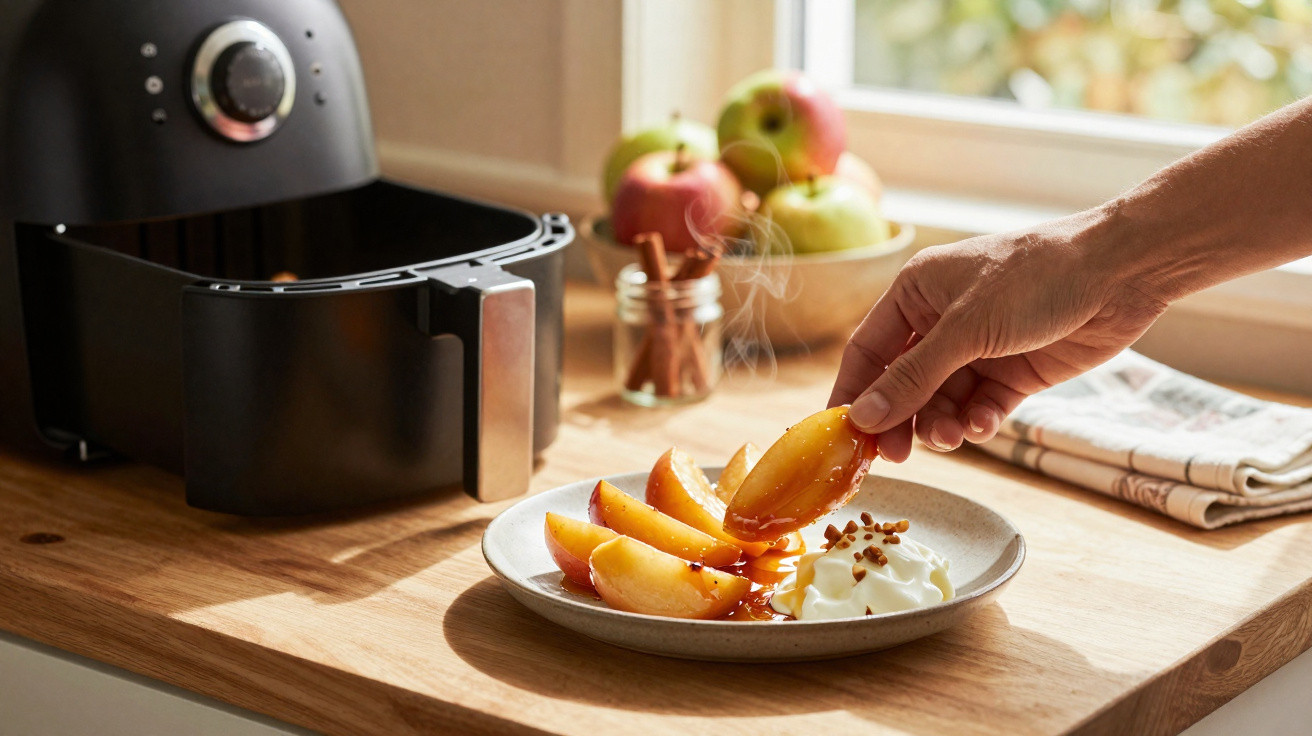
Caramel fragrance, bubbling butter and tender fruit: all the appeal of a classic French dessert, but without the customary pastry layer or the accompanying guilt.
French cooks have long celebrated tarte Tatin, the upside-down tart of caramelised apples. A viral air fryer alternative now claims to offer that same comforting flavour with considerably fewer calories and much less work.
From kitchen mishap to French classic
For more than a century, tarte Tatin has been surrounded by French culinary folklore. According to the tale, one of the Tatin sisters, proprietors of a hotel-restaurant in Lamotte-Beuvron, failed to put pastry in her tin, cooked the apples regardless, then placed pastry over them partway through cooking in a hurried attempt to rescue the dish.
Food historians now consider that appealing story improbable. Instead, they identify an earlier Sologne recipe, which the sisters helped make famous by putting it on the menu at their establishment around the beginning of the 20th century.
Whatever the true story behind it, traditional tarte Tatin is undeniably indulgent. It contains butter, sugar, further butter and sugar, a substantial pastry topping, and commonly cream or ice cream to serve.
Classic tarte Tatin is a masterpiece of caramel and butter, but it is not a dessert built with restraint in mind.
How traditional tarte Tatin is prepared
To see why a lighter take is so appealing, it is worth considering how the original recipe is assembled.
The standard method, step by step
- Melt a substantial quantity of butter and sugar in a sturdy tin until it forms a rich golden caramel.
- Arrange apple quarters closely in the caramel, with their cut sides facing upwards, so that they support one another.
- Heat the apples on the hob for several minutes, allowing them to begin softening and absorb the caramel.
- Lay pastry over the fruit, pushing its edges down inside the tin to hold in the juices.
- Bake until the pastry is crisp and golden, then carefully invert the tart while it is still hot, leaving the apples on top.
- Serve warm, typically with whipped cream or vanilla ice cream.
The finished tart is sticky, intense and immensely satisfying. It also contains plenty of fat and sugar, while requiring time and close attention during cooking.
The viral shortcut: “tatin-style” apples in the air fryer
On social media, creator Monelle Godaert (@notsosuperflu) has promoted a pared-back recipe that uses an air fryer to recreate tarte Tatin flavours without a pastry base.
Her approach mixes sliced apples with a little sugar, butter and spices, then cooks everything quickly at high heat in the appliance that many households now use for weekday chips and chicken.
The promise: the taste of caramelised apples “like a Tatin”, minus the pastry and much of the calorie load.
Air fryer tatin-style apples: step by step
Monelle’s recipe is made as follows:
- Cover the air fryer basket with baking paper to collect the caramel and shield the basket.
- Spread a handful of pecans across the bottom.
- Peel two Golden apples, then divide them into quarters.
- Place the apple quarters over the pecans.
- Dust the fruit with roughly one teaspoon of ground cinnamon.
- Add one generous tablespoon of sugar, which is sufficient to caramelise the apples.
- Scatter four small knobs of salted or unsalted butter across the top.
- Air fry for 20 minutes at 190°C (around 375°F).
The fairly high temperature lets the apples become very tender as the butter and sugar bubble around them. Meanwhile, the nuts toast, providing both flavour and crunch.
At 190°C for 20 minutes, the apples collapse into a soft, almost jammy texture, close to the filling of a classic tarte Tatin.
Why this variation feels lighter
The main difference is the missing pastry case. Conventional sweet pastry contributes refined flour as well as saturated fat, so leaving it out removes a significant amount of energy from each serving.
Here, the dessert consists chiefly of two apples. It uses just one spoonful of sugar and four small knobs of butter. That makes it leaner than many tarts, while retaining richness in the elements that matter.
Pecans provide fibre and healthy fats, helping to slow the rate at which sugar enters the bloodstream. The dessert still feels luxurious, but is less heavy than a bakery slice.
| Element | Traditional tarte Tatin | Air fryer apples |
|---|---|---|
| Pastry | Thick layer, high in butter | None |
| Cooking method | Hob + oven | Air fryer only |
| Portion control | Often large slices | Fruit-based, easier to keep modest |
| Texture | Sticky apples + crisp pastry | Soft apples + toasted nuts |
Selecting apples and making tweaks
Monelle chooses Golden apples because they turn soft and sweet while retaining some shape. Their gentle flavour pairs particularly well with butter and cinnamon.
Different apple varieties will alter the finished dish:
- Braeburn or Jazz for a tangier, more fragrant result.
- Granny Smith for pronounced acidity to offset the caramel.
- Gala for a softer and sweeter outcome.
Larger apple wedges will hold together during cooking, while thinner slices will be close to a compote once finished.
Serving suggestions that keep things “reasonable”
In France, a Tatin-style dessert would traditionally be served with vanilla ice cream or a spoonful of thick cream. Both are equally suitable here, although they make the dessert rich again.
For a lighter option, the creator recommends Greek yoghurt or vanilla skyr instead. Each brings creaminess and protein, which can aid fullness without greatly increasing the sugar content.
Swapping ice cream for yoghurt keeps the comfort factor while making the dessert easier to fit into an everyday diet.
Minor changes for different requirements
- Choose a sugar substitute if you are reducing sugar, but retain a small amount of real sugar to improve caramelisation.
- Swap part of the butter for a splash of apple juice to add moisture with less fat.
- Leave out the nuts where allergies are an issue, then add oat flakes after cooking for texture.
Why air fryers work well for this dessert
Air fryers move hot air rapidly around food, which promotes gentle caramelisation and browning without the need to heat an entire oven.
With fruit-based desserts, their compact chamber holds in steam released by the fruit. This gives a soft interior while allowing the outer surface to gain colour. The technique also reduces both cooking time and energy use, making it useful on busy weeknights.
There is also a safety benefit. Making caramel in a saucepan involves extremely hot, bubbling sugar. In this version, the butter, sugar and juices remain on the baking paper inside the basket, which makes the recipe feel less daunting for inexperienced cooks.
Balancing nostalgia with nutrition
French bistro desserts have a nostalgic quality. For many, they bring back memories of holidays, family dinners or early trips overseas. Giving them up entirely may feel disappointing.
This air fryer version provides a compromise. It retains the aroma of cooked apples, cinnamon warmth and buttery caramel flavour, but shifts the balance towards more fruit, fewer refined carbohydrates and a serving suitable for a weekday meal.
For people counting calories or managing blood sugar, this type of dessert may also have a milder effect. Apples supply fibre, nuts contain slowly digested fats, and choosing yoghurt instead of ice cream adds protein. Together, these small changes preserve the feeling of a treat without derailing daily intake.

















Comments
No comments yet. Be the first to comment!
Leave a Comment