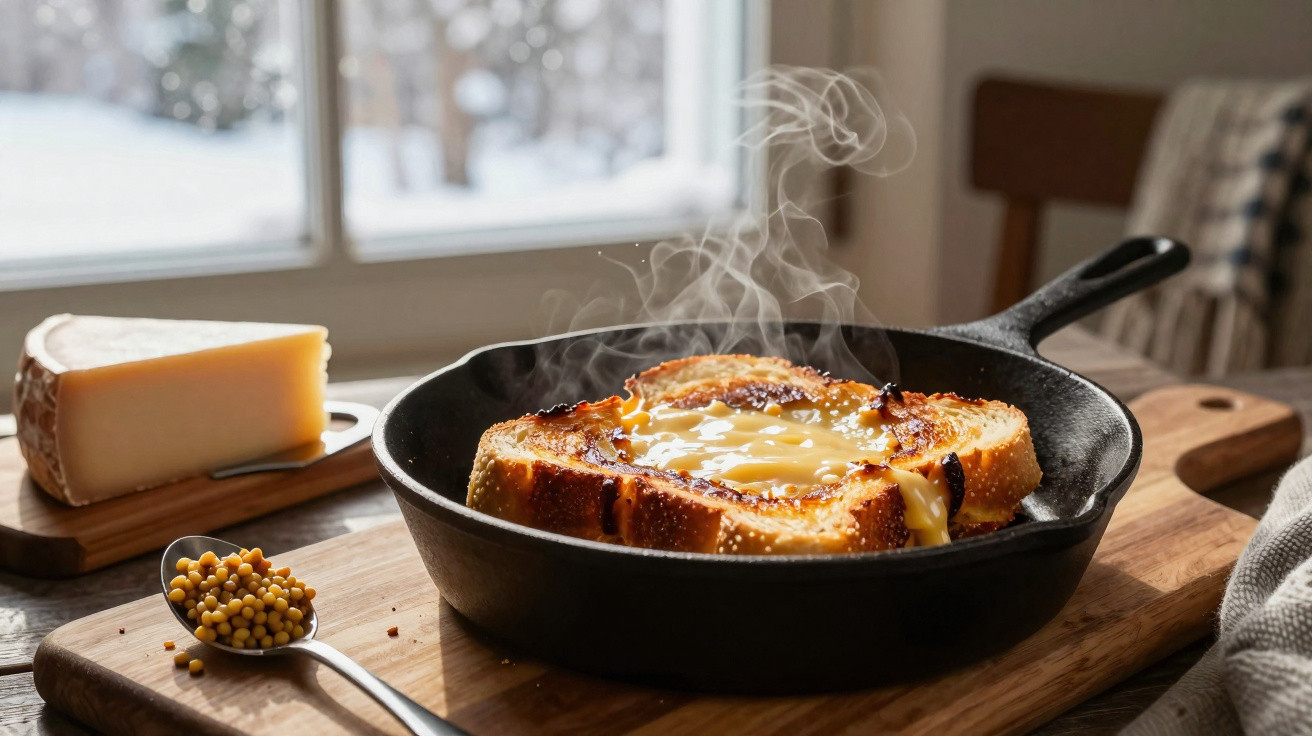
When the cold bites at your skin and the windows steam up, the kitchen becomes a quick, warm and unexpectedly creative refuge.
On evenings when the wind seems to cut straight through your coat, many people crave winter food but have neither the patience nor the kit for a fondue pot or raclette machine. This is exactly when a simple, well-built hot sandwich can provide the same comfort as a mountain meal – with only a frying pan and a handful of ingredients.
A winter sandwich with the feel of raclette
The idea is straightforward: turn classic raclette cheese into a pan-fried toastie, deeply golden outside and oozing within. There is no electric appliance taking up the table and no lengthy preparation. You need just four key ingredients, a little butter and 15 minutes.
This raclette toastie is a “shortcut” to the ski-season atmosphere: little effort, plenty of comfort and a crisp-meets-melting texture.
Start with a sturdy bread that can hold the filling without falling apart. Rather than a complicated sauce, use mustard: it cuts through the cheese's richness and makes the flavour more balanced. The result recalls traditional raclette served at a ski resort, but in the form of an individual sandwich that is ideal for dinner after an exhausting day.
The 4 ingredients that make the dish work
For two generously filled toasties, the list is short but deliberate:
- 4 thick slices of bread (artisan sandwich bread or sliced country loaf)
- 4 to 6 slices of raclette cheese (plain, smoked or peppered)
- 2 slices of cooked ham or turkey breast
- A small amount of mustard, preferably wholegrain or mild
Butter serves as a fifth, technical element, contributing more to texture than flavour. It goes into the frying pan rather than the sandwich, creating the golden crust.
The secret to balance lies in the mustard: a tangy, gently spicy touch that stops the sandwich becoming too heavy.
Quick assembly, with a purpose
This is not simply a matter of piling up ingredients. Their order affects both the texture and the way the cheese melts.
Layers for a “melting centre”
Lay the bread slices on a board first. Spread a thin coating of mustard over the inside of each slice, taking it right to the edges. This prevents any bland bites and seasons every corner.
Place the first layer of raclette over the bottom slice, covering the surface well. Add the ham or turkey breast, folding it so that it stays within the edges of the bread. Top with another layer of cheese.
This “sandwich within a sandwich” – cheese, cold cut, cheese – delivers what many people want from winter recipes: an even centre that melts consistently instead of all running out into the frying pan.
Finish with the second slice of bread, with its mustard-coated side facing inwards. Press down lightly with the palm of your hand to compact everything, creating a firm sandwich ready for frying.
Raclette toastie in a frying pan: getting it right
The frying pan takes the place of both a croque-monsieur machine and a café griddle. Used properly, it can give a more appealing result, with better control over the heat and texture.
Medium heat, butter and a little patience
Add a little butter to a frying pan warmed over a medium heat, and wait until it begins to foam. Carefully place the sandwiches in the pan to brown.
Allow 3 to 4 minutes per side as a guide. Look for golden bread with a light caramel colour, without burnt edges. If the bread starts darkening quickly while the cheese remains firm, turn the heat down and cover the pan for a minute to concentrate the heat inside.
The ideal point brings together three signs: butter gently sizzling, bread that feels firm and crisp under the spatula, and cheese discreetly seeping from the sides.
Once the sandwich has been turned, add the remaining butter to ensure equal crispness on the other side. Any small, lacy pieces of toasted cheese escaping from the edges are a crunchy bonus on the plate.
From a quick snack to a complete dinner
On its own, this toastie is enough for a fast meal on a cold day. A few simple sides, however, can turn the sandwich into a more balanced main dish.
Side dishes that work particularly well
- A crisp green salad (rocket, lettuce, watercress or mixed leaves)
- A light vinaigrette made with cider or sherry vinegar
- Cornichons and pickled onions
- Mushrooms sautéed with garlic and parsley
- Chopped walnuts scattered over the salad
The acidity of the pickles and salad helps offset the richness of the cheese, making the meal feel less heavy. Mushrooms, meanwhile, strengthen the alpine character of the dish, with an earthy flavour that pairs directly with raclette, particularly the smoked variety.
| Side dish | Role on the plate |
|---|---|
| Green salad | Adds freshness and lightness |
| Pickles (cornichons, onions) | Cuts through richness with acidity |
| Sautéed mushrooms | Brings a woodland note and moisture |
| Walnuts or other nuts | Provides crunch and a nutty flavour |
Raclette, toastie and croque: what changes in practice
Raclette is originally a Swiss dish in which a wheel of cheese is melted and scraped over potatoes, pickles and cured meats. A toastie is a pressed, heated sandwich closely associated with British food. The French croque-monsieur comes very close to the same idea, but it generally includes béchamel sauce and is cooked in an oven or dedicated appliance.
This frying-pan sandwich occupies a hybrid space: it uses the cheese associated with raclette, adopts the convenient toastie format and retains the immediate comfort of snowy-day food. For anyone without a raclette machine at home, it is a practical way to get close to the experience without investing in extra equipment.
When to make it and everyday considerations
This type of recipe suits several particular occasions: after a long day at work, during an evening binge-watch, or as a post-workout boost on cold days when your body calls for warming food.
As it is rich in cheese and butter, its frequency of consumption is worth considering. For people limiting saturated fat or cholesterol, adapted versions using less cheese and a non-stick frying pan with only a little fat may be more suitable.
Replacing some of the raclette with a lighter cheese, using lean turkey breast and controlling the amount of butter already changes the nutritional profile considerably.
If you enjoy variety, you can also create small at-home versions of the experience: an improvised “ski-resort menu” with this raclette toastie, a simple vegetable soup and a baked-fruit dessert. Everything is quick, made on the hob, without turning the kitchen into a fondue complex.
Another option is to make the preparation into a weekend activity with children or friends. Everyone can build their own sandwich, choosing the bread, cheese and cold cut. The foundation remains the same – layers of cheese, mustard and frying in butter – while every plate develops its own character, always arriving at the same destination: a centre of melted raclette and a crisp crust that crackles with every bite.

















Comments
No comments yet. Be the first to comment!
Leave a Comment