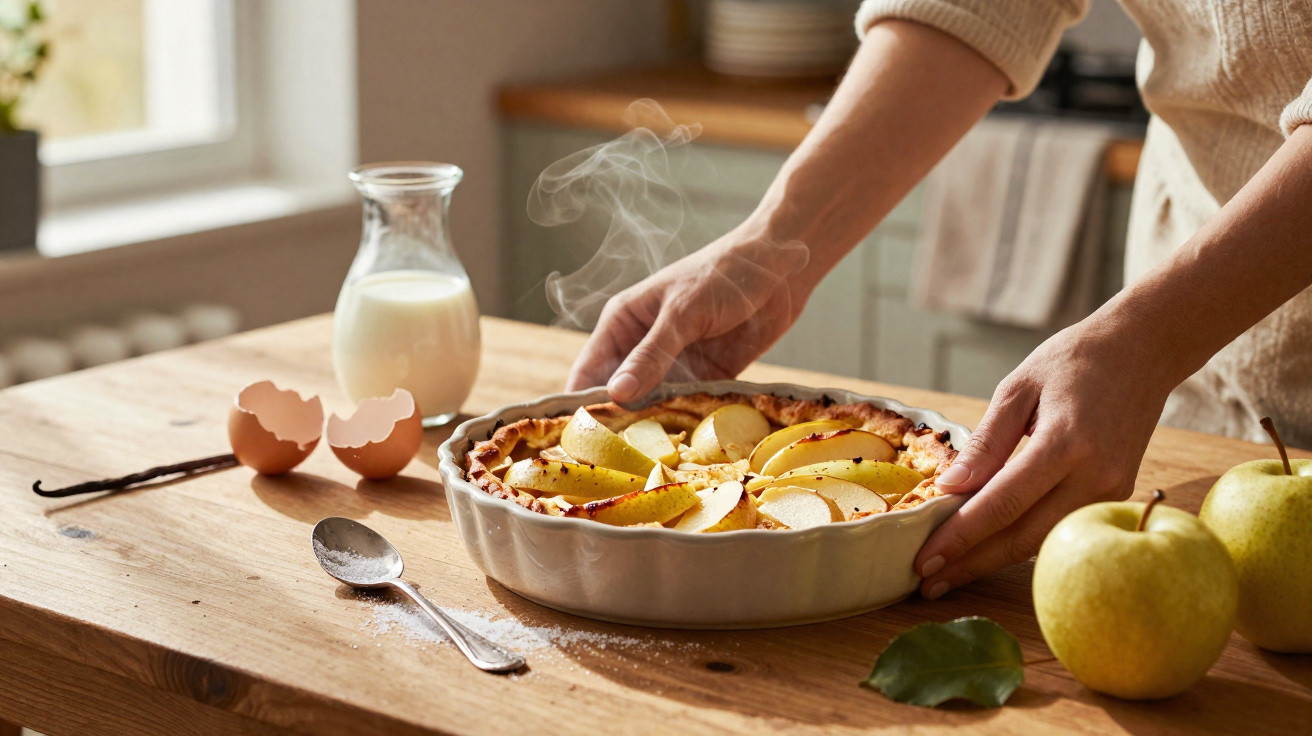
Cold evenings draw in, the lights come on sooner, and the kitchen suddenly becomes the most comforting room in the home.
Some puddings seem designed for the instant you close the curtains, slip off your shoes and crave something warm, aromatic and faintly nostalgic. This apple-pear clafoutis fits that brief perfectly: it uses a simple batter and everyday fruit, yet its texture sits somewhere between flan, custard and cake.
Why this traditional French dessert feels so current
Clafoutis has appeared quietly in French family recipe books for generations. It was never intended as an elaborate dessert. Usually made with cherries, it consists of fruit held in a thin vanilla-scented batter, which rises in the oven before settling a little as it cools.
In 2024, that thrifty approach feels especially relevant. Food costs are climbing, more people are cooking at home, and social media feeds are packed with recipes offering comfort without an extensive shopping list. This apple-pear version meets all those needs: it is inexpensive, straightforward and attractive enough for Instagram beside a candle and a linen napkin.
With milk, eggs, flour and a couple of bruised fruits, you end up with a dessert that feels far more luxurious than its cost.
The seasonal variation is what makes it special. Rather than cherries, tender pears and slightly firmer apples fill the dish together. Apples provide shape and bite, while pears cook down into something almost like compote. Combined, they create a late-autumn character: gentle sweetness, a little juice and an aroma that reaches the hallway before the oven door is opened.
How an apple-pear clafoutis works
Fundamentally, clafoutis is an oven-baked custard. The eggs set and bind it, flour gives it sufficient structure to portion, and milk loosens the batter without making it dense. Sugar and vanilla provide the comforting flavour.
| Component | Role in the clafoutis |
|---|---|
| Eggs | Set the custard and keep the fruit in position |
| Flour | Thickens the batter and gives a subtle cake-like bite |
| Milk | Maintains a creamy, light texture |
| Butter | Adds richness and creates a soft, tender crumb |
| Apples & pears | Bring sweetness, moisture and contrasting textures |
The apple-pear pairing works because of its balance. Apples such as Golden or Braeburn retain their form and a little firmness. Conference or Bosc pears become soft, nearly melting away at the edges. Every spoonful moves between texture and tenderness.
The ideal clafoutis barely trembles at the centre when you pull it from the oven, then firms up into a silky, spoon-friendly dessert as it cools.
The almost-nothing ingredient list
Most kitchens will already contain nearly everything needed for this recipe. There is no need for specialist equipment, hard-to-find ingredients or lengthy marinating.
- 3 medium apples, peeled and chopped into small pieces
- 2 ripe, but not overly soft, pears, peeled and diced
- 4 eggs
- About 90–100 g plain flour
- Roughly 100 g sugar, adjusted to taste
- 250 ml whole milk or a plant-based alternative
- 30 g melted butter, plus extra for greasing the dish
- Vanilla pod or vanilla extract
- A pinch of salt
- Optional: flaked almonds or demerara sugar for a crisp topping
That is the understated appeal of clafoutis in today’s food landscape. It makes good use of what is already in the cupboard. A few fruits past their best are ideal here. The last of a bag of flour or a milk carton becomes the beginning of a dessert rather than scraps to throw away.
Step by step: from a cold kitchen to a warm plate
Making a flavourful batter without fuss
A short ingredient list benefits from a little care at each stage, although very little effort is required:
- Preheat the oven to 180°C. Butter an ovenproof baking or gratin dish, then sprinkle sugar across the base so it caramelises during baking.
- Spread the apples and pears across the bottom, combining them so each portion contains both fruits.
- Whisk the eggs and sugar until paler and lightly frothy. This helps produce a lighter finished texture.
- Mix in the flour and salt until no dry patches remain and the batter is smooth.
- Add the vanilla seeds or extract, then gradually whisk in the milk until the batter is loose but not watery.
- Stir through the melted butter, which enriches the flavour and supports the softly set finish.
Carefully pour the batter over the fruit. For added texture, scatter over almonds or a spoonful of coarse sugar. The surface will toast and crisp around the edges, contrasting nicely with the soft filling beneath.
Baking and resting the clafoutis
The baking stage may appear uncomplicated, but it has more influence on the final result than many home cooks expect.
- Bake at 180°C for approximately 35–40 minutes. The edges should rise and become golden, while the centre should still give a slight wobble when the dish is moved.
- Rest it for at least 15 minutes after removing it from the oven. This time allows the dessert to settle and finish setting.
- Serve it warm or at room temperature, preferably spooned into generous portions rather than cut into neat slices.
That rest on the counter is where the magic happens: aromas deepen, the custard relaxes, and the fruit juices blend with the batter.
A scoop of cold vanilla ice cream or a spoonful of thick cream makes it suitable for a dinner party, even if it was assembled in ten minutes between emails.
Why this clafoutis suits changing eating habits
Shoppers are increasingly choosing recipes that deliver comfort without excess. Trends in home baking suggest that people want treats that feel indulgent while still relying on familiar ingredients, rather than elaborate patisserie techniques.
This apple-pear clafoutis suits that preference neatly:
- It makes use of autumn fruit and therefore follows the seasons.
- It helps prevent waste by accommodating fruit with a few bruises.
- It can be adapted for different dietary requirements with oat or almond milk, vegan margarine and gluten-free flour blends.
- It is easy to increase for a group or reduce for a small dish serving two.
The approach is useful during busy weeks, too. It can be baked in the evening, refrigerated overnight and rewarmed in portions over the following two days. Its brief oven time and single main dish require less energy than a complicated layered cake.
Storage, reheating and useful make-ahead tips
After it has cooled, the clafoutis can be kept covered or in a container in the fridge for up to two days. Its texture may even improve after several hours, once the custard has firmed and the fruit flavours have blended.
To restore its freshly baked softness, place the dish in an oven at 150°C for around ten minutes, or gently heat individual portions in the microwave at low power. The aim is mild warming, rather than overheated edges and a rubbery middle.
This makes it a practical option for shared office lunches, Sunday roasts that run into the afternoon or an informal gathering where you want to offer something homemade without making life difficult.
Beyond the recipe: variations, risks and clever uses
Once its structure is understood, apple-pear clafoutis becomes a starting point rather than a rigid recipe. Gentle spices including cinnamon, cardamom and a little finely grated ginger work well with both apples and pears. For dinner with friends, a dash of dark rum or calvados gives it a more adult note.
There are several potential problems to avoid. Too much fruit can leave the centre wet and unable to set properly. Raising the oven temperature to speed things up may scorch the top while leaving the middle uncooked. Adding too much sugar obscures the fruit’s natural taste and makes the dessert overly sweet, which can feel heavy after a meal.
Conversely, the format lends itself to a few useful ideas. Leftover portions can be warmed for breakfast with a spoonful of yoghurt. A version with very little sugar in the batter can move towards brunch, somewhere between baked porridge and bread pudding. For families, asking children to whisk the batter or arrange the fruit offers a simple, hands-on way to show how custards set and how various fruits respond to baking.
As the colder months take hold across the UK and US, this modest fruit-led pudding provides a useful model. It transforms cupboard basics and seasonal fruit into something that feels special, without extensive preparation or complicated equipment. A baking dish, a whisk and half an hour will usually be enough to send the first scent of vanilla and baked fruit through the house.

















Comments
No comments yet. Be the first to comment!
Leave a Comment