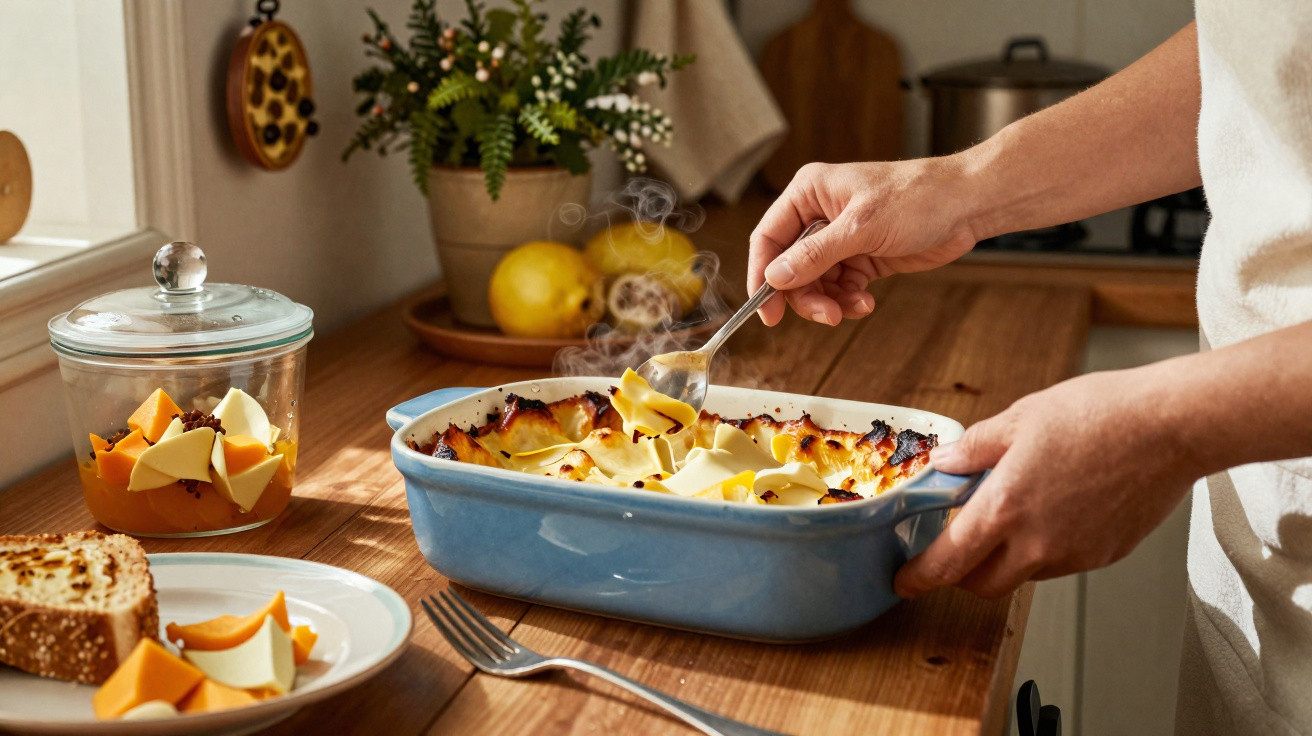
The scent arrived before anything else: a gradually building curl of cheese, garlic and something warm with a slight sweetness drifting along the corridor. Someone in the building had plainly chosen a “bake it all and deal with the rest tomorrow” sort of evening. You know the aroma: bubbling around the edges, browned on top, from the kind of meal that has you inspecting the fridge despite knowing it is practically bare.
By the time an oven door banged shut upstairs, my mind was running through every baked comfort food that improves by day two. Lasagna. Mac and cheese. Shepherd’s pie. Baked ziti that changes from saucy to neatly sliceable.
There is one straightforward reason we are so fond of these leftovers.
The quiet magic of next-day comfort food
There is a particular pleasure in opening the fridge to find a substantial glass dish waiting on the shelf. The pasta has become firm, the cheese has set and the sauce has stopped spilling in every direction. It appears composed, assured, almost self-satisfied. Cut into it and the portion stays intact like a well-mannered child at a family lunch.
Straight from the oven, that very same dish was noisy and unruly. Cheese pulled into strings, sauce bubbled as though it might overflow, and everyone scorched their mouths because pasta seems to erase all patience. By the following day, everything has calmed down. It is the same food, only wiser.
Take a traditional baked ziti or lasagna. On the first day, it can be slightly chaotic. The layers slip, servings fall apart on the plate, and you eat it with more determination than elegance. The next day, however, it suddenly feels restaurant-level. You lift out a tidy square, warm it in the microwave or oven, and the flavours seem more profound.
One reader told me that she makes two trays of baked rigatoni every Sunday. “The first night is for the kids,” she laughed. “The second night is for the grown‑ups. That’s when the flavor actually shows up.” She is right. The sauce absorbs into the pasta, herbs mellow and cheese shifts from molten disorder to silky comfort. It is as if the dish spends the night discovering its true identity.
There is a simple food-science explanation for why baked comfort food is so successful the following day. As it cools, the starch in potatoes or pasta sets and becomes firmer. Fat from cream and cheese also solidifies. Meanwhile, sauce molecules settle into every pore of the carbohydrates beneath them.
When you reheat it, you are doing more than warming it: you are reviving it after a slow marinade. Rather than sitting on the surface, the flavours are threaded throughout. It tastes more luxurious, despite nothing having been added. That’s why yesterday’s baked mac and cheese can taste like something a restaurant quietly simmered for hours. The fridge has done the slow, patient work on your behalf.
How to bake today for tomorrow’s comfort
To achieve that next-day magic, it helps to approach cooking with a slightly different mindset. It is not complicated; it simply takes a small adjustment.
Favour meals baked in a deep dish: lasagna, baked gnocchi, enchilada casseroles, layered vegetable bakes and even heavily cheesy baked rice. Dishes with layers and plenty of sauce generally excel on day two. Cook pasta or potatoes a little less than usual before baking, so they do not become mushy after their second heating. Use a little more sauce than seems necessary, as the starch will absorb it overnight.
Afterwards, allow the dish to cool fully before you cover it. This is when its structure settles, much as brownies cut more cleanly on the following day.
Many people hurry this stage. They bake and serve the meal, then put the still-steaming dish in the fridge beneath foil. What happens then? Condensation falls back onto the food, the surface turns soggy and a comforting texture becomes somewhat… wet. We have all had that experience: opening leftovers, lifting the foil and discovering a disheartening, damp lid of cheese.
There is a better approach. Leave the dish on the worktop until it is merely warm when touched. Cover it securely, then refrigerate it. When day two comfort is calling, reheat it gently. Use a moderate oven temperature, keep it covered at first and remove the cover at the end if you want to restore its crisp top. Honestly, hardly anyone manages this every day. Yet on the evenings when you do, the reward is considerable.
“Next-day baked pasta is my secret weeknight weapon,” says Léa, 34, who batch‑cooks on Sundays for her busy workweek. “I don’t feel like I’m eating leftovers. I feel like I’m cheating the system.”
She has found a simple routine that suits nearly every baked comfort dish:
- Under‑cook the pasta or potatoes by 2–3 minutes before baking
- Add a little extra sauce or broth so it doesn’t dry out overnight
- Cool completely before covering and refrigerating
- Reheat covered, then uncover at the end to re‑crisp the top
- Always add a tiny fresh touch: herbs, cracked pepper, a squeeze of lemon
Those finishing touches transform “meh, leftovers” into a second, almost better dinner. The dish and ingredients have not changed, but the meal somehow feels remarkably fresh.
Why next-day baked comfort food helps when life is messy
There is something emotionally comforting about food that does not give up after one evening. In a world where so much can seem disposable, a pan of baked comfort food that is equally good - and sometimes better - on day two feels unexpectedly stabilising. It remains there for you.
You arrive home worn out, open the fridge and, rather than finding a random collection of odds and ends, see something structured: a ready-to-eat square of dinner. It offers another chance at that warm, oven-baked feeling without the chopping, grating, scheduling and washing-up. You get the comfort without paying the full price again. That can alter the entire feel of an evening.
There is also a subtle form of self-respect in preparing food with tomorrow in mind. This is not Instagram-style meal preparation involving flawless glass jars and colour-coded lids. It is simply the act of acknowledging: I will probably be tired later, and I deserve proper food anyway.
Baked comfort food that lasts well until the next day is rather like a message from your earlier self attached to the fridge. “I had your back,” it says from its neat little rectangle of cheese and sauce. You warm it, sit down and feel slightly less as though you are struggling to keep pace with your own life. That’s the real luxury hiding in a pan of next-day mac and cheese.
Some people insist that the second day is when a dish finally becomes itself. The sharp edge of the cheese softens, tomato acidity mellows and spices settle into balance rather than shouting over one another. The first evening brings excitement; the second brings depth.
Once you recognise this, you begin to account for it: an additional tray of enchilada bake, a bigger shepherd’s pie, a double batch of baked cauliflower cheese, with half reserved for tomorrow’s lunch. You may even start quietly supporting the leftovers when everyone reaches for another serving, hoping there will be just enough to create a perfect slice for the following day. You close the fridge softly, aware that comfort has already been sorted.
| Key point | Detail | Value for the reader |
|---|---|---|
| Choose dishes that suit the “next day” | Layered bakes with starch + sauce (lasagna, baked ziti, shepherd’s pie) | Ensures leftovers are as satisfying as the original meal |
| Cook with tomorrow in mind | Slightly under‑cook pasta/potatoes, add extra sauce and cool completely before chilling | Improved texture, deeper flavour and less chance of dry or soggy leftovers |
| Reheat intelligently | Use gentle heat, cover then uncover, and add small fresh toppings | Turns leftovers into a second restaurant‑level meal at home |
FAQ:
- Question 1 Which baked comfort foods genuinely taste better the next day?
- Question 2 How long is it safe to keep baked dishes in the fridge?
- Question 3 Is it all right to reheat baked pasta more than once?
- Question 4 Can these dishes be frozen for a later date?
- Question 5 How can I prevent next-day baked dishes from drying out?

















Comments
No comments yet. Be the first to comment!
Leave a Comment