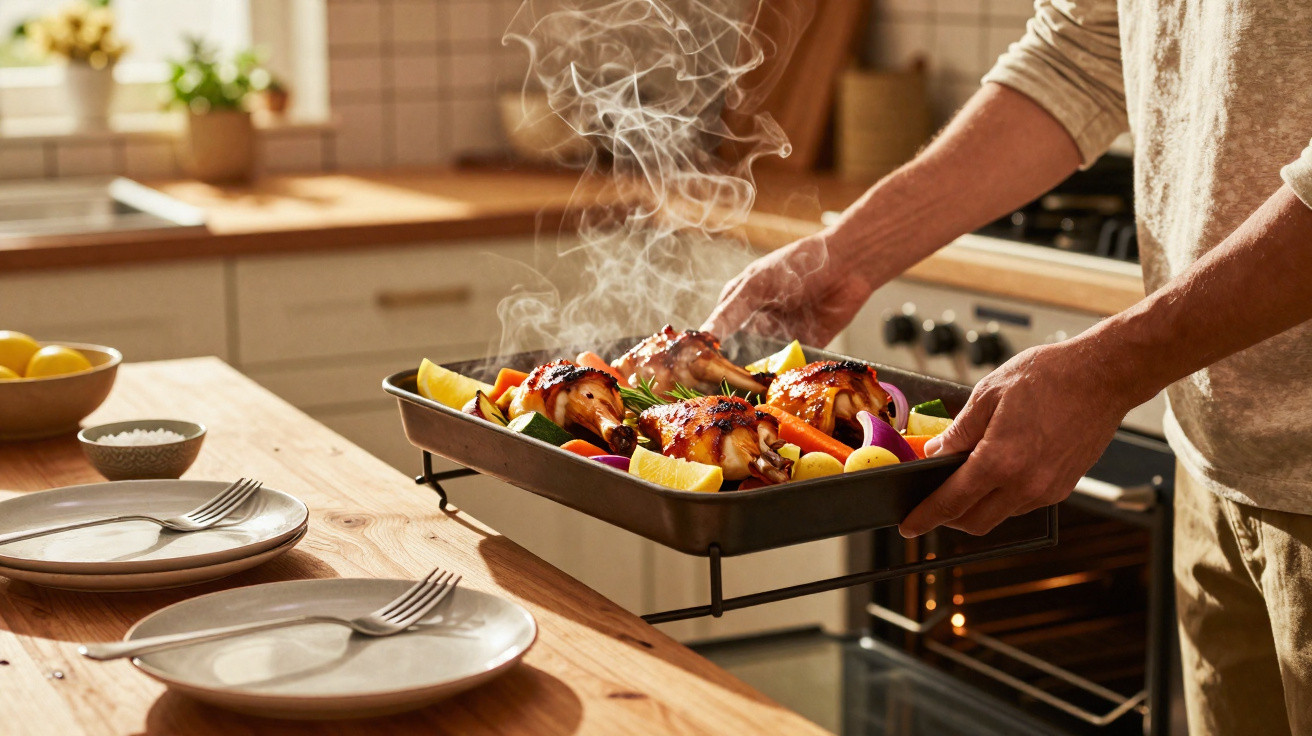
The baking tray emerged from the oven looking almost self-satisfied: edges fizzing, corners bronzed and a deeply savoury scent winding through the hall and pulling everyone into the kitchen. I had intended to make rice alongside it, and perhaps a small salad if I could face it, but as soon as I put the dish down, I understood that this meal needed no support.
Plates were set on the table. Someone dipped a spoon directly into the dish, scorched their mouth, laughed and immediately went in for another bite. Nobody even mentioned the missing side dish.
That was the moment I noticed that something quietly radical had happened.
The evening when the side dish stopped mattering
The notion came to me on an ordinary weekday, when my mind was exhausted and the contents of my fridge were even less inspiring. I was flicking through recipes that all seemed to require two pans, a saucepan and twenty separate stages. Then I wondered: what if dinner could simply be one thing, cooked in one dish, and still be genuinely sufficient?
I took out a baking dish and began adding whatever I had: chopped vegetables, a protein and a sauce created from equal parts cupboard mishap and inspiration. It felt less like preparing a recipe and more like clearing out the fridge.
Thirty minutes later, I opened the oven and found I had made a whole meal with no side dish at all.
When I served it for the first time, I expected objections. You know the familiar questions: “Where’s the rice?”, “No bread?”, “Is there a salad?” I had even prepared emergency toast, just in case.
But instead, everyone hovered over the dish as people gather around a campfire. Steam drifted upwards; the surface was crisp and golden, while underneath was soft and saucy. Potatoes brought comfort, vegetables added colour and chicken gave it substance. All of it had been layered, steeped in flavour and roasted together.
By the time the tray reached the table, side dishes were the last thing on anyone’s mind. They were already working out when to take a second helping.
Viewed from a distance, the reasoning is almost self-evident. A strong baked dinner can cover every requirement in one place: carbohydrates, vegetables, protein and flavour. The oven takes on the hard work, allowing the ingredients to combine so that every mouthful feels complete rather than like a plate you have to assemble yourself.
We have been taught that a “proper” meal should consist of separate components: a main course, a side, perhaps another side for appearances. But what most of us want is something filling, balanced and achievable on a Wednesday evening.
To be truthful, nobody manages that every day.
How to make a baked dinner that needs nothing else
I began to see my baking dish as a small landscape that needed the right balance. At the bottom, I use something starchy to absorb the juices: sliced potatoes, chunks of sweet potato or, on especially desperate days, torn pieces of bread. Above that goes a substantial layer of vegetables, chopped small enough to cook without delay: carrots, peppers, courgettes, onions or whatever happens to be available.
Then comes the centrepiece: chicken thighs, sausages, chickpeas or even substantial lentils when I want a plant-based version. I add a slick of olive oil, a punchy seasoning blend and perhaps a little stock or crushed tomatoes.
There is nothing elaborate about it. It is simply straightforward food, arranged in layers and placed in a hot oven until it turns golden and fills the kitchen with the smell of someone who has their life more together than they feel.
The mistake is assuming that adding more components makes dinner better. That is how the side-dish habit returns. You can take a flawless tray from the oven, then suddenly feel compelled to boil pasta or cut bread, as though the dish could not possibly stand alone.
I have done exactly that, only to watch people leave the additional carbohydrates untouched and return to serve themselves from the tray. The meal already offers fullness: contrasting textures, varied colours, some crunch and some softness. What we’re really hungry for is variety in each bite, not three separate pots on the stove.
Once that sinks in, the supposed “need” for a side dish begins to look like a routine rather than a rule.
Sometimes a baked dinner feels like a quiet act of self-respect: “This is enough. I am enough. This pan is enough.”
- Build in layers
Base: a starchy foundation. Centre: plenty of vegetables. Top: protein and flavour. - Season generously
Use salt, pepper, garlic, smoked paprika, herbs and lemon zest. Add slightly more than feels necessary. - Include liquid, then allow it to cook down
A little stock, cream or tomato helps keep everything tender as the oven intensifies the flavours. - Pick one “wow” feature
A crisp cheese topping, herby breadcrumbs, roasted lemon slices or charred edges can provide that satisfying finishing touch. - Have faith in the tray
Before rushing to make rice or bread, serve the dish alone once. See how quickly it vanishes.
How one-pan baked dinners reshape your evenings
A subtle change takes place when you stop pursuing the “perfect” carefully composed plate and embrace one abundant baked dish instead. Dinner no longer feels like a performance; it becomes a pause. You place the tray on the table, everyone gathers round, spoons scrape against the dish and conversation becomes easier. The concern is no longer whether each plate appears balanced, but whether the food feels comforting.
On some evenings, that means a creamy bake of potatoes, leeks and salmon. On others, it is roasted chickpeas, tomatoes, peppers and feta, all softened and collapsed together as though they have had a long day as well. Sometimes it is simply whatever is lurking at the back of the fridge, roasted into something surprisingly delicious.
The real secret is not only the recipe. It is the quiet permission you give yourself to say: this is dinner, full stop, no side required.
| Key point | Detail | Value for the reader |
|---|---|---|
| Put every element in one dish | Bring together starch, vegetables and protein in one baking tray | Reduces time, washing-up and mental effort while still delivering a “complete” meal |
| Season boldly and add moisture | Add punchy spices along with a splash of stock, cream or tomato | Creates rich flavour and a satisfying, restaurant-level taste without additional sides |
| Allow the tray to be sufficient | Serve the bake by itself at least once before deciding to add sides | Helps break the side-dish habit and demonstrates how fully one-pan dinners can satisfy |
FAQ:
Question 1
Can a baked dinner really be balanced without a side dish?
Yes. Including a starch, vegetables and a protein source within the same dish covers the fundamentals of a balanced plate.Question 2
Won’t people miss having rice, pasta, or bread with it?
Frequently, they will not. If the dish is hearty, saucy and properly seasoned, most people concentrate on flavour and fullness rather than tradition.Question 3
How do I stop my veg from turning mushy in the oven?
Chop firmer vegetables, such as carrots and potatoes, into smaller pieces, and leave softer vegetables, including courgettes and peppers, slightly larger so they finish at approximately the same time.Question 4
Can I prep a baked dinner in advance?
Yes. You can assemble the layers in the dish, cover it and refrigerate it for several hours, then bake it when needed, allowing a few extra minutes for cooking.Question 5
What oven temperature works best for this kind of meal?
A moderately high oven of around 190–200°C / 375–400°F generally produces tender interiors and attractively browned edges on top.

















Comments
No comments yet. Be the first to comment!
Leave a Comment