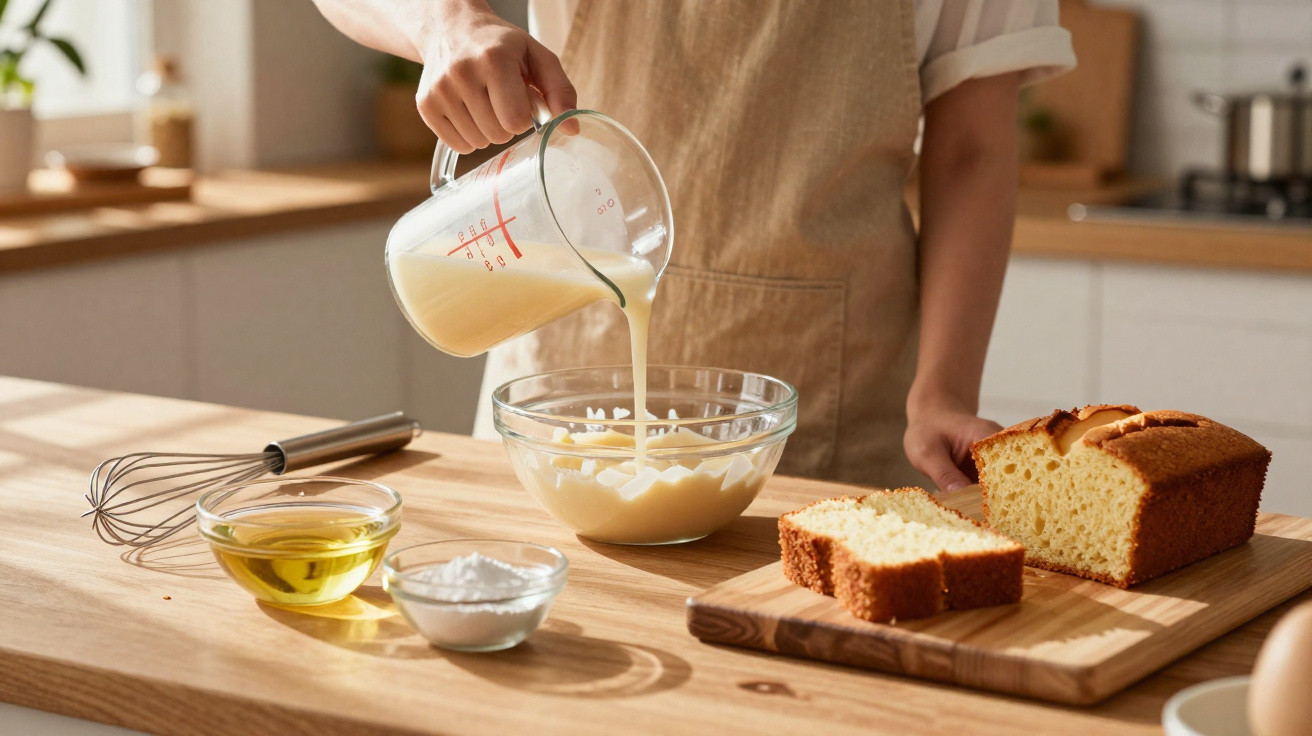
You may have added more vanilla, baked it for longer or stirred in another spoonful of sugar, yet the cake still comes out dense. A working baker’s answer is a simple three-ingredient technique that makes the crumb lighter without any butter and without changing your recipe.
The bakery was nearly shut when I watched it unfold. There was an ordinary, slightly stubborn batter and an exhausted pastry cook working from instinct. She separated a yolk into a small bowl, gradually poured in oil, added a dash of lemon juice and whisked the mixture until it was thick and glossy. The little bowl appeared insignificant, but everything changed once she folded it into the batter. The cake baked tall rather than merely high, filled with fine bubbles and so light that a fork passed through easily. I saw customers taste it, then nod as though they had just been let in on a secret. It was a subtle technique, right there in view - and one you can use too.
From brick to bounce
A heavy cake is not only a flavour issue; it is a structural one. A tight crumb is often caused by overdeveloped gluten, fat that has not been evenly incorporated and batter unable to retain gas. It’s not butter you’re missing-it’s structure. If the batter cannot keep hold of the bubbles created by baking powder or bicarbonate of soda, the rise vanishes and the crumb becomes compact as it cools.
I noticed this especially clearly with a home baker called Lila. She adored her carrot cake but disliked the way it sank. She divided her usual batter between two tins, adding the three-ingredient emulsion to just one. The unaltered cake was respectable and neat, but somewhat flat. The cake with the emulsion rose a thumb-width higher, with a silkier crumb and a melt-in-the-mouth texture that did not cling to the palate. The oven, baking time and recipe were identical - only the way the batter was given somewhere to hold air had changed.
That is why the contents of that small bowl make such a difference. Egg yolk contains lecithin, a natural emulsifier that helps water and fat combine. Neutral oil coats the flour, relaxing gluten strands so they do not tighten like twine. Lemon juice, or a mild vinegar, shifts the pH to a point where bicarbonate of soda reacts effectively, while also giving baking powder a more consistent boost. It feels like cheating. The emulsion stabilises tiny air bubbles throughout the batter, allowing heat to expand them rather than letting the lift escape up the sides of the tin.
The three-ingredient emulsion
The method is straightforward and precise. For a standard 20–23 cm cake, with roughly 700–950 ml of batter, whisk together 1 egg yolk, 3 tablespoons of neutral oil - grapeseed, rapeseed or sunflower - and 1 teaspoon of lemon juice or mild vinegar until creamy and opaque. Whisk by hand in a small bowl for 60–90 seconds, adding the oil slowly at the beginning. Fold the emulsion into the wet ingredients just before adding the flour, or whisk it into the batter during the final 10 seconds of mixing. The emulsion traps air you can’t whisk in later.
Choose the acid according to the cake’s flavour profile. Lemon complements vanilla, citrus and berry cakes, while vinegar sits unobtrusively beneath chocolate, banana and spice. Keep the ingredients at room temperature so the emulsion remains stable, and use a neutral oil to avoid unwanted peppery flavours. Everyone has produced a squat cake and called it “rustic”. This is the mildest solution I know, and it requires no specialist shopping. Let’s be honest: nobody actually does that every day.
Treat it as a rescue technique rather than a recipe overhaul. Use the emulsion in a batter that already tastes good, then allow it to provide the lift instead of adding more sugar or beating for longer.
“Fat alone won’t make a cake light. Structure does. The emulsion gives structure a chance to bloom,” says Maya, a pastry chef in London.
- Use 1 yolk per standard cake; for cupcakes, half the amount.
- For a particularly tender crumb, replace 2 tablespoons of flour with cornflour.
- Stop mixing as soon as the flour has disappeared. Overmixing reduces lift.
- For cocoa cakes, use vinegar; it works more harmoniously with cocoa’s alkalinity.
Why it works beyond the recipe
This small trio has understated strength. Lecithin in the yolk coats the flour and limits excessive gluten development; the oil distributes in a thin layer so bubbles form consistently; and the acid activates the raising agents while softening perceived sweetness. It is the reverse of using force. Rather than whipping in extra air and hoping it survives, you alter the batter’s chemistry so it is naturally inclined to retain it. Acid is the quiet accelerator. The result is neither greasy nor sponge-like: it has a fine crumb, a gentle spring and tenderness that does not fall apart on the second day.
The method is useful beyond standard cakes, too. Banana bread that normally rises into a dome before sinking settles into an even top with a soft chew. Olive oil cakes become refined instead of sticky. Flours with less gluten benefit even more because the emulsion gives them cohesion without needing extra flour to firm up the mixture. It is not magic; it simply helps the ingredients perform at their best while keeping your original recipe intact. Pass it on to a friend who believes “moist” tells the entire story. Then watch their expression when the crumb breaks neatly.
| Key point | Detail | Benefit for the reader |
|---|---|---|
| Three-ingredient emulsion | 1 yolk + 3 tbsp neutral oil + 1 tsp lemon juice/vinegar | Easy, repeatable lift without butter, special equipment or new purchases |
| When to add it | Fold into the wet ingredients before flour, or add right at the end | Retains the most air while preventing overmixing and toughness |
| Why it works | Lecithin emulsifies, oil tenderises and acid supports leavening | A fine, fluffy crumb with improved rise and softness on day two |

















Comments
No comments yet. Be the first to comment!
Leave a Comment