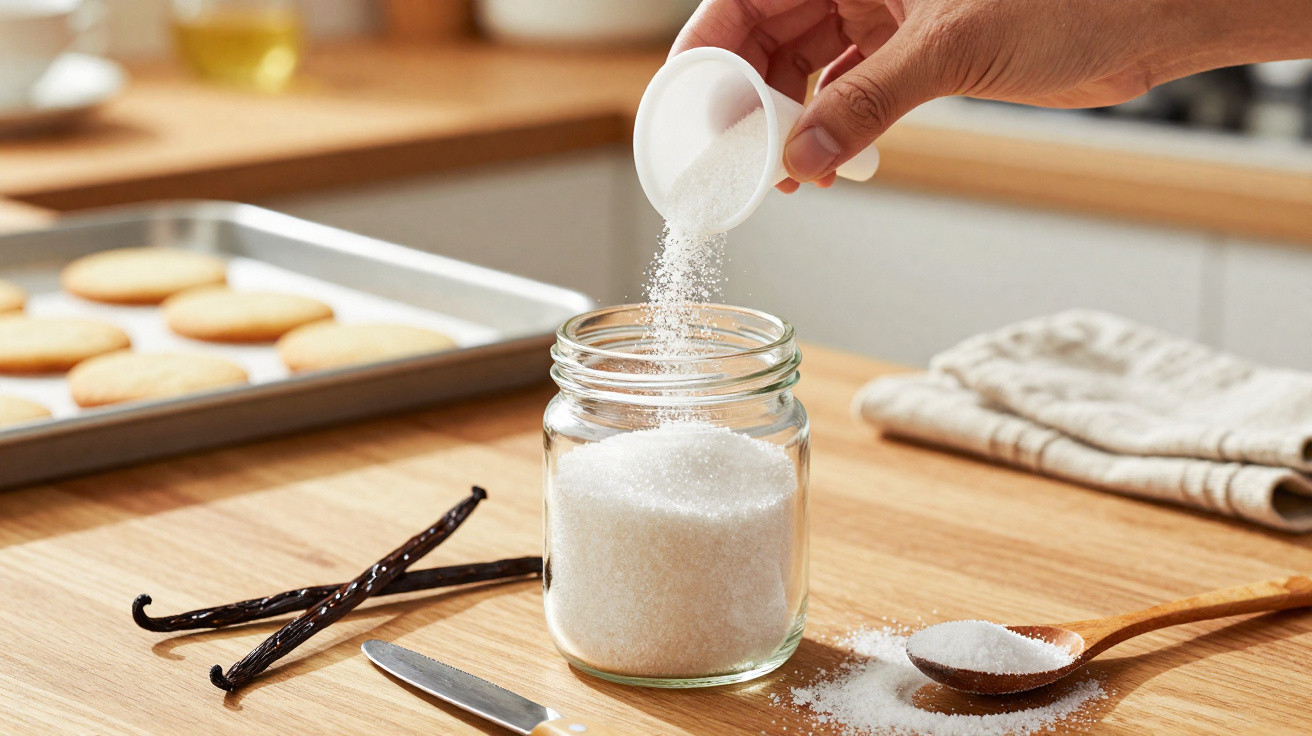
That gentle vanilla aroma in a cosy kitchen often begins with a small sachet.
But the story of that sachet is evolving.
With costs climbing and ingredient labels becoming increasingly complicated, more home bakers are using straightforward methods to take charge of flavour, reduce waste and continue serving desserts.
Why vanilla sugar is making a comeback
For years, vanilla sugar was almost instinctively bought in supermarket packets: one sachet for a sponge, another for whipped cream, and the routine became familiar. Ready-made packets remain beside the baking powder in many shops across the UK and US, although they still seem more closely associated with continental Europe than with Britain or America.
Home baking habits are changing, however. Brief ingredient lists now hold greater appeal than lengthy labels containing additives. Social media continues to promote quick “pantry projects” that offer comfort and a feeling of control, and vanilla sugar meets each of those needs.
Two ingredients, one jar and a couple of minutes are enough to replace those industrial sachets for months.
Homemade vanilla sugar reflects three overlapping trends: a preference for genuine flavour, an effort to reduce packaging waste, and a wish to make every costly vanilla pod go as far as possible.
What vanilla sugar is
Vanilla sugar is simply sugar scented with vanilla. In a great many French, German and Eastern European recipes, it fulfils the function that vanilla extract has in Anglo-American baking. Rather than pouring in a teaspoon of liquid extract, you replace some of the regular sugar with its vanilla-infused equivalent.
It can be mixed directly into:
- cake batters and muffin mixtures
- custards, rice pudding and crème anglaise
- whipped cream and Chantilly cream
- fruit salads and compotes
- toppings for crêpes, waffles and French toast
Commercial sachets are designed to create this result using synthetic flavourings or diluted natural ones. Homemade vanilla sugar instead uses real vanilla pods, including the shells left after their seeds have been removed.
From pod to jar: the 2-minute method
The basic homemade approach could not be simpler: used pods, sugar and time. Using pods after their first purpose is important, as it transforms an expensive spice into a resourceful kitchen habit.
The zero-waste method using used pods
Whenever you split a vanilla pod and scrape out its sticky black seeds for custard or ice cream, you are left with another useful ingredient: the hollow pod. Discarding it means throwing away considerable aroma.
That dry-looking shell still holds enough fragrance to perfume a whole jar of sugar.
This is the speedy technique that many pastry chefs use in their own kitchens:
- Leave the scraped pod on a plate for several hours so that it dries slightly.
- Place it in a clean, dry jar with an airtight lid.
- Add enough white granulated sugar to cover it completely.
- Close the jar and shake it briefly.
Within a few days, the sugar takes on a light scent. After two to three weeks, its aroma becomes noticeably stronger. Each time you bake, you can replenish the jar with extra sugar and further used pods.
Quick blending for a stronger flavour
For a more intense vanilla taste, the pod can be blended into the sugar. This method takes nearer two minutes than two weeks.
Using a small food processor or spice grinder:
- Snip the dried pod into small lengths with scissors.
- Put the pieces into the grinder with some of the sugar.
- Pulse briefly, breaking down the pod without turning the sugar completely into icing sugar.
- Stir the fragrant sugar through a larger jar of plain sugar.
The result is slightly beige sugar with fine dark specks, which are attractive in doughs and batters. Its aroma is more pronounced than that produced by merely leaving a pod buried in a jar.
Using the seeds too: flavour versus cost
As vanilla is often considered an occasional luxury rather than an everyday ingredient, some bakers use a whole pod, including its seeds, in a jar of sugar. This produces a richer flavour, though it also increases the cost per spoonful.
The process is otherwise unchanged: split the pod, scrape its seeds into the sugar, mix well, and then put the empty pod into the jar. The seeds stick to the sugar crystals and release their scent rapidly. In a day or two, the sugar can smell almost like a newly opened bottle of costly extract.
| Method | Cost per jar | Flavor intensity | Time to mature |
|---|---|---|---|
| Used pods only | Low | Gentle | 1–3 weeks |
| Blended pods + sugar | Low to medium | Medium | Immediate to a few days |
| Seeds + pods in sugar | Higher | Strong | 1–2 days |
How homemade vanilla sugar compares with industrial sachets
Shop-bought vanilla sugar commonly combines refined sugar with artificial vanillin and, at times, dextrose, anti-caking agents and only tiny amounts of genuine vanilla. Its flavour tends to be sharp and uncomplicated, formulated to remain consistent and last on the shelf.
Homemade vanilla sugar, by contrast, carries the character of the pod’s origin. A Madagascar pod offers a warm, creamy fragrance; Tahitian vanilla is generally floral with a faint fruitiness; and Mexican vanilla has spicy notes. Such variation may be less desirable for anyone seeking identical cakes every time, but many home cooks appreciate the distinction.
One jar replaces dozens of sachets and cuts the plastic and cardboard that usually come with them.
Storage offers another advantage. Individual sachets can disappear at the back of a cupboard, while one glass jar on a worktop or pantry shelf serves as both a baking essential and a reminder that real vanilla is available for use.
Beyond desserts: ways to use leftover pods
Saving vanilla pods for sugar soon reveals other easy uses. The aromatic shells can scent other ingredients just as effectively.
Vanilla salt, oil and spirits
A dry, scraped pod can be added to a jar of fine sea salt just as it can to sugar. After several weeks, the salt develops a subtle fragrance that works unexpectedly well with scallops, roasted carrots and buttered popcorn. Used sparingly, it can complement both sweet and savoury food.
Some cooks put a pod into a bottle of neutral vegetable oil or gentle olive oil. Given time, it imparts a delicate aroma suitable for roast pears, pastry dough and brioche. Alcohol works on the same principle: leaving a pod in vodka, rum or brandy creates a homemade vanilla spirit for baking, cocktails or macerating fruit.
Making pure vanilla powder
Those who favour dry ingredients can grind fully dehydrated pods into a fine powder. It works rather like instant vanilla: a small pinch quickly alters the flavour of yoghurt, coffee or pancake batter. Although it costs more than extract, only a little is needed and it stores conveniently in a small jar.
Storage, safety and realistic savings
Vanilla pods are a dried plant product, which means they keep for months when protected from moisture, warmth and direct sunlight. Sugar acts as a preservative, giving tightly sealed vanilla sugar a very long shelf life. Dampness is the main concern, as it can make sugar clump and allow mould to develop on pod fragments.
Making vanilla sugar at home does not make vanilla itself inexpensive. The spice remains costly because its cultivation is labour-intensive and sensitive to climate conditions. The difference lies in how much value each pod provides: one vanilla bean can flavour a custard as well as a full jar of sugar, instead of serving a single recipe alone.
For frequent bakers, this can make a meaningful difference. A typical bottle of vanilla extract is used up quickly when batches of biscuits, cupcakes and pancakes become regular. A jar of vanilla sugar that is continually replenished with used pods extends every purchase and maintains a dependable flavour profile over time.
There is also a sense of rhythm to the practice. Turning leftover pods into vanilla sugar makes baking a small ongoing cycle rather than a collection of isolated recipes. The seeds from yesterday’s crème brûlée can become vanilla coffee the next morning, or scented sugar scattered over a stack of crêpes. Simple though it may be, that cycle restores a quiet feeling of craft to everyday cooking.

















Comments
No comments yet. Be the first to comment!
Leave a Comment