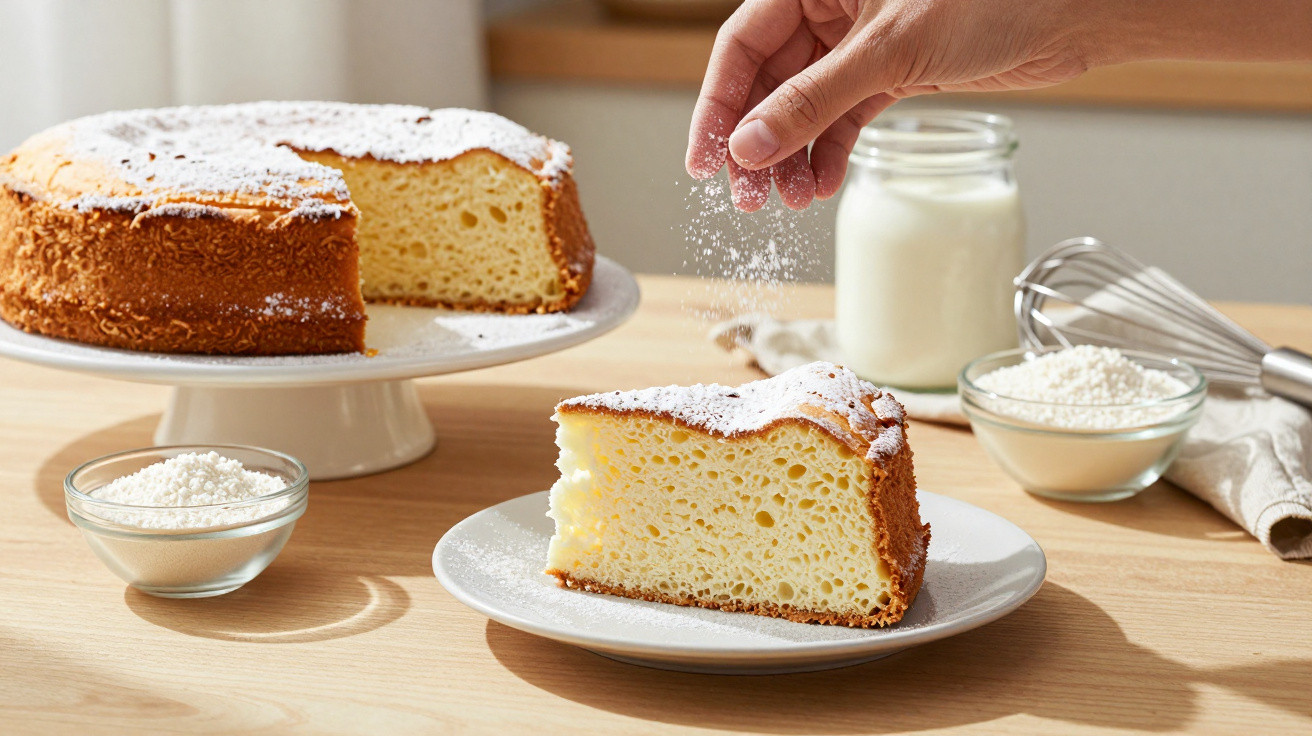
Do you feel as though you do everything properly, yet your yoghurt cake sometimes comes out a little dry or dense? Rest assured, you are not the issue. Your batter simply needs one very easy extra ingredient, the one that will make your cake truly ultra-moist, as light as a little cloud.
Why your yoghurt cake is not always properly moist
You follow the recipe, use the right quantities and choose the correct tin. Yet the texture still falls short. The cake is fine, but not melt-in-the-mouth. Does that sound familiar?
The reason is often the wheat flour. It contains gluten, which develops when the mixture is stirred for too long. The batter becomes firmer; the cake rises, but its crumb tightens. This produces a denser texture that can sometimes be slightly chewy.
Combine this with an oven that is too hot or yoghurt that is too low in fat, and the centre will dry out more quickly. It is even worse the following day. The cake may look lovely and well risen, yet seem to have “aged” overnight. Fortunately, one small adjustment to the batter can make all the difference.
The simple ingredient that makes yoghurt cake ultra-moist
You probably already have this miracle ingredient in your cupboard: cornflour, also known as Maizena. It is fine, light and, above all, gluten-free.
By swapping some of the flour for cornflour, you create a softer crumb. The flavour remains that of a traditional yoghurt cake, the one you remember from childhood. Its texture, however, changes completely: lighter, more tender and almost velvety on the palate.
Best of all, there is no complicated technique involved. Keep using your usual recipe and simply replace some of the flour with cornflour. It is a small change in the mixing bowl with a big result on the plate.
Ultra-moist cornflour yoghurt cake recipe
Here is a very straightforward version serving 4 to 6 people. As with classic recipes, everything is measured using the yoghurt pot, with one small addition that changes everything.
Ingredients (4 to 6 people)
- 1 125 g pot of full-fat natural yoghurt
- 3 medium eggs
- 100 ml neutral oil (sunflower or rapeseed), approximately 1 full yoghurt pot
- 220 g sugar, approximately 2 level yoghurt pots
- 160 g cornflour (Maizena), approximately 2 level yoghurt pots
- 160 g wheat flour, approximately 2 level yoghurt pots
- 11 g baking powder (1 sachet)
- Zest of 1 unwaxed lemon (optional)
- 2 apples (approximately 250 g), peeled and cut into small cubes (optional, for an even more melt-in-the-mouth result)
Method
- Preheat the oven to 180 °C on a conventional setting.
- Spoon the yoghurt into a large mixing bowl. Wash and dry the pot, as it will be used for measuring.
- Add the sugar and oil, then whisk until the mixture is completely smooth.
- Stir in the eggs one at a time. Mix without whisking too vigorously, so that you do not overwork the batter.
- Add the cornflour and mix only until incorporated.
- Next, add the flour and baking powder. Fold together gently until the batter is even, but no further.
- If using them, add the lemon zest and diced apples. Stir briefly to distribute them evenly.
- Pour the batter into a 22 cm diameter tin, well buttered and floured or lined with baking paper.
- Bake for 30 to 35 minutes. A knife inserted into the centre should come out clean, or with a few crumbs attached, but no raw batter.
- Leave the cake in its tin for 10 minutes, then turn it out onto a wire rack. This lets the steam escape and keeps the crust light.
You will have an ultra-moist yoghurt cake that is airy and melts in the mouth. It is ideal for an afternoon treat, breakfast or alongside coffee.
How to adapt your own recipe with cornflour
Already have a favourite recipe that you do not want to change? You can certainly keep it. Only one detail needs adjusting: the flour-to-cornflour ratio.
A simple rule to remember: replace 30 to 50% of the flour with cornflour.
- If your recipe uses 300 g of flour, use 150 g flour + 150 g cornflour.
- If it uses 200 g of flour, use 120 g flour + 80 g cornflour.
Flour provides structure and helps the cake hold its shape, while cornflour delivers lightness and moisture. Not sure where to begin? Start by replacing one third of the flour, taste the result, then adapt it to the texture you prefer.
6 tips for moisture that lasts until the next day
Cornflour already does much of the work, but a few additional steps can transform your cake completely.
- Choose full-fat yoghurt, or even Greek yoghurt. The fat protects the crumb and helps it stay moist.
- Do not overmix the batter once the flour and cornflour have been added. The less you mix, the less gluten develops.
- Bake at a moderate temperature, between 170 and 180 °C. If the oven is too hot, the outside burns while the inside dries out.
- Watch the end of the baking time. Stop as soon as the knife comes out clean. An extra five minutes can be enough to make the cake dry.
- Turn it out and cool it on a wire rack. In the hot tin, trapped steam softens the crust and dries the inside.
- Wrap it well once cold, in cling film or an airtight container. It will remain tender for longer.
Gluten-free version and delicious flavour ideas
Need to avoid gluten, or baking for someone with an intolerance? Cornflour then becomes your best ally. It makes it possible to retain a moist texture without wheat flour.
- Replace all the flour with 320 g cornflour, or with a blend of starches (corn, potato and tapioca).
- Use gluten-free baking powder.
- If the batter seems too crumbly, add 1 to 2 tablespoons of psyllium husk powder or a little xanthan gum to bind it more effectively.
For flavourings, you can create endless variations without losing that moisture.
- Add 150 g diced fresh fruit (apple, pear, apricot or raspberry) to the batter.
- Add 100 g chocolate chips or praline pieces.
- Use the zest of a lemon or orange for a citrus version.
- Add 1 teaspoon vanilla extract or 2 tablespoons honey, replacing some of the sugar.
With the same yoghurt-and-cornflour base, you can make a real collection of moist cakes, each one different, without any stress.
Mistakes to avoid so you do not lose all that moisture
A few simple pitfalls can undo all your efforts. Knowing them is already the first step towards avoiding them.
- Replacing all the flour with cornflour without adjusting the baking powder or texture. The cake may collapse or crumble.
- Using a tin that is too small, making the layer of batter too deep. The middle will bake poorly and remain dense.
- Opening the oven door too early. The sudden temperature change can cause the cake to sink.
- Slicing the cake while it is still piping hot. It will squash, crumble and lose its moisture.
Let it rest for 15 to 20 minutes before cutting it. This brief pause also gives the flavours time to develop more fully.
In short: one small change for a big difference
For yoghurt cakes that come out of the oven ultra-moist, there is no need to reinvent everything. Simply replace some of the flour with cornflour, bake at the right temperature, then allow the cake to breathe before slicing it.
The aroma remains that of a childhood afternoon treat, but the bite is entirely different: a lighter, more melt-in-the-mouth crumb that makes you want another slice. Try it once, and there is every chance you will no longer want to return to the 100% flour version.

















Comments
No comments yet. Be the first to comment!
Leave a Comment