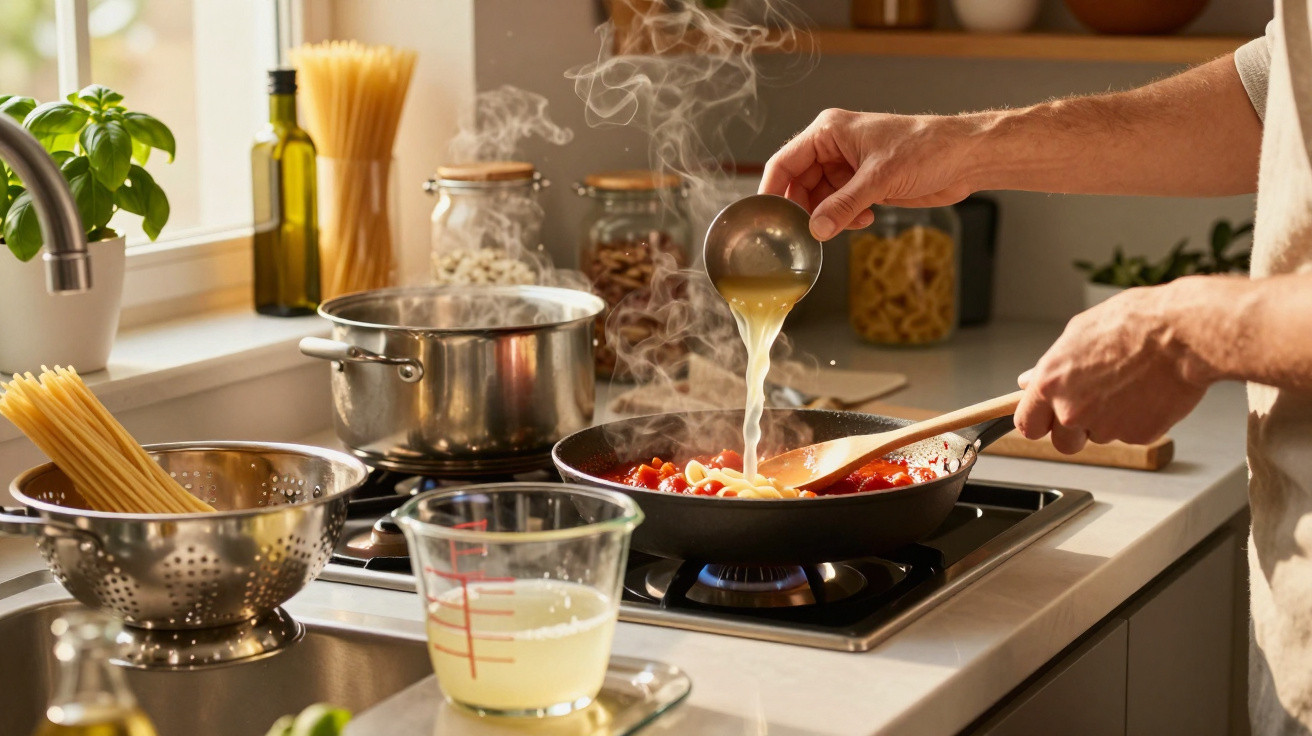
There is a small thing we do almost automatically: the pasta is cooked, the colander is waiting in the sink, and the cloudy water vanishes in a cloud of steam. Dinner is moving along, the children are asking for their plates, the sauce looks slightly too thick... and nobody gives that pan another thought. Yet this murky water, which seems useless, can transform a sauce, rescue a sticky pan and even make certain dishes far more generous. Next time, save a ladleful.
This cloudy water has real power in the kitchen
We have all seen a good tomato sauce suddenly thicken at the bottom of the pan. Cold water is then added, rather randomly, and the result often loses flavour. Pasta cooking water, on the other hand, contains starch released during cooking, which gives it that slightly milky, unremarkable appearance. In a sauce, this starch discreetly binds together fat, cheese, tomato juices and spices. The result is smoother, glossier and less likely to split. It is not some inaccessible chef’s trick: it is simply a habit worth adopting.
In Italy, many cooks never serve pasta that has been drained and then covered with sauce. Instead, it completes its cooking directly in the frying pan with a few spoonfuls of its cooking water. For a family-sized serving, reserving around 25 to 30 centilitres is often enough to loosen an overly thick sauce. A carbonara then becomes creamy without a drop of cream, while a jarred pesto immediately feels less heavy. It may seem like an insignificant detail, but it is noticeable from the first mouthful. It can even prevent you from throwing away a sauce that appeared to have gone wrong.
The reason is straightforward: starch slightly thickens the liquid while helping oil or butter combine with water. This is called an emulsion, a somewhat technical word for something very practical: the sauce coats the pasta more effectively instead of sliding to the bottom of the plate. Take care with salt, however, as the cooking water is often already seasoned. If you salted the pan generously, add the water little by little and taste before adjusting the seasoning. Add one ladle, stir, then assess it. This is nearly always more effective than pouring in a large glassful too quickly.
How to save and use it without making things complicated
The easiest approach is to take out a cupful of water two minutes before draining the pasta. Place it beside the hob, within easy reach, before you even take out the colander: this simple routine prevents you from forgetting. For a tomato sauce, add two or three tablespoons when the pasta goes into the frying pan. Toss it over a medium heat for one minute, then adjust if needed. When using Parmesan, pecorino or butter, turn the heat down slightly so that the cheese stays silky rather than forming little lumps.
This water is not only useful for Italian recipes. A small amount can loosen an overly thick vegetable soup, extend the cooking juices from mushrooms or add binding power to a pan of courgettes. Some people even use it to soak a pan where cheese has stuck, thanks to its warmth and starch content. Let us be honest: hardly anyone does that every day. But on evenings when you are cooking quickly with whatever is left in the fridge, that bowl of reserved water becomes surprisingly useful. It requires no equipment, no expense and no perfect planning.
A common mistake is to keep this water on the worktop for several days or use it in any recipe at all. It is salty, sometimes very starchy, and its flavour may overpower a delicate dish such as a compote or a very light sauce. Keep it for the meal you are making, or refrigerate it for a few hours in a clean container if you have a specific use in mind. One kitchen rule comes up often:
“Pasta water does not replace every liquid; above all, it gives body to dishes that lack it.”
- Take it out before draining the pasta.
- Add it gradually, never all at once.
- Taste before adding more salt.
- Use it mainly for sauces, pan-fried dishes and creamy meals.
A small habit that also changes how we view waste
Saving pasta cooking water will not revolutionise a kitchen on its own, and nobody claims otherwise. Still, this gesture says something very relevant today: before throwing something away, it is worth asking whether what looks like waste might still have a use. Starchy water is not spectacular. In fact, it is rather modest. But it lets you make more of ingredients you have already bought, reduces unnecessary additions and encourages more thoughtful cooking. A good sauce is not necessarily the one that requires the most products.
There is also a simple pleasure in understanding why a dish works. When pasta turns glossy in the frying pan and the sauce finally coats it, it feels as though you have learnt a family secret. There is no need to aim for perfection: the first attempt may be too salty, while another may be slightly too runny. That is perfectly normal. Everyday cooking is often built this way, between an overflowing pan, an improvised recipe and a discovery you keep for the rest of your life.
Your next plate of spaghetti can therefore become a small experiment. Take out a ladleful, add it to the sauce and watch the texture change: the action takes seconds and can sometimes alter the whole feel of the meal. Cooking water is a reminder that smarter cooking does not always depend on expensive gadgets or rare ingredients. It often starts with details we had stopped noticing. And what if that pan of cloudy water were, after all, one of the most overlooked ingredients in your cupboard?
| Key point | Detail | Added value for the reader |
|---|---|---|
| Natural starch | Cooking water contains starch released by the pasta. | Sauces that are more cohesive, glossy and silky. |
| Use it immediately | Reserve a cupful before tipping the pasta into the colander. | A simple habit that avoids adding flavourless cold water. |
| Careful amounts | Add the water gradually, as it is often salty. | Better-controlled texture and more accurate seasoning. |

















Comments
No comments yet. Be the first to comment!
Leave a Comment