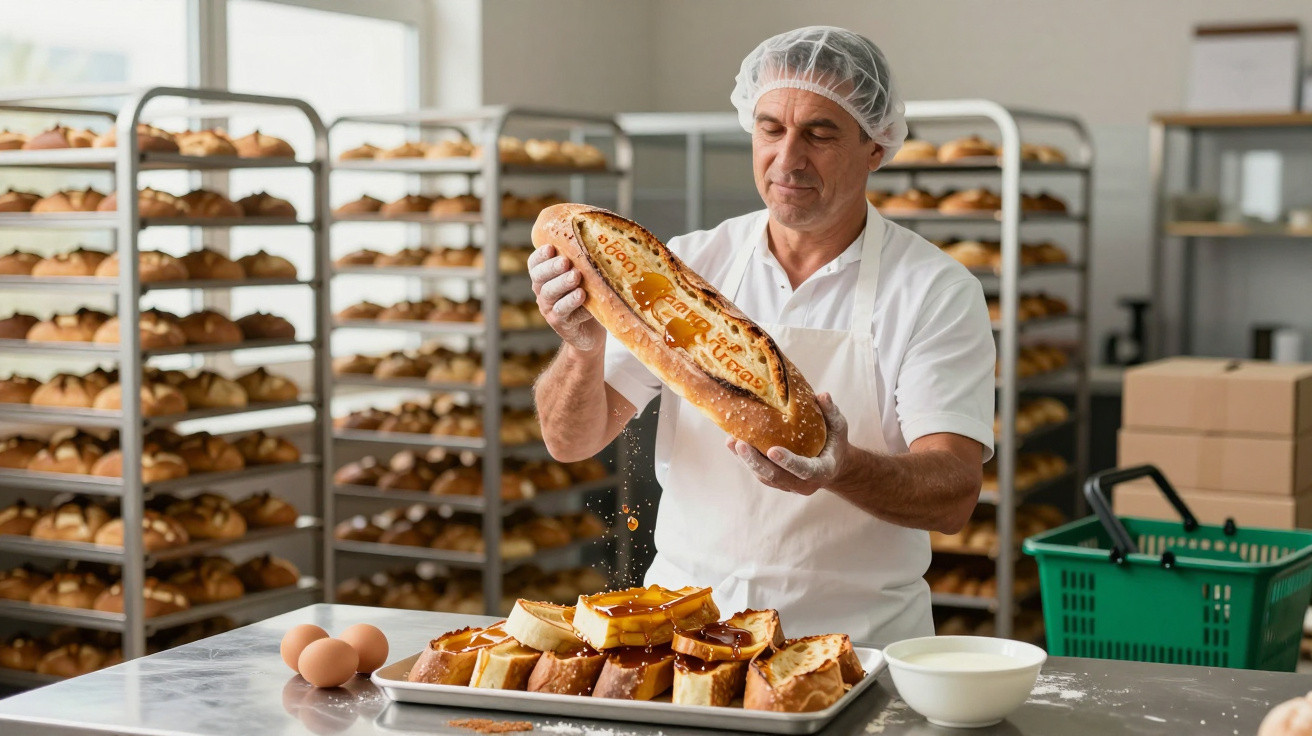
Spain is devoted to torrijas: sweet slices of bread soaked in milk and fried, which reach peak popularity every year around Easter. Major supermarket chains play a central role, as many families now buy ready-made specialist loaves rather than visiting their local baker. One of these bestsellers is produced by a company whose premises appear rather unremarkable, yet it makes millions of bread slices for one of Spain’s largest supermarket chains.
Why bread determines whether torrijas succeed or fail
Anyone making torrijas at home soon realises that milk, sugar and eggs can easily be swapped or adjusted - but the bread cannot. It has to withstand considerable handling without breaking apart.
- It must absorb milk effectively without crumbling.
- It needs a firm crumb that remains intact during frying.
- The centre should become creamy and moist, while the outside is lightly crisp.
Spanish home cooks are ideally advised to choose a slightly stale, substantial bread with a close crumb. This is exactly where supermarkets step in, selling ready-made breads developed specifically for soaking in milk and then frying.
“Perfect torrijas need a robust bread: resilient yet soft inside - a balancing act that not every bakery product can achieve.”
Mercadona and its dedicated torrija bread
For several years, the supermarket chain Mercadona has sold a loaf made expressly for torrijas. It appears on shelves only seasonally, generally for a few weeks before Easter, in elongated slices within a 500 g pack.
The bread is already flavoured, traditionally with lemon and cinnamon - the very notes many Spaniards expect from torrijas. At roughly €1.13 for half a kilogram, it sits at the lower end of the specialist-bread price range.
The unassuming Alcalá de Henares factory
This bread is not made in supermarket in-store bakeries, but by a specialist producer near Madrid: Panificadora Alcalá. The business is based in Alcalá de Henares, a city better known for its historic centre and university than for industrial baking.
Its history goes back to the 1950s. At first, the company mainly supplied the Madrid region and neighbouring areas including Castilla-La Mancha and Castilla y León. Its expansion across the rest of Spain did not begin until around the turn of the millennium.
From local baker to major supplier
Panificadora Alcalá has been a regular Mercadona supplier since 2006. The factory produces several types of bread and snack products for the Hacendado own brand, including:
- Specialist seeded breads, including a sliced version containing five different seeds
- Standard sliced baguette-style loaves for everyday use
- Rustic loaves containing wholemeal flour and blends of oats, sunflower seeds and sesame
- Breadcrumbs in a range of varieties
- Crisp croutons for salads and soups
Mercadona’s torrija bread forms part of this range, although it is available only for a limited period each year. This seasonality creates an enormous production peak for the bakery: large volumes must be delivered within a few weeks so that shelves can be stocked fully and on time nationwide.
What Mercadona’s torrija bread actually contains
The specialist loaf is conventionally based on wheat flour and water, but it is deliberately enriched to improve texture, shelf life and flavour. Its ingredients include:
- Wheat flour as the principal ingredient
- Water
- Sunflower oil
- Sugar and salt
- Inactive rye sourdough culture
- Yeast
- Chicory fibre
- Wheat gluten to reinforce the crumb
- Lemon paste and cinnamon for its characteristic flavour
- Preservative E-282 (calcium propionate) to extend shelf life
The added gluten gives the loaf greater structure, which is essential when it is soaked in milk. Without this reinforcement, slices would be more likely to tear or fall apart when turned in the pan. The preservative keeps the product fresh for longer - something traditional artisan bakers often view more critically, but which is close to standard practice for packaged supermarket products.
OCU test: how does the torrija bread compare?
In 2025, the Spanish consumer organisation OCU examined ten different supermarket torrija breads. Its aim was to provide guidance on which products perform well in the pan, as well as how they compare on ingredients and price.
The assessment focused on three key qualities that this kind of bread needs to deliver:
- Stability while soaking in milk
- Stability when turned and fried
- Texture and flavour after frying
Every bread tested used comparatively strong flour and a finer, more even crumb structure to meet these requirements. The testers fried the torrijas in the traditional way before judging their appearance, consistency and flavour.
Positive verdict for Hacendado bread
Mercadona’s torrija bread performed notably well. OCU particularly highlighted:
- A well-balanced recipe without artificial flavourings
- Natural ingredients, including lemon peel and cinnamon, that are typical of the dessert
- Clear step-by-step instructions on the packaging
- Very appealing value for money
“In practical testing, the torrija made with Hacendado bread retained its shape, stayed moist and impressed with its balanced lemon-and-cinnamon flavour.”
There were criticisms, however. The testers noted the use of several preservatives and antioxidants. While these were not considered especially problematic at the levels found, they illustrate a familiar trade-off: maximum shelf life versus an ingredient list that is as “clean” as possible.
Carrefour as a premium-segment competitor
Alongside Mercadona, Carrefour’s torrija bread also received an OCU recommendation. It performed slightly better still in the cooking and taste tests. However, its price is considerably higher: around €1.99 for 350 g, which is almost twice the price per kilogram of Mercadona’s version.
Carrefour relies somewhat more heavily on flavourings, including citrus flavourings, and also adds additives. Its ingredient list is therefore not ideal for particularly discerning consumers, although many shoppers are chiefly guided by flavour and reliable results.
What readers in Germany can take from Spain’s torrija trend
Across German-speaking countries, many people also use packaged toast or brioche to make French toast or similar sweet dishes. Spain offers an insight into how strongly supermarkets now shape recipes: instead of plain bread, they sell products tailored directly to a particular dish with flavourings, sugar and additives.
For home bakers who regularly make sweet dishes from stale bread, these principles are worth considering:
- A close crumb with smaller air pockets provides stability.
- Slightly stale or lightly dried bread absorbs liquid more effectively.
- Lemon zest, vanilla or cinnamon can be infused directly into the milk instead of being baked into the bread.
- Anyone wishing to avoid additives can choose organic loaves from a bakery and add sugar and spices themselves.
Why industrial bread remains appealing for festive classics
The success of Mercadona’s torrija bread demonstrates the strength of convenience: it is inexpensive, widely available and produces consistent results. Many households prefer not to risk their chosen bread disintegrating during soaking, so they opt for a product designed for precisely that task.
For manufacturers, this creates profitable niches in the form of seasonal specialist breads that achieve high sales volumes in a short period. At the same time, it increases the responsibility to communicate openly about which additives are used and why. Those who value traditional production are therefore inevitably drawn back to their local baker - in Spain as well.
It remains interesting to see how the trend develops. German retail chains could conceivably place greater emphasis on “recipe-ready” breads, for example for French toast, bread-and-butter pudding or baked bread dishes. Spain’s torrija specialisation already provides a blueprint for this.

















Comments
No comments yet. Be the first to comment!
Leave a Comment