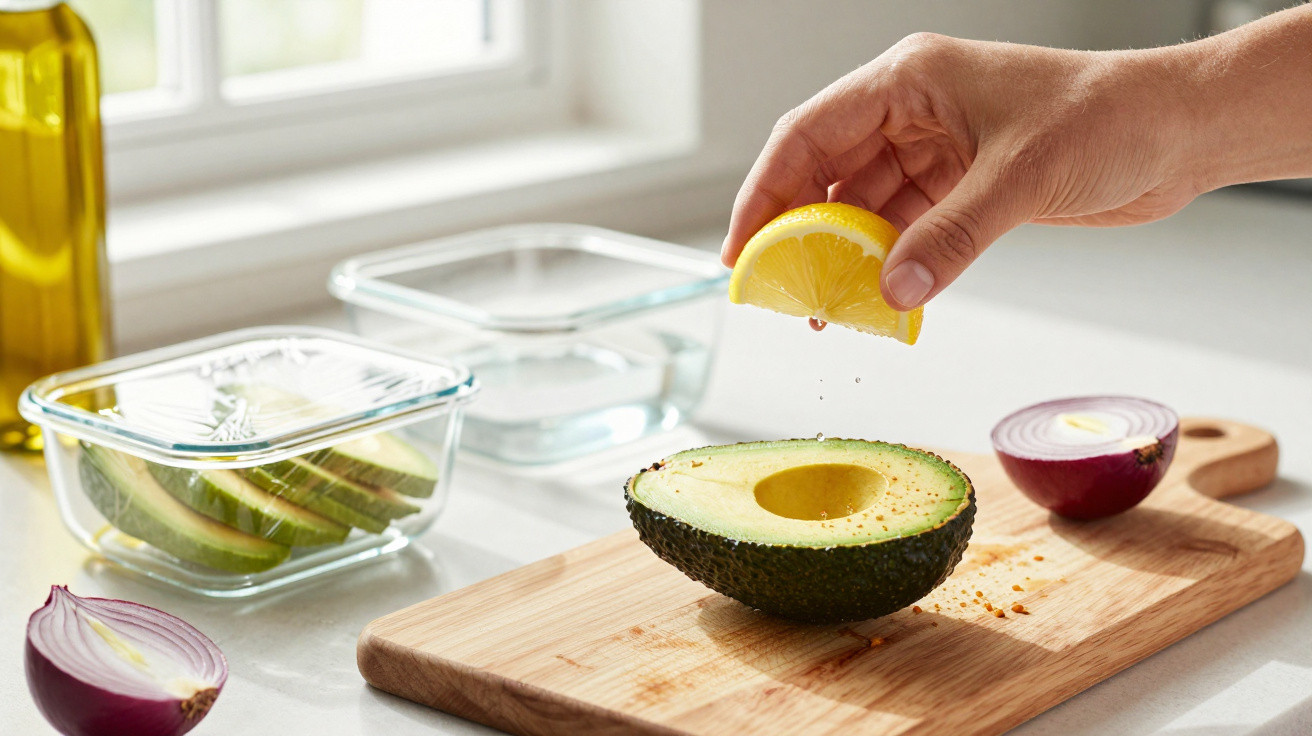
The situation is familiar: a perfectly ripe avocado, sliced for toast or an impromptu guacamole, is then left on the worktop for twenty minutes. When you return, the green flesh has turned brownish, making it seem ready for the bin. You hesitate, scrape away a little, sigh, and vow never again to buy avocados ‘just in case’. Yet this browning is neither mysterious nor inevitable. A few straightforward steps, usually possible in any ordinary kitchen, can keep a cut avocado far more appetising. Sometimes, that genuinely transforms lunch.
Why a cut avocado browns so quickly
As soon as avocado flesh is exposed to air, it begins to change. The soft, almost bright green colour of a perfectly ripe fruit gradually becomes khaki and then brown, particularly around the cut surface. We all know the moment: you put one half on a plate, telling yourself you will eat it ‘in an hour’, only to find it looking unrecognisable later.
This process has a name: oxidation. Enzymes naturally found in avocado react with oxygen, causing the darker colouring, much like a sliced apple turning brown on the table. The flavour is not necessarily affected immediately: after one or two hours, you can often remove a thin dark layer and still find pleasant flesh beneath.
Even so, colour is a powerful visual cue, especially when you are cooking for guests or taking lunch to the office. We eat with our eyes too, even on days when we have only ten minutes to spare. The aim, then, is not to make an avocado last forever, but to reduce its exposure to air and slow this natural process.
The most effective methods in an ordinary kitchen
The most dependable approach is to form a barrier between the flesh and the air. Keep the stone in place if you are using only one half, not because it has magical powers, but because it physically covers the small area beneath it. Then press cling film directly onto the exposed flesh, gently smoothing out air bubbles with the palm of your hand.
A squeeze of lemon or lime juice works particularly well for avocado intended for a salad, toast or sauce. Its acidity slows oxidation while adding a fresh note that naturally complements the fruit. Let us be honest: nobody squeezes a lemon with laboratory precision every day, but even a few drops make a real difference.
The fridge supports this step rather than replacing it. A lemon-coated avocado half, wrapped directly against the flesh and stored in an airtight container, can remain presentable until the following day, although it will lose some freshness as the hours pass.
“The right habit is not to look for a spectacular trick: it is to reduce the air around the flesh from the very first minutes.”
- Cling film directly on the flesh: the most consistent method for half an avocado.
- Lemon or lime: useful for slowing browning and enhancing flavour.
- An airtight container in the fridge: additional protection, especially overnight.
- Olive oil: a thin coating may help, but it changes the flavour more noticeably.
A common mistake is to place the avocado half in a bowl, stone facing up, then loosely stretch a piece of cling film over the top. Air can still circulate around the flesh. Another seemingly clever idea is to submerge it in water: this may preserve the colour for a while, but the texture can become watery and hygiene requires genuine care.
What works less well, and what to check before eating avocado
Despite its enduring reputation, the stone alone protects only a very small part of the avocado. It does not stop the remaining surface from browning, especially if the fruit is left uncovered on a plate. The trick of placing chopped onion in an airtight container is also widely shared: its sulphur compounds may have a limited effect, but the avocado may take on an unpleasant smell as well.
There is no need to panic if the avocado has browned slightly. Carefully remove the brown film with a spoon or the blade of a knife, then inspect what remains: green, firm flesh with a mild smell can still be eaten without concern. A fermented odour, slimy areas or very dark marks extending into the flesh, however, are signs not to persist.
The best tip often starts before you even cut it: buy an avocado at the right stage of ripeness and open it only when you know how you will use it. A very soft avocado will oxidise quickly and will not keep as well overnight in the fridge. Making toast, a salad or a small portion of guacamole from ingredients you already have also avoids leaving one lonely half in the refrigerator.
There is still an element of common sense that viral recipes sometimes overlook. A cut avocado is not something to store for several days in the hope that lemon juice or cling film will solve everything. It is better to aim for twenty-four hours, enjoy its creamy texture at the right time, and accept that slight browning does not automatically turn food into waste.
| Key point | Detail | Benefit for the reader |
|---|---|---|
| Limit air exposure | Press cling film directly onto the cut flesh. | Noticeably reduces visible browning. |
| Add acidity | Drizzle over a few drops of lemon or lime. | Preserves colour and enhances savoury dishes. |
| Store briefly | Put the protected avocado in an airtight container in the fridge. | Helps maintain a pleasant texture until the next day. |

















Comments
No comments yet. Be the first to comment!
Leave a Comment