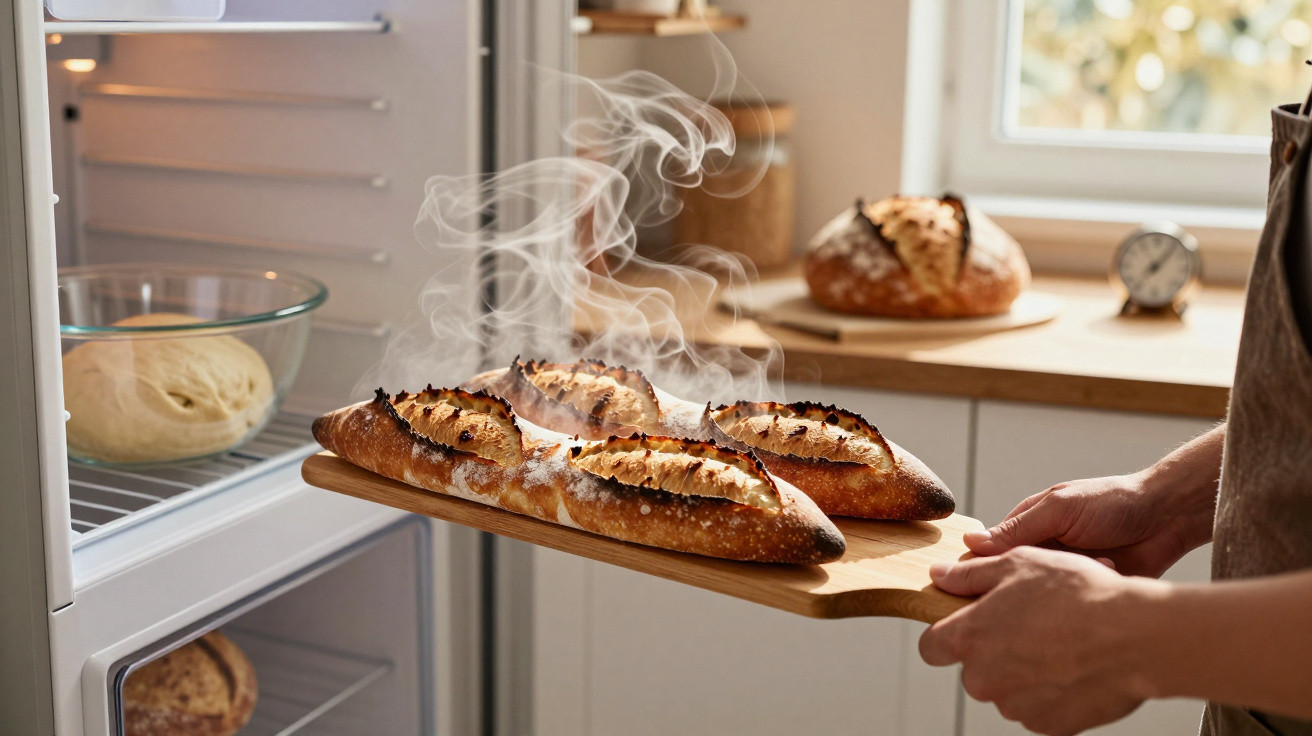
Making an authentic French baguette at home calls for patience and the right techniques to achieve the best result. Understanding the true value of a long resting period turns simple ingredients into a highly flavourful experience in your own kitchen.
How does slow fermentation transform bread flavour?
Low-temperature fermentation profoundly changes the chemical properties of artisan dough. This extended rest lets the components interact in balance, creating complex aromas that cannot be achieved through quicker, more traditional production methods.
While the dough rests in the fridge, yeast activity slows considerably without stopping the production of important acids. This controlled process produces an exceptionally rich finished loaf, delivering the distinctive identity that has made the cuisine of France renowned across the world.
The main factors influencing this culinary process are:
- Ingredients: A precise combination of flour, water, salt, semolina and yeast.
- Gluten: Development of the structural network through mixing at a low speed.
- Fridge: An extended rest under controlled refrigeration for many consecutive hours.
- Crumb: Creation of a perfectly airy, light internal structure.
- Crust: Development of an exceptionally crisp exterior texture through steam.
What are the stages of the cold-method preparation?
Begin by mixing the ingredients at a low speed for fifteen minutes before the first rise. Once it has doubled in size at room temperature, deflate and shape the dough, then start its overnight rest in the fridge for several hours.
The following day, return the chilled dough to the worktop and allow it to reach the right temperature for sixty minutes before dividing it. This period is essential for handling the portions properly and makes final shaping easier without damaging the internal structure of the food to be baked.
Watch the detailed step-by-step guide on Bruno Albouze’s YouTube channel:
How should baguette dough be shaped and structured?
Divide the dough accurately into equal pieces, then pre-shape them into rectangles on a floured surface. Covering the portions with a damp cloth allows an essential forty-five-minute rest, stabilising the texture for the final stretching stages.
Shaping technique
Fold like a business letter
Folding the dough and pressing it gently with the palm of your hand helps strengthen it. This method ensures the shape remains firm and even.
Next, roll each loaf with both hands, working from the centre towards the ends, until it reaches the required length.
Once each loaf reaches the ideal length of sixteen inches, place it with the seam facing down. The final proof takes around one hour beneath the protective cloth, allowing the volume to increase before it goes into the fully heated oven.
Follow these handling recommendations at this stage:
- Avoid forcefully deflating the dough while dividing it.
- Maintain the right humidity by covering the bread with clean, damp cloths.
- Allow the correct resting time to make hand-stretching the loaves easier.
What is the secret to a perfectly crisp crust?
The final stage before baking requires precise lengthways cuts across the top of the risen dough. These slashes guide the bread’s expansion in the heat, creating its distinctive appearance while allowing heat to penetrate evenly and efficiently.
Adding ice cubes to a hot baking tray creates the steam needed to delay premature drying of the loaf’s surface. This initial moisture helps form a superb golden crust while keeping the interior airy, with an incredibly delicious and irresistible flavour.
The main benefits of introducing steam into the oven include:
- It delays early drying of the dough’s outer surface.
- It allows the bread to expand fully before the crust forms.
- It provides a glossy finish and an intensely crisp texture.
How can you organise the timing for freshly baked bread?
The greatest benefit of this method is the complete flexibility it offers for a busy home routine. Letting the dough rest under controlled refrigeration means you can plan exactly when to bake, ensuring fresh food without spending the entire day on production.
Taking the dough from the fridge before baking makes the process especially practical. This technique is ideal for anyone who wants to enjoy classic recipes, as well as make a quick three-ingredient bread without any fuss and with an excellent homemade result.

















Comments
No comments yet. Be the first to comment!
Leave a Comment