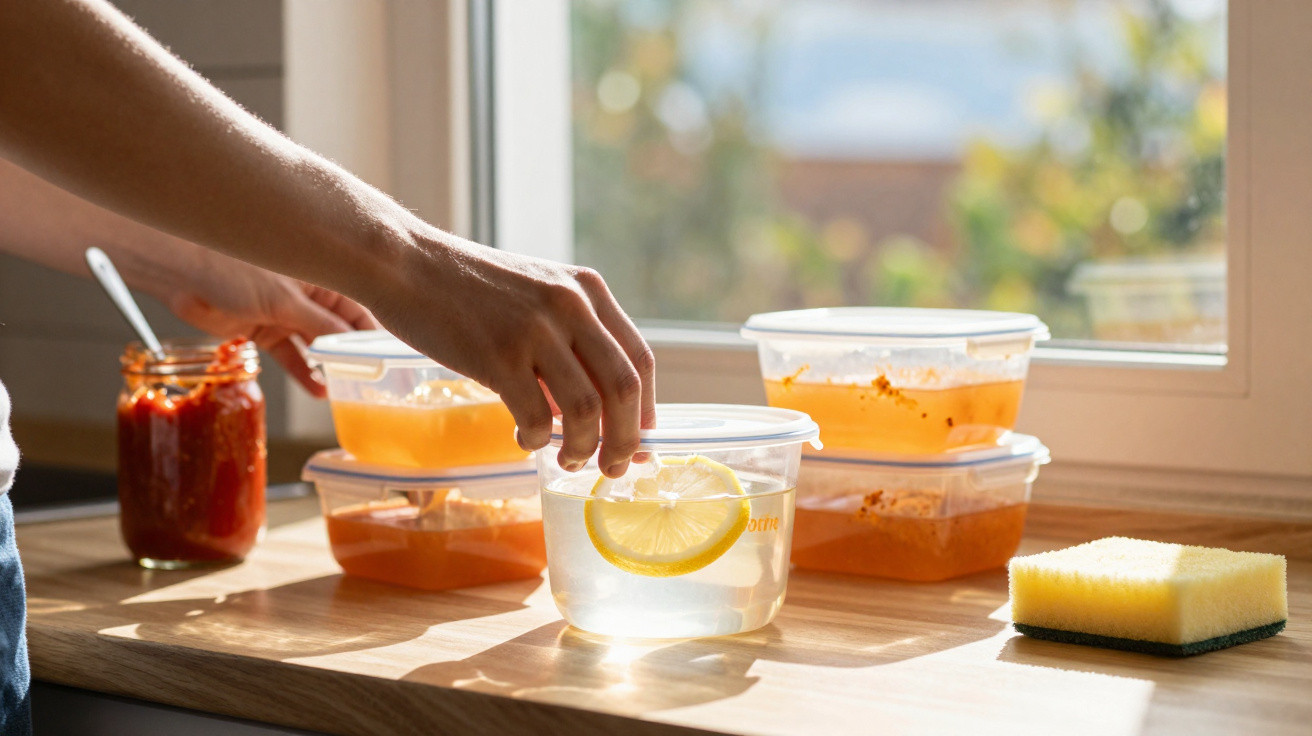
Sometimes, all it takes is leftover spaghetti Bolognese to turn an immaculate plastic container into a vaguely orange object, almost shamefully hidden at the back of the cupboard. We all know the feeling: you open the dishwasher hoping to find your clear container, only to discover a salmon tint that appears to be there for good. Even after several washes, tomato sauce leaves its mark. Yet this is neither inevitable nor a reason to throw away containers that are still perfectly sound. One straightforward, often overlooked method can make a real difference - and it requires no miracle product.
Why tomato sauce clings so firmly to plastic
The same scenario plays out in many kitchens: a portion of chilli, a bake or lasagne goes into the fridge in a lightweight, practical, tightly sealed container. A few hours later, the meal has gone, but the orange colouring remains, embedded in the sides and especially around the corners. This discolouration does not necessarily mean the container is dirty; rather, it shows how plastic can retain certain pigments.
The culprit has a slightly scientific name: lycopene, the naturally red pigment found in tomatoes. It is particularly attracted to fats, which is why a slow-cooked sauce containing oil, cheese or meat stains more than a simple tomato purée. A study published in Food Chemistry also notes that lycopene is highly soluble in fats. In a warm container, the mixture has ideal conditions.
Plastic - particularly when it is old or lightly scratched - has tiny imperfections that cannot be seen with the naked eye. Pigments and fats can seep into them more readily, especially when food is reheated directly in the microwave. Let us be honest: hardly anyone cleans a container immediately after swallowing the last mouthful every day. Yet that short delay gives the red colouring time to settle in.
The sunlight trick that brightens stained plastic containers
The most effective trick comes down to a surprisingly simple routine: wash the container with warm water, washing-up liquid and a pinch of bicarbonate of soda, then leave it to dry in direct sunlight. Natural light helps break down the pigments responsible for the staining, while the bicarbonate of soda and detergent lift the greasy film. There is no need to scrub as though stripping a wall; a soft sponge is more than enough.
For a heavily stained container, make a loose paste with one tablespoon of bicarbonate of soda and just enough water to moisten it. Spread it over the orange areas, leave it for 30 minutes, rinse thoroughly, then place the open container outside with the stained side facing the light. A patio, windowsill or balcony will do. After two or three hours in the sun, the improvement is often noticeable.
Many people reach for bleach or an abrasive sponge out of frustration. It is understandable: watching the mark reappear after every wash is genuinely irritating. However, these options can weaken the material, leave a lingering smell or create tiny scratches that allow future stains to cling even more quickly.
“The sun works as a discreet ally: it does not replace washing, but it helps fade pigments that water alone cannot remove.”
- Clean the container promptly once it has been emptied.
- Add a small amount of bicarbonate of soda if a stain appears.
- Leave the container open to dry in daylight for a few hours.
- Avoid metal scouring pads and chlorine-based products.
The right habit to stop orange stains returning
The best stained container is the one you never have to rescue. Before pouring very hot tomato sauce into it, wait a few minutes, or use a glass container if you know the dish will be reheated in the microwave. A light coating of neutral oil can also reduce how strongly pigments stick, although this is by no means essential. A practical kitchen should still be a liveable kitchen.
Ultimately, these stains reflect everyday life: improvised meals, portions saved for the next day, and lunch prepared between appointments. Rather than replacing a container that is still useful too quickly, giving it a little sunlight becomes an almost satisfying habit. The next time an orange mark appears, simply check the weather before browsing the supermarket shelves.
| Key point | Detail | Benefit for the reader |
|---|---|---|
| Source of the stain | Lycopene in tomatoes clings to plastic, particularly when fat and heat are involved. | Understand why standard washing does not always work. |
| Effective method | Bicarbonate of soda, washing-up liquid and sunlight after rinsing. | Restore a clearer container without harsh products. |
| Prevention | Avoid heating red sauces for long periods in scratched or old plastic. | Reduce staining and extend the lifespan of containers. |

















Comments
No comments yet. Be the first to comment!
Leave a Comment