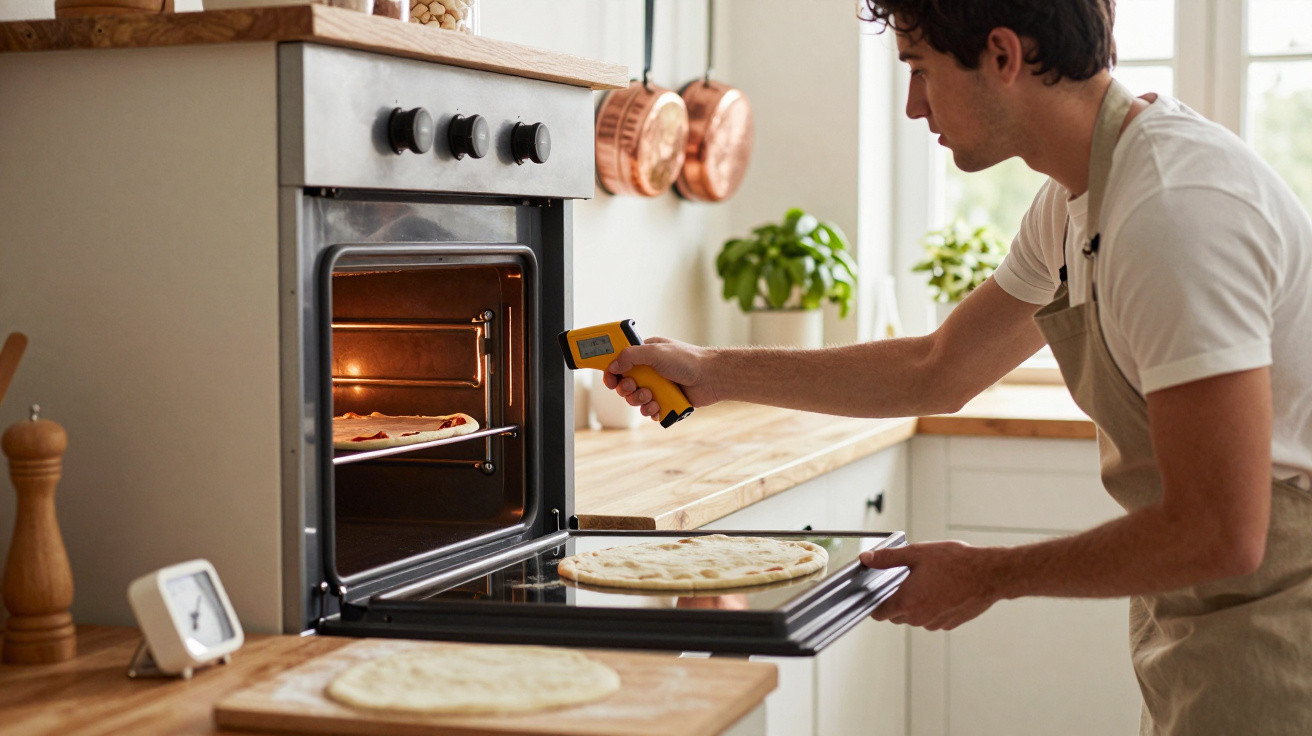
Last Tuesday evening, I watched my neighbour Sarah put yet another disappointing homemade pizza into the oven. The dough appeared flawless and the toppings had been carefully arranged, yet I could already predict the result. Half an hour later, she took out an average pizza with a soggy base and patchily melted cheese, before shrugging: “homemade pizza just never turns out like the restaurants.” We have all experienced it: standing in the kitchen and wondering why our pizza ambitions repeatedly fall short. The reality is that most of us ruin our pizzas before they ever enter the oven. It is not your dough recipe or topping selection that is at fault-it is the way you preheat the oven.
The Silent Pizza Killers Hiding in Plain Sight
Visit almost any home kitchen on pizza night and you will see an identical routine. Someone turns the oven up to 230°C, waits for the indicator light to go out, and immediately puts the pizza in. It sounds perfectly reasonable: if the oven says it is ready, surely it is ready.
Yet this is what occurs during that so-called preheating period: the heating elements pump out hot air until the internal thermometer reaches the selected temperature, then switch off. Meanwhile, the oven walls, shelves and, crucially, the pizza stone or baking tray remain cold. Putting pizza on a merely warm surface is like attempting to sear a steak in a pan that has barely heated up-you may cook it, but you will not create anything special.
In truth, thermal mass is rarely on anyone’s mind when they are hungry for pizza. The oven feels hot as soon as you open it, and the steam mists up your glasses, so it seems logical that everything is fully heated. That belief deprives us of crisp crusts time after time. Professional pizza ovens operate at roughly 425–480°C, with their cooking surfaces staying intensely hot between pizzas.
The Pizza Preheat Method That Actually Works
Proper pizza preheating begins 45–60 minutes before you intend to bake. Set the oven to its highest temperature-typically 260–290°C in a domestic oven. If you own a pizza stone or steel, position it on the lowest shelf before turning the oven on. The longer preheat gives every surface in the oven time to reach, and remain at, its maximum temperature.
I understand why a full hour of preheating can seem excessive when you are hungry and the children ask “when will it be ready?” every five minutes. Many people stop at 15 minutes because the wait appears wasteful. However, restaurants do not continually switch their pizza ovens on and off during service-they maintain constant heat because thermal stability creates better food.
“The difference between a 15-minute preheat and a 45-minute preheat is the difference between baking a pizza and creating one,” says Tony Gemignani, multiple-time World Pizza Champion.
Use this pizza preheat checklist:
- Set the oven to its maximum temperature with the pizza stone inside.
- Wait 45–60 minutes rather than relying solely on the preheat light going out.
- If available, use an infrared thermometer to check the surface temperature.
- Leave the oven door shut for the entire preheat period.
When Pizza Night Becomes Actually Worth the Effort
The change produced by thoroughly preheating the oven is almost miraculous. As the dough meets the searing-hot stone, attractive air bubbles immediately begin to form around the crust. The base cooks quickly enough to remain crisp, while the top develops beautifully melted cheese with those sought-after brown patches.
This longer preheating habit may also alter the way you approach cooking more broadly. When we rush the foundation, we compromise everything that follows. Pizza night need not mean accepting “good enough”; it can mean making something that causes everyone at the table to fall silent briefly as they take the first bite.
| Key point | Detail | Value for the reader |
|---|---|---|
| Extended preheat time | 45–60 minutes at maximum temperature | Provides the thermal mass needed for crisp crusts |
| Surface temperature matters | A pizza stone or steel requires time to heat fully | Avoids soggy bases and uneven cooking |
| Maximum oven temperature | 260–290°C for domestic ovens | Replicates professional pizza oven conditions |

















Comments
No comments yet. Be the first to comment!
Leave a Comment