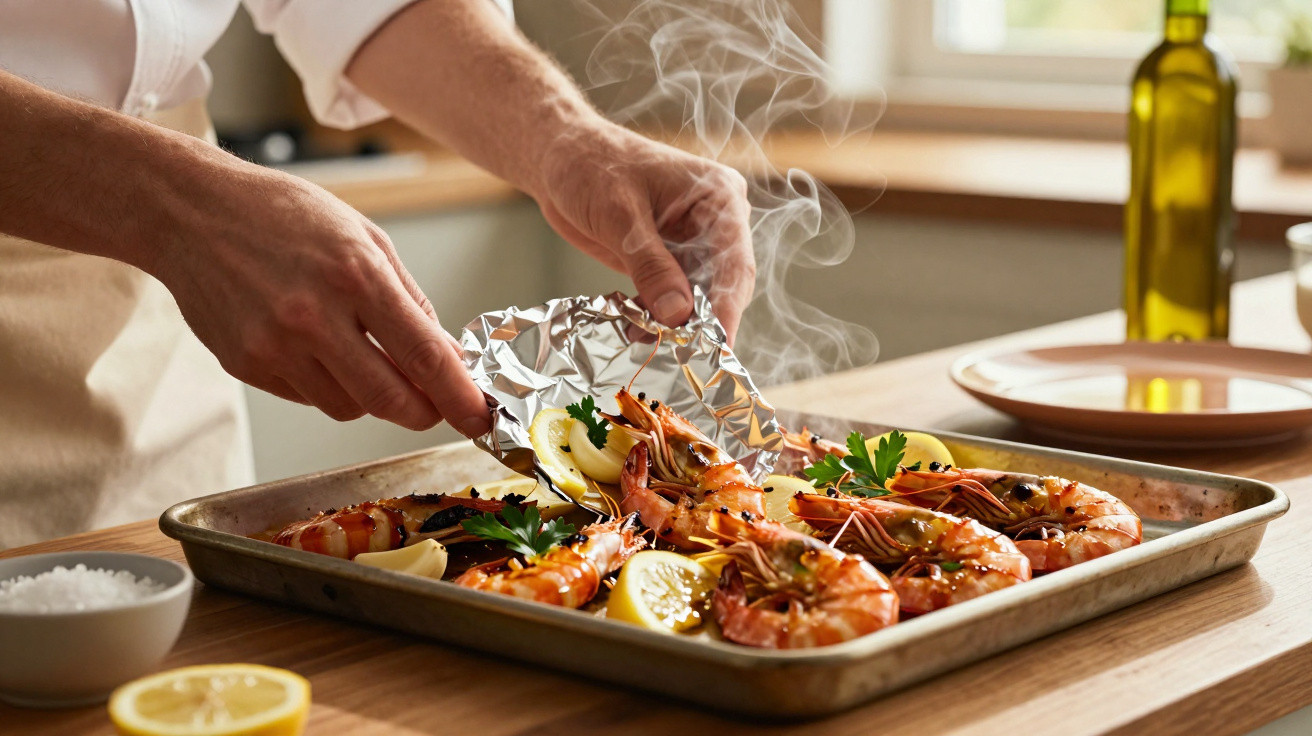
For flavourful grilled prawns, one simple cooking step can transform the texture without overpowering their sea-fresh flavour.
Many cooks automatically add oil to the pan before putting in the prawns. However, this is not always the most suitable approach. High-heat cooking, combined with coarse salt, a little water and a sheet of aluminium foil, helps keep the flesh tender while giving the shells an attractive colour.
Cooking that keeps prawns at the heart of the plate
Prawns already have a distinctive taste: briny, subtly sweet and delicate. Adding oil, butter or seasonings at the start of cooking can quickly overwhelm it. On a very hot surface, fat may also smoke and leave an overly strong flavour.
“The principle is simple: quickly sear the shell, then trap a little steam to cook the flesh without drying it out.”
This technique is suited to large raw prawns with their heads and shells intact. They should be fresh, or defrosted slowly in the fridge. A glossy shell, a mild smell and firm flesh are useful signs to look for when buying them.
It is best to leave the shells on while cooking. They provide a natural barrier against the heat and retain some of the juices. Shelled prawns cook much faster and can easily dry out, particularly in a very hot pan.
Aluminium foil: an unexpected aid for tender prawns
The distinctive feature of this method is the sheet of aluminium foil placed over the prawns. It works as a temporary lid. A few drops of water added to the hot pan immediately create steam, which circulates beneath the foil and finishes cooking the flesh through to the centre.
The cooking surface remains extremely hot, allowing the shells to become coloured and lightly charred. Inside, the steam reduces moisture loss. This prevents the rubbery texture shellfish can develop when left over the heat for too long.
Ingredients needed
- Large raw prawns, preferably unshelled;
- Coarse salt;
- A little water;
- A sufficiently large sheet of aluminium foil;
- Lemon, served only at the table.
No oil is needed in the pan. The coarse salt scattered across the base helps season the prawns and reduces their direct contact with the scorching metal. Do not use a thick layer: a handful spread thinly is enough for a large frying pan.
How to recreate the method at home
A cast-iron, steel or heavy-based frying pan will give good results. Heat it over a high heat for several minutes. The pan needs to be genuinely hot before the prawns are added. If it is merely warm, they will release water, cook in their own juices and lose their appealing colour.
- Heat a large empty frying pan over a high heat.
- Spread a thin layer of coarse salt across the base.
- Arrange the prawns in a single layer, without crowding them.
- Add a few drops of water around the shellfish.
- Cover immediately with the aluminium foil.
- Cook for around one and a half minutes on the first side.
- Turn the prawns over and continue cooking for less than a minute.
- Remove from the heat as soon as the shells turn orange and the flesh is just firm.
Cooking time varies according to the size of the prawns. Small prawns need only a very brief cook, while large king prawns may require a few extra seconds. It is better to take a prawn off slightly early than too late, as the residual heat from the pan will continue cooking it a little after the heat is switched off.
Mistakes that can ruin grilled prawns
The first trap is using prawns that have already been cooked. They are often pink before they even reach the pan. Cooking them again will almost inevitably make them dry. For this recipe, choose grey or translucent shellfish, meaning raw prawns.
Another common mistake is defrosting prawns quickly under hot water or cooking them while still frozen. They then release a great deal of liquid. After defrosting them in the fridge, drying them carefully with kitchen paper makes a real difference.
- Do not overcrowd the pan: every prawn must be in contact with the hot surface.
- Do not add garlic at the beginning: it will burn before the prawns are ready.
- Avoid lemon during cooking: its acidity quickly alters the texture of the flesh.
- Do not lift the aluminium foil every ten seconds: the steam needs to remain trapped.
- Do not leave the heat on unattended: cooking happens very quickly.
A light plate that is far from bland
Prawns provide protein, iodine, selenium, zinc and vitamin B12. Their natural fat content remains moderate. Leaving out cooking oil does not simply make the recipe lighter; it also allows the flavour of the prawns to stand out more clearly.
Lemon can be served in wedges so that everyone can add it to their own taste. A cold sauce made separately with a little yoghurt, lemon and fresh herbs also pairs very well with prawns without making the cooking process heavier. Toasted bread, plain rice or a crisp salad will easily complete the plate.
Why steam protects the flesh
Steam transfers heat more gently than direct contact with a scorching pan. It helps the flesh cook more evenly, especially near the head and in the thickest part of the body. The aluminium foil must not stay over the heat for long: its sole purpose is to create a brief hot, humid environment.
This tip also works for certain other shellfish, such as langoustines or small crayfish, provided the cooking time is adjusted. With delicate pieces, a few seconds may be sufficient. The best guide remains visual: opaque but still supple flesh and brightly coloured shells indicate that the prawns are ready to eat.

















Comments
No comments yet. Be the first to comment!
Leave a Comment