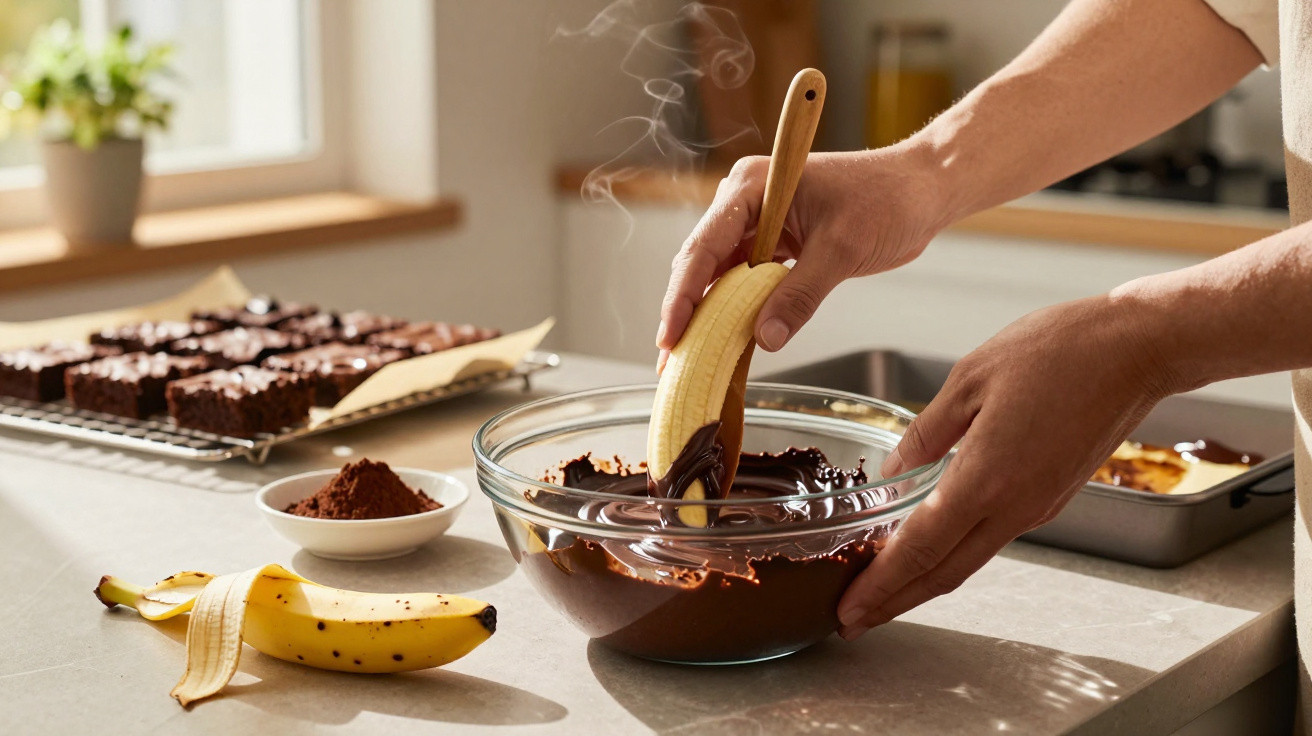
The first time I watched someone drop a banana into brownie batter, I genuinely thought they had lost the plot. They did not present it as some clever baking shortcut. They simply peeled a speckled banana, crushed it with a fork and stirred it into the bowl of melted chocolate as though everyone did it. For a moment, the kitchen fell silent. You could practically hear the shared thought: surely that is how you spoil an otherwise perfect brownie?
Twenty-five minutes later, the tin emerged from the oven. Its edges had set while the middle still had a slight wobble: the ideal brownie moment. As we cut through it, steam drifted up and the knife was sticky rather than dry. After one mouthful, the quiet gave way to the gentle, amazed “ohhh” people make when something tastes far better than expected.
There was something unusual going on in that tin.
Why one lonely banana can save dry brownies
Think of the last brownies you baked that looked flawless on the surface but sliced like cardboard through the centre. You followed every instruction and kept track of the baking time. Still, the texture somehow missed the mark, landing closer to cake than fudge. It is one of home baking’s small disappointments: the ingredients are correct, the method is nearly there, yet the finished bake is merely… fine.
Picture that same recipe, the same tin and the same oven, now with a single ripe banana mashed into the mixture. Nothing else needs altering. You still beat the eggs and sugar, fold through the flour and cocoa, then scrape the shiny batter into a lined 20 cm square tin. Once cool, the edges retain the slight chew everyone wants, while the centre stays silky and soft for days. It is the sort of brownie that holds a fingerprint when you gently press it.
This small change works because a banana is effectively a moisture-packed fruit. It contributes water, naturally occurring sugars and pectin, a plant fibre that turns into a soft gel during baking. Together, these ingredients work alongside the cocoa and fat, retaining moisture that would otherwise vanish in the oven’s heat. The brownies therefore feel indulgent even when the recipe itself is fairly straightforward. One modest piece of fruit can make a major difference to the structure.
The banana brownies trick pastry chefs quietly use at home
The method is simple: choose one very ripe banana, ideally one covered with freckles and slightly soft to the touch, then mash it on a plate with a fork until it is mostly smooth. For a standard 20 cm square brownie tin, you need roughly 120 ml of mashed banana. Mix it into the wet ingredients immediately after the eggs and sugar, before folding in the flour and cocoa. There is no special process involved; just stir thoroughly until the banana vanishes into the chocolate mixture.
Bake normally, but watch the centre carefully. The additional sugar and moisture can mean the brownies need a few extra minutes, or that they simply remain softer for longer after cooling. The toothpick check is slightly different too: do not wait for it to come out clean. Instead, look for several sticky crumbs clinging to it. Take the tin out at that point. Avoid baking for longer “just in case”, or you will undo the benefit the banana provides.
There are a few common mistakes to avoid. The first is choosing a firm yellow banana with hardly any spots. It is still starchy and restrained, so it will not blend smoothly into the batter. Another is assuming banana is a flavour bomb and adding two or three at once. That is when brownies cross into banana bread territory with no way back. The subtle sweet spot is one medium, very ripe banana for a small tin, with two only if you genuinely want a noticeable banana flavour.
Sugar can also cause unnecessary concern. Some people reduce it too drastically because they believe the banana will replace it entirely. The result is weaker texture and less of that familiar crackly brownie top. Honestly, no one makes brownies every day. But when you do, they are allowed to be brownies.
Sometimes, the smartest kitchen tricks feel almost too simple to be real. One pastry chef I spoke with laughed and said, “If I wrote ‘add a sad leftover banana’ into a menu recipe, nobody would take me seriously. But at home? I almost never bake brownies without one. It keeps them soft for days, and no one ever guesses why.”
- Choose very ripe bananas
Skins that are spotted or even largely brown signal higher sugar levels and softer fibres. Those are what create moisture and tenderness in the oven. - Balance the chocolate
If you are worried about banana flavour, use darker chocolate and add an extra spoonful of cocoa. The fruit will stay in the background. - Manage the crumbs
Bake until the middle has set but remains fudgy. What seems slightly underbaked at first will be just right once the brownies cool. - Store them sensibly
Allow the brownies to cool fully, then cover the tin or wrap individual portions. The banana continues to retain softness rather than letting them turn stale overnight. - Try it gradually
Begin with half a banana the first time. If you enjoy the texture, add more on your next bake. They are your brownies, after all.
The small kitchen rebellion behind your “signature” brownies
Once you begin adding banana to brownies, you may find that your whole approach to recipes changes. A fixed ingredient list starts to feel more like a conversation than an instruction. You notice where fruit could replace dairy, where some sweetness might come from a natural source, and how texture is not inevitable but something you can shape. That solitary banana on the worktop suddenly appears less like waste and more like an opportunity.
You may start trying other additions: a tablespoon of peanut butter alongside the banana, a pinch of espresso powder to deepen the chocolate flavour, or a handful of nuts for contrast. Then you bring a tin to friends or colleagues, and somebody asks, “What did you do differently?” You shrug because the answer seems too minor and too modest. Eventually, you tell them. That is how understated baking tricks travel: one overripe banana and one dense, soft square at a time.
| Key point | Detail | Value for the reader |
|---|---|---|
| Use ripe bananas | Spotted, soft fruit mashes easily and supplies more natural sugar and moisture | Keeps brownies fudgy rather than dry, even after a day or two |
| One banana per small tin | Around 1 medium banana (120 ml mashed) for a 20 cm square tin | Enhances the texture without turning brownies into banana bread |
| Adjust baking cues | Look for sticky crumbs on a toothpick rather than a clean result | Stops overbaking and maintains that melt-in-the-middle texture |
FAQ:
- Question 1 Will my brownies taste strongly of banana?
- Question 2 Can I leave out some butter or oil if I add banana?
- Question 3 Does this trick work with a boxed brownie mix?
- Question 4 What if my banana is very brown and nearly liquid?
- Question 5 How should I store banana brownies, and how long will they keep?

















Comments
No comments yet. Be the first to comment!
Leave a Comment