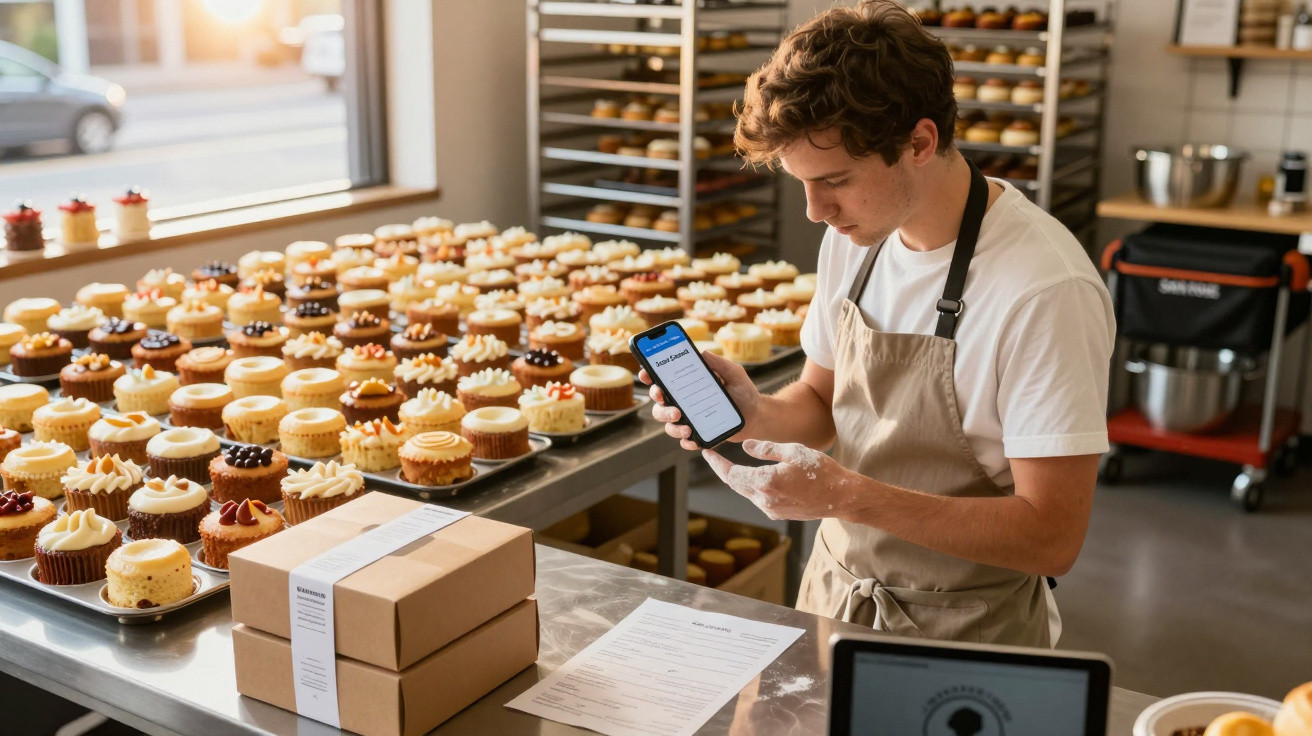
When a California bakery fighting to stay afloat received a major corporate order, survival appeared to be within reach.
The order was from Tesla and seemed set to transform the prospects of a small San Jose pie business. But the electric vehicle company abruptly withdrew, leaving its owner facing costs, additional staff and no obvious route to payment.
A dream Tesla order for a bakery on the edge
The Giving Pies is a small San Jose, California, bakery owned by Voahangy Rasetarinera. Her business was under severe pressure in 2024. Higher costs, narrow profit margins and the continuing effects of the pandemic had brought the shop close to collapse.
An email then arrived that seemed to offer a way out. Tesla staff wanted catering for a Valentine’s Day event: 2,000 mini pies valued at roughly $6,000. For a neighbourhood bakery, it was an exceptionally large order.
A single corporate order can represent several weeks of revenue for a local bakery – and often the difference between closing and carrying on.
Rasetarinera accepted without delay. She arranged extra shifts, assessed the capacity of her ovens and began preparing for the largest order the bakery had ever handled. Ingredients were purchased in bulk, packaging was organised and employees were asked to get ready for a demanding but potentially rewarding week.
Payment delays and a surprise expansion
One warning sign emerged early on: the payment had not arrived.
Tesla’s payment remained outstanding despite invoices and follow-up messages. Rasetarinera told US media that the bakery repeatedly asked when it would receive the money. Eventually, a Tesla representative, referred to only as “Laura” in messages shared by the owner, responded with an apology.
The Tesla employee said the company was using a third-party service, City Flavor, to process the payment. She stated that it was taking time because the outside provider lacked experience with an order of this type.
The situation then changed again. Rather than reducing its request, Tesla enlarged it. The bakery was informed that the order had risen from 2,000 to 4,000 mini pies, taking the value of the contract to about $16,000.
For a small shop, doubling an already massive order means doubling risk: more ingredients, more staff, and more time, all before a single dollar has arrived.
To fulfil the expanded request, The Giving Pies increased production. It took on extra workers, bought further supplies and reorganised the kitchen to operate almost continuously before the deadline.
A last-minute cancellation that hit hard
Everything then unravelled only a week before the planned delivery.
Tesla suddenly cancelled the full order by email, according to posts on the bakery’s Instagram account. There was no detailed explanation and no reimbursement for ingredients already bought or labour already arranged.
Rasetarinera reported that the message was strikingly brief: the company no longer required the pies and was “really sorry”. A cancelled $16,000 catering order may be insignificant to a huge technology company, but it can be ruinous for a small bakery.
- Thousands of dollars had already gone on ingredients.
- Workers had been hired and rostered for the large order.
- The bakery had declined other potential customers because it lacked capacity.
The financial and emotional impact was immediate. There was no large stockpile of unsold pies, as production was still under way, but the business had already taken on substantial upfront costs without certainty that it could recover them.
A factory tour as “compensation”
As criticism began to grow, Tesla reportedly got in touch with Rasetarinera again. Rather than offering payment, the company initially proposed something much less tangible: a tour of its factory.
That did little to resolve the bakery owner’s problem of growing expenses and a major shortfall in anticipated income. A factory visit may be enjoyable, but it cannot cover wages or bills from suppliers.
Social media outrage pulls Elon Musk into the story
Rasetarinera felt she had little choice but to make the matter public. She shared the story on social media, explaining the unexpected cancellation and how near the business had come to failing.
Her post quickly spread. The bakery’s followers shared it extensively, while many comments criticised Tesla and backed the independent business. The story soon reached national publications, including The Guardian, as well as technology-focused websites.
In the age of platforms like Instagram and X, a single local business complaint can become a global PR problem within hours.
The attention ultimately reached Tesla’s prominent chief executive, Elon Musk. On X, formerly Twitter, Musk replied to users who had highlighted the bakery’s account and reports of the cancelled order.
He offered a short apology and publicly promised to “make things right” and deal with the matter straight away. Rasetarinera subsequently said Tesla sent her $2,000, while the publicity brought a rush of new customers to the bakery.
A PR disaster that became unexpected marketing
The Giving Pies, previously close to failure, was suddenly receiving widespread attention. Local people visited specifically to support it, online orders increased and media interviews generated still more interest and trade.
Tesla’s eventual payment was well below the original $16,000 invoice for 4,000 pies. However, the longer-term value of the new customers generated by the story may be greater.
| Key element | Impact on the bakery |
|---|---|
| Initial 2,000-pie order | Promised $6,000 boost during a difficult period |
| Order expanded to 4,000 pies | Higher revenue potential but much higher costs and risk |
| Last-minute cancellation | Uncovered expenses, staff costs, and emotional stress |
| Viral social media story | Nationwide attention, spike in local support and sales |
| Elon Musk’s response | Partial compensation and reputational pressure on Tesla |
Why big corporate orders can be so risky for small businesses
The episode highlights a frequent challenge for small businesses. Major corporate customers can determine a month’s takings, yet they can also create risks that most smaller firms are not equipped to absorb.
When a multinational makes a large catering request, a local bakery may need to:
- Purchase bulk ingredients at very short notice.
- Take on temporary employees or pay overtime.
- Restructure production and put regular customers aside.
- Depend on promised funds that can be held up by complicated internal processes.
If the arrangement proceeds smoothly, the business can expand and gain a high-profile reference client. But when a cancellation or delayed payment occurs, the consequences can last for months.
How small shops can protect themselves
Situations such as that faced by The Giving Pies show why many small suppliers require deposits or staged payments for major orders. Several practical protections can reduce the harm:
- Asking for a non-refundable deposit before production begins.
- Using written agreements that set out cancellation charges.
- Establishing firm payment dates and penalties for late payment.
- Reducing exposure by avoiding excessive reliance on one customer.
Such measures cannot remove every risk, but they can make a late cancellation less damaging.
The power and double edge of online outrage
The case also demonstrates how swiftly public pressure can affect large companies. Social platforms magnify individual complaints, particularly where there is an obvious imbalance of power between a local business and a major technology brand.
For consumers and business owners, social media can act as an informal means of accountability: a way of drawing attention to behaviour that appears unfair, even if contracts are unclear or cannot be enforced. Viral controversies can also be disorderly, however. Details may be reduced to simple narratives, companies can feel compelled to respond before completing an investigation and reputations can shift on incomplete information.
Here, the attention arguably benefited both parties in different respects. The bakery received support and increased sales. Tesla, facing pressure, indicated it would put right at least some of the issue, while demonstrating that its chief executive reacts to grassroots criticism.
What this means for future small–big business relationships
To other independent bakeries, caterers and craftspeople, the Tesla pie episode is likely to sound familiar. Large clients can bring equal amounts of opportunity and concern. A fairer arrangement, with deposits, explicit cancellation terms and realistic timescales, could reduce the likelihood that an ideal order becomes a near-disaster.
Meanwhile, people attending corporate events may begin to ask where their food has come from and how its suppliers have been treated. A modest box of mini pies can tell a far wider story about power, responsibility and the reality of modern commercial relationships behind the scenes.

















Comments
No comments yet. Be the first to comment!
Leave a Comment