Weeknight meals can soon become a repetitive cycle of familiar dishes, particularly if quiche is your usual fallback.
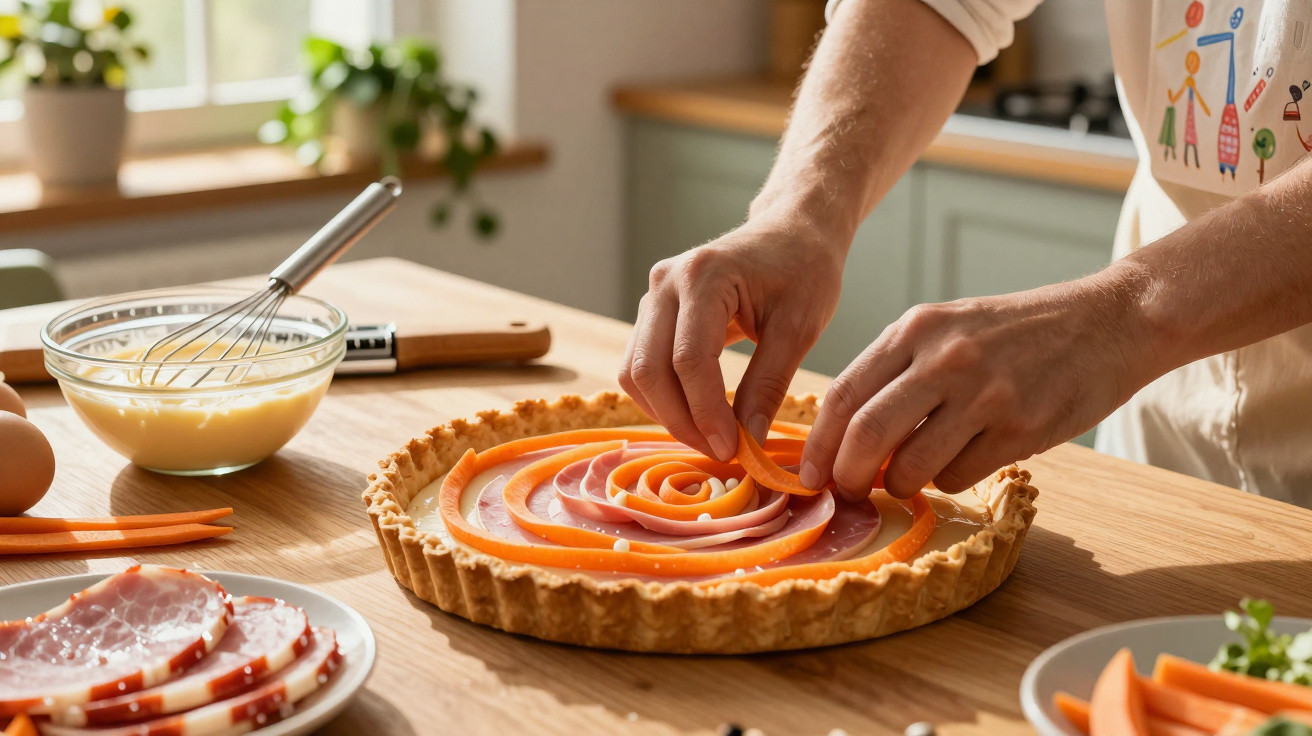
A vibrant recipe making the rounds on French social media is discreetly changing things up: the carrot and ham spiral tart. It has the appearance of a patisserie-worthy centrepiece, yet offers the family-friendly ease of a vegetable-packed quiche.
How French nutritionist Élodie Colombel reinvented classic quiche
The recipe was created by French dietitian and online creator Élodie Colombel, who posts as @win.a.diet. Her aim is to put more vegetables on family dinner plates without causing objections around the table.
Rather than serving vegetables on the side, she makes them the focal point. Her take on quiche Lorraine retains the reassuring pastry case and egg custard, but uses carrot ribbons, ham strips and soft mozzarella for much of the filling, arranging them in a mesmerising spiral.
Visually, it lands somewhere between a rustic tart and a fine-dining starter, yet it’s built from supermarket basics and pantry ingredients.
The attraction for parents is clear. The spiral pattern makes carrots seem more like celebratory food than an obligatory portion of veg. For cooks tired of the same old quiche, it offers a different texture, more vivid flavour and a restaurant-style presentation with scarcely any added work.
The basic formula for the carrot and ham spiral tart
Essential ingredients for four people
This tart needs only a straightforward set of ingredients, most of which are common in a UK fridge or cupboard:
- 1 sheet shortcrust pastry (ready-rolled or homemade)
- 3 large carrots
- 6 slices cooked ham
- 1 ball mozzarella or a generous handful of grated mozzarella
For the quiche-style custard, Colombel uses lighter alternatives to double cream:
- 4 eggs
- 150 ml milk
- 100 g skyr (or plain thick yoghurt, Greek-style if skyr is difficult to find)
- Salt and pepper
- Spices of your choice: paprika, nutmeg, garlic powder or herbs
The use of skyr cuts down on fat while keeping the filling creamy, making this tart feel indulgent but relatively balanced.
Step by step: turning plain pastry into a spiral centrepiece
1. Prepare the custard
Break the eggs into a large bowl and whisk them smooth. Add the milk and skyr, then whisk once more until evenly combined and free from noticeable yoghurt lumps. Season well with salt, pepper and whichever spices you prefer. Leave it to one side as you prepare the filling.
2. Prepare the ham and carrot ribbons
Place the ham on a chopping board, then slice it into strips roughly 1–2 cm wide. These strips will be positioned between the carrot ribbons.
Peel the carrots before shaving them into long lengths. A vegetable peeler or mandoline is ideal for this task. You need fine, supple ribbons that will curl into a spiral without breaking. Slices that are too thick are more difficult to arrange and can remain a little crunchy.
3. Line the tin and create the spiral
Unroll the shortcrust pastry into a tart tin, gently pressing it into the edges and corners. Lightly prick the base with a fork, which helps stop it from puffing up in the oven.
This is where the tart becomes eye-catching. Begin in the centre by tightly rolling a single carrot ribbon into a small coil, then set it in the middle of the tin. Wind a further ribbon around it to continue the spiral. Keep adding ribbons and working outwards until they cover most of the tart’s surface.
The spiral does not need to look perfect. Cracks and overlaps simply give the tart a hand-crafted feel.
Slot mozzarella pieces between the carrot ribbons. Put the ham strips into these gaps too, alternating them to make a mosaic-like pattern. As it bakes, the cheese melts into the custard and brings the ham and vegetables together.
4. Add the custard, bake and let it transform
Pour the egg and skyr mixture carefully over the spiral, allowing it to run into the spaces between the ham and vegetable layers. Gently tip the tin from side to side so the custard is evenly distributed without disturbing the arrangement.
Bake at 180°C for approximately 40 minutes. It is done when the surface is golden, the carrots are tender and the centre has only a slight wobble when the tin is shaken gently.
Allow the tart to stand for a few minutes before cutting it. This brief resting time lets the filling set further and makes it easier to hold neat slices.
Why the carrot and ham spiral tart suits busy families
Parents seeking to cut back on ultra-processed food can encounter resistance from children used to familiar, beige meals. This tart changes the approach by pairing recognisable flavours-ham, cheese and pastry-with a far larger serving of vegetables.
| Element | Classic quiche | Carrot & ham spiral tart |
|---|---|---|
| Main veg | Often onion, leek or none | Carrot ribbons across the whole surface |
| Dairy base | Cream and milk | Milk and skyr or yoghurt |
| Visual impact | Even, flat filling | Colourful spiral pattern |
| Protein sources | Bacon or lardons | Cooked ham, eggs, dairy |
For those watching saturated fat, swapping cream for skyr or thick yoghurt reduces richness slightly while keeping protein high.
What to serve alongside the spiral tart
The carrot and ham tart is substantial enough to serve as a complete meal, although simple side dishes make it go further while adding freshness. Colombel suggests raw vegetables or a crisp salad as a contrasting accompaniment.
- Green salad dressed with a sharp mustard vinaigrette
- Finely sliced cucumber and radish with lemon and olive oil
- Shaved fennel and apple for sweet-and-sour crunch
It stores well in the fridge, and is enjoyable cold or lightly reheated, so it is a practical option for packed lunches. Wrap leftover portions to take to work and serve them with a small pot of salad.
Small changes that alter the tart’s character
The recipe’s basic structure is adaptable. After making the original version, you can tailor it to various dietary needs and preferences with a few changes:
- Vegetarian option: Leave out the ham, replacing it with more cheese, roasted peppers or smoked tofu strips.
- Gluten-free version: Choose a gluten-free pastry case, or line the tin with thin potato slices that have been pre-baked until just tender.
- Different vegetables: Combine the carrots with courgette ribbons or butternut squash for more colour.
- Spice variations: Paprika and oregano create a Mediterranean character, whereas cumin and coriander seed take the flavours in a more Middle Eastern direction.
Nutritionally, carrots used as the main filling provide fibre, beta-carotene and natural sweetness. Combining them with protein-rich eggs and skyr makes for a more filling meal, which may help curb snacking later in the evening.
Practical tips and frequent pitfalls
Cooks trying this type of tart commonly come up against similar issues, including soggy pastry, burnt edges and vegetables that have not fully cooked. A few simple measures can reduce these problems.
- Roll the pastry a little thinner if it seems particularly heavy; thick pastry may remain uncooked in the middle.
- Dry the mozzarella with kitchen paper before using it, as excess moisture can lead to a soft base.
- If your oven is especially hot, cover the pastry edges with foil for the last 10 minutes to prevent them burning.
- If the carrots are very firm, briefly blanch the ribbons in boiling water, then cool and dry them before forming the spiral.
For anyone unfamiliar with the terms “quiche mixture” and “custard”, they simply mean eggs blended with milk or cream, which bake into a softly set filling. The proportions here-four eggs to around 250 g of dairy-produce a custard firm enough for slicing while remaining tender.
This spiral tart can also be a useful way to involve children in cooking. Asking them to arrange the carrot ribbons and ham strips gives them a sense of ownership over the meal. Children are frequently more willing to eat vegetables they have helped make, particularly when the finished dish looks colourful and playful on the plate.

















Comments
No comments yet. Be the first to comment!
Leave a Comment