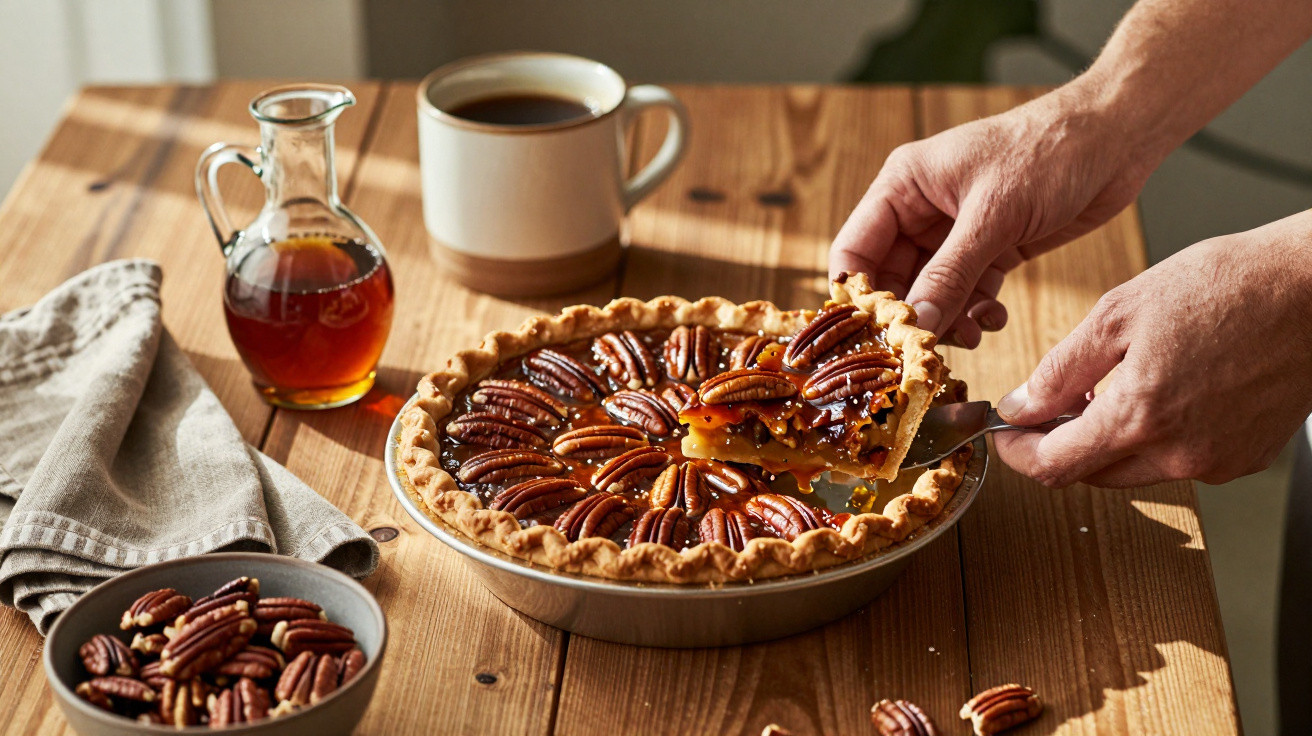
Cold nights, fallen leaves, ovens packed to capacity.
Amid it all, something sweet, nutty and pleasingly sticky quietly takes centre stage.
Once the weather turns crisp and jumpers reappear from the wardrobe, baking feels less like a chore and more like a comforting ritual. The pace in the kitchen eases, the spice cupboard comes alive, and one particular pie - dark, glossy and full of pecans - claims its place at the heart of the Thanksgiving table.
The pecan pie revival: why this classic matters again
Pecan pie is enjoying a low-key resurgence in both the US and the UK. Searches for “maple pecan” and “brown sugar pecan pie” rise sharply every November, while cafés from Brooklyn to Birmingham notice a similar shift: when pumpkin season passes, customers turn towards nuts and caramelised flavours.
It is about more than nostalgia. Pecan pie suits the current appetite for comfort with a more mature edge: less icing, greater complexity. There are toasted nuts, dark sugar and a pastry case that gives a faint crack beneath the fork. It offers all the occasion-worthy impact of a celebration pudding without requiring professional techniques or specialist equipment.
A good pecan pie works like a soft spotlight on the table: modest to make, generous to share, memorable to eat.
The contemporary update lies in the ingredients. Versions made with traditional corn syrup are increasingly replaced by maple syrup, muscovado sugar, a splash of rum or perhaps orange zest. The essential format remains unchanged, but its flavours become deeper, cosier and more distinctly autumnal.
From pantry to pie dish: the flavours behind this pecan pie
The variation currently favoured by many home bakers replaces ordinary white sugar with muscovado and makes maple a central feature. It creates a filling that resembles caramel with better restraint: rich and rounded rather than excessively sweet.
The essential autumn cupboard list
- Pecans: preferably a combination of whole halves for the surface and roughly chopped nuts within the filling.
- Muscovado sugar: adds moisture and molasses depth that ordinary brown sugar cannot replicate.
- Maple syrup: provides a floral sweetness that rounds off the caramelised filling.
- Butter: used in both the pastry and filling to bring flavours and textures together.
- Eggs: create a custard-like middle that sets while remaining soft and gently wobbly.
- Cinnamon and a pinch of salt: intended to define the sweetness rather than overpower it.
- Optional dark rum or bourbon: adds subtle warmth in the background, rather than a heavy alcoholic hit.
The pastry also changes the character of the finished pie. Sweet pastry made with muscovado sugar and a spoonful of ground almonds bakes to a warm amber shade, appearing almost toasted before the pie even returns to the oven for its final bake.
| Element | Traditional version | Modern maple-muscovado twist |
|---|---|---|
| Sweetener | Corn syrup and white sugar | Maple syrup and dark muscovado |
| Crust | Plain pie dough | Sweet pastry with ground almonds |
| Texture | Dense and very sweet | Slightly lighter, more aromatic |
| Aromatics | Vanilla, sometimes nothing | Cinnamon, orange zest, optional rum |
How this pie works: simple technique without the pressure
This is a recipe where attention matters more than expertise. The process is uncomplicated: there is no need for a stand mixer, sugar thermometer or laminated pastry. You are simply creating three parts: a sturdy crust, a smooth filling and a generous covering of nuts.
Making a crust that stays sealed
The pastry shell is more important than it is often given credit for. If it is too thin or insufficiently baked, the sugary filling can seep beneath it, scorch in places and effectively fuse the pie tin to the pie. Blind-baking the base properly prevents that problem.
The goal is simple: a sealed, lightly golden shell that can hold a thick, hot, syrupy filling without cracking.
Refrigerate the pastry before rolling it out. Ease it into the tin without stretching it, ensuring there are no air pockets in the corners. Prick the base, fill it with baking beans or dry rice, then bake until the edges are only just beginning to take on colour. Brushing it quickly with beaten egg before returning it briefly to the oven helps close any tiny gaps.
The filling: shiny, aromatic and balanced
Everything for the filling can be combined in a single bowl. Begin with softened butter and muscovado sugar, then add eggs, maple syrup, cinnamon, salt and rum if desired. The important point is not to beat the mixture too vigorously. Too much air produces a foamy, uneven surface.
Mixing chopped pecans into the filling gives it substance. Arranging whole pecan halves across the top creates its familiar appearance: geometric and almost architectural, yet rustic enough to look homemade instead of styled for a photograph.
The pie bakes in two phases. An initial short spell at a higher temperature firms the outside edges and crisps the pastry, then a lower heat gently cooks the middle. On removal from the oven, the centre should still quiver a little when the tin is moved.
Getting the timing right: why tomorrow’s slice is better
Straight from the oven, the aroma is hard to resist: warm maple, buttery nuts and toasted pecans. Served just warm with a scoop of vanilla ice cream, it perfectly matches the familiar American Thanksgiving film scene.
Leave it until the following day and the texture develops differently. The filling becomes firmer, the flavours meld, and the sweetness seems more measured. Where pastry meets custard, the crust softens slightly, making a narrow layer reminiscent of caramel-soaked biscuit.
If you want a showpiece for Thursday, baking on Wednesday evening might quietly be the smartest move you can make.
This schedule works well with contemporary hosting. Many people are balancing work, travel and family commitments. A pudding that benefits from resting overnight takes pressure off the main day, particularly when the oven is already occupied by turkey and traybakes.
How home bakers are adapting their Thanksgiving pecan pie
Social media reveals several clear ways in which people tailor the basic recipe for different guests, dietary requirements and preferences. These changes need no advanced pastry ability, only modest adjustments.
Less sugar, more personality
A popular approach is to reduce the sugar slightly and rely more heavily on flavour. Choosing a darker sweetener, such as muscovado or maple, allows bakers to lower the amount while retaining intensity. Some substitute honey for part of the maple syrup, adding floral character and a different style of stickiness.
Texture variations
- Finely chopped nuts in the filling for a fudge-like consistency.
- A layer of dark chocolate chips over the base to form a fine ganache-like line.
- A spoonful of orange marmalade brushed onto the pastry before the filling is added.
Every change alters the overall balance, whether through extra chew, bitterness or brightness. The result is still clearly pecan pie, although each choice shifts its character slightly.
Beyond Thanksgiving: pecan pie for unhurried Sundays
Restricting pecan pie to a single holiday seems wasteful. Its flavours work throughout the period from late September into early winter. On a relaxed Sunday, the same pie feels less ceremonial and more like a companion for a slow afternoon.
Smaller servings can help. Baking the recipe in a rectangular tin and slicing it into bars makes it more of a teatime treat than a statement pudding. With strong coffee or a mug of black tea, it sits somewhere between cake and confectionery.
For anyone wanting a lighter option, use the same filling over a thinner pastry base, or bake it in individual tartlets instead. A smaller format reduces the sense of heaviness: one little, rich portion becomes a measured indulgence rather than an occasion.
What to watch for: pitfalls, shortcuts and useful swaps
Pecan pie may appear forgiving, but a few errors can upset it. The main challenges concern texture and structure.
- Overbaking: makes the centre grainy rather than silky.
- Underbaking: leaves the middle runny, particularly if the pie is sliced while warm.
- An unsealed crust: leads to leaks and burnt sugar around the edges.
- Cheap maple-flavoured syrup: reduces the flavour to flat, one-dimensional sweetness.
When time is limited, ready-made all-butter pastry is suitable, provided it is still blind-baked thoroughly. Frozen pecans perform as well as fresh ones after a light toast in the oven, which may even refresh their flavour.
For anyone serving guests with nut allergies, another direction is needed. The same filling base - eggs, maple, muscovado and butter - can instead be baked with pumpkin or butternut squash purée in place of the nuts. This produces an autumn custard pie with the same spiced, caramelised character and without the risk.
Beyond the current season, the technique lends itself to other flavour combinations. Replacing maple with golden syrup and pecans with walnuts produces a version with a distinctly British feel. Using the same pastry alongside hazelnuts and a little espresso takes the idea into coffee-shop territory. The recipe’s structure remains reliable; the details can shift with taste, climate and mood.

















Comments
No comments yet. Be the first to comment!
Leave a Comment