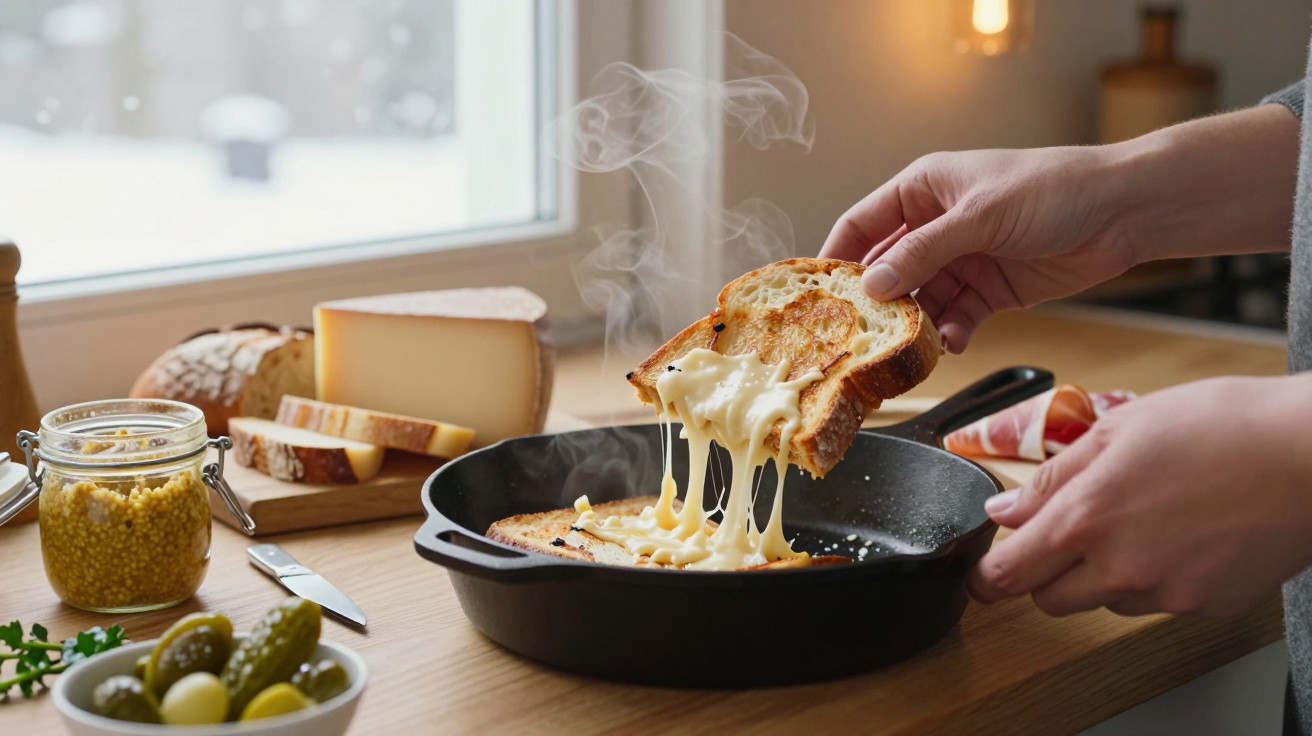
When winter evenings are bitterly cold and it is dark before you finish work, this pan-fried raclette toastie can make an ordinary January night feel a little like supper in a ski chalet - without a gadget, raclette grill or much washing-up.
Why this winter toastie feels like a mini raclette night
Raclette normally brings to mind a tabletop appliance, heaps of potatoes and a whole evening built around melted cheese. It is ideal for a Saturday, but much less practical on a Tuesday. This recipe delivers those same comforting flavours in a single toasted sandwich made in an ordinary frying pan.
This raclette toastie keeps the spirit of a mountain dinner but shrinks it to 15 minutes and a single pan.
The formula is simple: substantial bread, gooey raclette cheese, a slice of ham, some mustard and a generous amount of butter to create a crisp golden exterior. It is the sort of meal that has you peeling off your jumper halfway through because you have finally warmed up.
The four key ingredients (plus one small upgrade)
To make two generously filled toasties, you will need:
- 4 slices of thick-cut bread (country-style or bakery sandwich bread)
- 4–6 slices of raclette cheese (plain, smoked or peppered)
- 2 slices of cooked ham or turkey
- 1 tablespoon wholegrain or mild mustard
- About 30 g (2 tbsp) softened salted butter for frying
That is genuinely all you need. There are no potatoes to peel or specialist grill plates to clean. Choosing the right bread thickness is important: bread that is too thin will collapse beneath the melted cheese, while overly dense slices may remain doughy in the middle.
Building the perfect raclette toastie
Mustard first, for balance
Arrange the bread slices on the worktop and coat the inside of each one with a thin, even layer of mustard. Take it right to the edges rather than leaving the crusts bare; they deserve flavour too.
The small amount of mustard isn’t about heat, but about cutting through the richness of the cheese.
That tang prevents the sandwich from becoming too heavy after only a few mouthfuls, particularly with cheese as intensely rich as raclette.
The “cheese–ham–cheese” trick
Cover two slices of bread with an initial layer of raclette cheese. A little cheese hanging over the edges is welcome - it will turn crisp in the frying pan.
Place a slice of ham or turkey on top, folding it neatly so it remains inside the sandwich. Add another layer of raclette over the meat. This double cheese layer is not merely indulgent; it serves a practical purpose.
Sandwiching the ham between two blankets of cheese creates that molten, even middle you usually only get with proper raclette equipment.
Finish each toastie with the remaining bread, ensuring the mustard-coated sides face inwards. Use your palm to press them lightly, bringing the filling together without flattening the bread. The aim is a compact, sturdy sandwich that stays intact while cooking.
Why the frying pan beats the sandwich press
A standard sandwich maker would work, but an everyday frying pan offers greater control and more flavour. Direct heat and butter transform the bread in a way that is hard to beat.
Getting that golden, crackling crust
Warm a large frying pan over a medium heat, then melt half the butter until it starts to foam. Put both sandwiches into the pan side by side.
A gentle medium heat lets the bread turn deep golden while the cheese has time to fully melt.
Fry the first side for around 3–4 minutes. Keep an eye on the colour: you want a deep golden brown rather than blackened patches. Should the bread colour too fast while the cheese remains firm, lower the heat and cover the pan briefly to retain the warmth.
Turn the toasties carefully using a wide spatula, add the rest of the butter and cook the second side in the same way. Towards the end, small streams of cheese should escape around the edges and form lacy, crunchy pieces where they meet the pan. That is how you know they are ready.
Turning a toastie into a proper winter meal
The sandwich is substantial enough to eat by itself, but a few well-chosen accompaniments can turn it into a full dinner rather than a guilty snack.
Fresh, sharp and crunchy on the side
A modest salad makes a real difference alongside it. Lamb’s lettuce, rocket or mixed leaves all work well, especially with a lively vinaigrette made using cider or sherry vinegar.
- Salad leaves with a bit of bitterness (rocket, frisée)
- A sharp vinaigrette (cider vinegar, mustard, oil, salt, pepper)
- Optional extras: walnuts, thinly sliced apple or pear
The acidity in the dressing cuts through the cheese and resets your palate between bites.
For a plate that feels more traditionally raclette-inspired, include a few crisp pickles. Small gherkins and cocktail onions supply that Alpine-holiday sharpness without requiring the complete raclette set-up.
Adding a forest twist
With a little extra time, quickly frying mushrooms with garlic and parsley gives the toastie a “back from the slopes” character. Sliced button or chestnut mushrooms, sautéed in a small amount of butter or oil, are ideal.
Sprinkle crushed walnuts over the salad, or grate a pinch of nutmeg over the toasties as they come out of the pan, for an extra flavour note that makes the meal seem planned rather than thrown together in a hurry.
How to adapt it for different diets and fridges
This raclette toastie is easy to adapt. Replace the ham with turkey, or omit it altogether. For a vegetarian alternative, use sliced mushrooms, caramelised onions or even leftover roast vegetables between the cheese layers.
Think of the basic structure - bread, mustard, cheese, filling, cheese - and adjust the filling to what you have.
If you do not have raclette cheese, use a combination of a good melting cheese, such as Emmental, Gruyère or mild cheddar, plus a little smoked cheese to recreate its Alpine character. The result will not have quite the same texture, but it will still deliver plenty of comfort.
What “raclette” actually means
Beyond Europe, raclette can sometimes be regarded simply as “another melting cheese”. In its Swiss origins, however, raclette describes both the cheese and the shared ritual: half a cheese wheel is heated, then its melted surface is scraped onto plates of potatoes, cured meats and pickles.
This toastie takes those essential components - flowing cheese, charcuterie, the sharpness of mustard or pickles, and plenty of carbohydrates - and turns them into a sandwich to enjoy on the sofa beneath a blanket.
When to reach for this recipe
This pan raclette toastie suits more occasions than might first appear. It makes a quick supper after a freezing commute, a filling lunch after a winter walk, or a simple choice for unexpected friends when you want something more comforting than a cheeseboard but less demanding than a complete raclette evening.
| Occasion | Why it fits |
|---|---|
| Weeknight dinner | Ready in 15 minutes, minimal prep and washing-up |
| Post-ski or winter walk | High in calories, warms you up quickly |
| Casual guests | Easy to scale up, feels indulgent without much effort |
Anyone monitoring their salt or saturated fat intake may prefer to view this dish as an occasional treat rather than an everyday choice. Swapping ham for turkey, using a little less butter and serving it with a large salad are straightforward ways to strike a balance without giving up the satisfaction of melted cheese.
Conversely, for people who work long hours outdoors during winter - delivery riders, construction workers and hill walkers - a toastie like this can provide a genuinely useful, speedy source of calories and warmth. Serve it with a steaming mug of tea or broth and you have a small but remarkably effective winter survival plan on the plate.
















Comments
No comments yet. Be the first to comment!
Leave a Comment