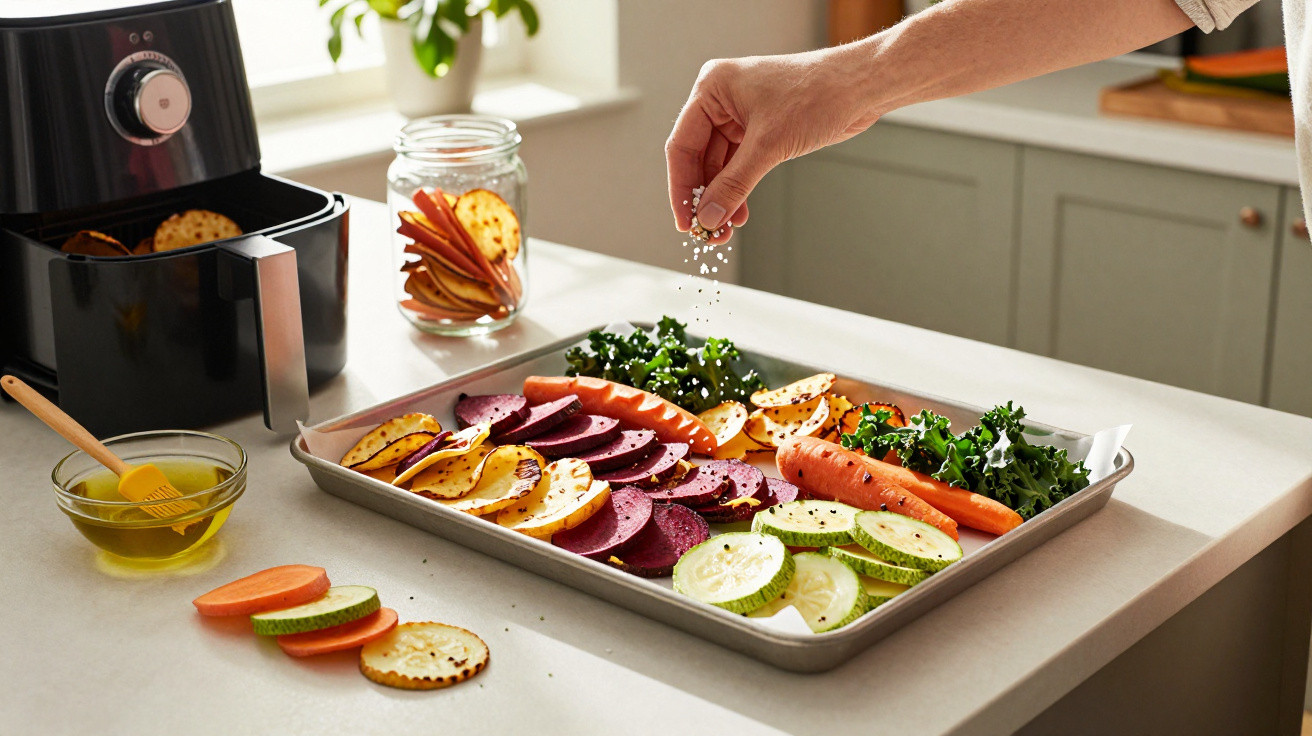
Your oven or air fryer can transform ordinary vegetables into a remarkably light snack with a satisfying, crisp snap.
Dietitians across UK kitchens are increasingly recommending a more sensible route to crunch: finely sliced veg, a teaspoon of oil and punchy seasoning. This approach keeps salt lower while bringing more fibre to the snack bowl. Here is how to create bag-like crispness at home without using a deep fryer.
Why dietitians care about homemade crisps
Ready-made crisps are convenient and reliably crunchy, yet they often contain more oil and salt than people need over the course of a week. Homemade batches put the balance in your hands. You control the oil, sodium, vegetables and serving size. They can also cost less, an advantage when household budgets are stretched.
There is also the issue of acrylamide, a browning compound that develops when starchy foods are cooked at high temperatures. To reduce the risk, soak potato slices to remove surplus starch from their surface, bake them at a moderate temperature and take the trays out once the slices are golden instead of dark brown.
Thin slices, a full dry, and moderate heat do most of the heavy lifting. That trio turns humble veg into a clean, crisp snack.
| Per 30 g serving | Homemade baked crisps | Shop-bought fried crisps |
|---|---|---|
| Energy | 100–120 kcal | 150–160 kcal |
| Total fat | 2–4 g | 9–10 g |
| Saturated fat | 0.2–0.6 g | 0.7–1.0 g |
| Salt | 0.05–0.15 g | 0.30–0.50 g |
| Fibre | 1.2–2.0 g | 0.8–1.3 g |
These figures are usual ranges for lightly oiled, oven-baked vegetable crisps compared with standard fried crisps. The final values will differ depending on the vegetable, oil and seasoning you use.
The homemade crisps method for a proper crunch
Oven method
- Slice: Use a mandoline where possible. Cut potatoes and beetroot to 1–2 mm, and sweet potato to 3 mm.
- Soak: Put potato and sweet potato slices in cold water for 15 minutes. This helps remove surface starch.
- Dry: Pat each slice dry until it squeaks between your fingers. Dampness prevents crispness.
- Oil: Toss with 1 tsp of rapeseed or olive oil for each medium potato, or for every two handfuls of vegetables. Aim for an even coating rather than soaking them.
- Arrange: Lay the slices in one layer on lined or perforated trays, without any overlap.
- Bake: Cook at 180°C fan for 10–18 minutes, turning once. Remove thinner pieces as soon as they brown.
- Finish: Add seasoning while the crisps are warm, then leave them to cool completely on a rack for the best snap.
Air fryer method
- Heat the air fryer to 160–170°C.
- Cook in small batches to allow air to move freely, shaking halfway through.
- Fry for 8–12 minutes until pale golden. Reduce to 150°C if the edges colour too quickly.
Microwave quick fix
- Place 1–2 mm potato slices on baking parchment and use only the lightest coating of oil.
- Microwave on high for 3–5 minutes, turning once, until the slices are dry with crisp edges.
Most soggy crisps come from damp slices or crowded trays. Dry them properly and keep rows single-file.
Vegetable-by-vegetable guide
Potato
For the familiar classic crunch, use Maris Piper, King Edward or another floury potato. Soak and dry the slices, then use as little oil as possible. Finish with a splash of malt vinegar for a chip-shop note without adding more salt.
Sweet potato and beetroot
Both vegetables colour fast. Cut them slightly thicker, cook at 160–170°C and keep a close eye on them during the final two minutes. Their natural sweetness pairs particularly well with a little smoked paprika.
Courgette and carrot
Vegetables with a high water content require extra care. Lightly salt the slices, leave them for ten minutes, then blot off the released moisture. Before baking, coat them with fine semolina or cornflour to encourage crisping.
Kale
Strip out the tougher stems. Tear the leaves, massage them with 1 tsp of oil per bowl and bake at 150–160°C for 6–8 minutes. Season once baked. Nori flakes or sesame seeds provide an extra savoury note.
Seasonings that work
- Salt and vinegar: Immediately after baking, spray or brush on apple cider vinegar; choose fine salt rather than coarse salt.
- Herb and lemon: Combine dried thyme with lemon zest and black pepper.
- Smoky heat: Use smoked paprika, cayenne and garlic granules.
- Cheesy umami: Mix nutritional yeast, onion powder and a pinch of mustard powder.
- Za’atar twist: Try sumac, sesame and thyme, then finish with the faintest drizzle of olive oil.
Health angles you asked about
- Glycaemic impact: Finely sliced, thoroughly baked potato crisps are digested more quickly than boiled potatoes. Serve them with protein or yoghurt-based dips to moderate the rise.
- Acrylamide: Aim for light gold rather than mahogany. Soak and dry the slices, keep the oven below 190°C and remove them early rather than late.
- Oil choice: Rapeseed oil copes well with oven temperatures and contains less saturated fat. Extra-virgin olive oil is suitable at 170–180°C if you monitor the colour closely.
- Salt: Use your fingers to measure rather than shaking freely. A three-finger pinch is about 0.3 g; most adults benefit from staying below 6 g daily.
- Allergies and FODMAP: Replace onion and garlic powders with asafoetida and chives. Inspect spice blends for concealed milk or gluten.
- Kids and older adults: Keep salt especially low. Prioritise a range of vegetables, and make the edges softer for toddlers.
Chase flavour with acids and herbs before reaching for salt. Vinegar, citrus, and umami do heavy lifting.
Storage, batch cooking and costs
Allow the crisps to cool fully before storing them, otherwise trapped steam will soften them. Keep them in an airtight tin with a sheet of kitchen paper. For their best crunch, eat them within two days. Should they go limp, heat them again at 160°C for five minutes.
Making larger batches can save time. Slice several potatoes, soak and dry them together, then cook them in successive rounds. A single teaspoon of oil is enough for a generous bowl, meaning the price per portion will often be less than half that of branded bags. You also avoid palm oil and can choose British-grown potatoes and beetroot.
Troubleshooting and smart extras
- Burnt edges, soft middles: Turn down the heat and cook for longer, or cut the slices more consistently.
- Still leathery: Increase airflow by using a perforated tray or placing a wire rack over a baking tray.
- Too oily: Use a spray bottle and count the sprays; the slices need a sheen, not pools of oil.
- A noisy air fryer with uneven browning: Make smaller batches and shake them more frequently.
To make the snack more substantial, include protein: try Greek yoghurt with lemon and dill, or a fast cottage cheese dip with capers. The combination of fibre and protein helps keep you full, which is the understated reason these crisps work so well on weekdays.
For anyone managing blood pressure, homemade batches make it easier to cap sodium without sacrificing taste. If you are following a low-potassium plan, choose courgette, carrot and kale instead of large quantities of potato, and keep serving sizes moderate. Those monitoring weight can divide portions into 30 g tubs, so there is a clear point at which to stop eating.

















Comments
No comments yet. Be the first to comment!
Leave a Comment