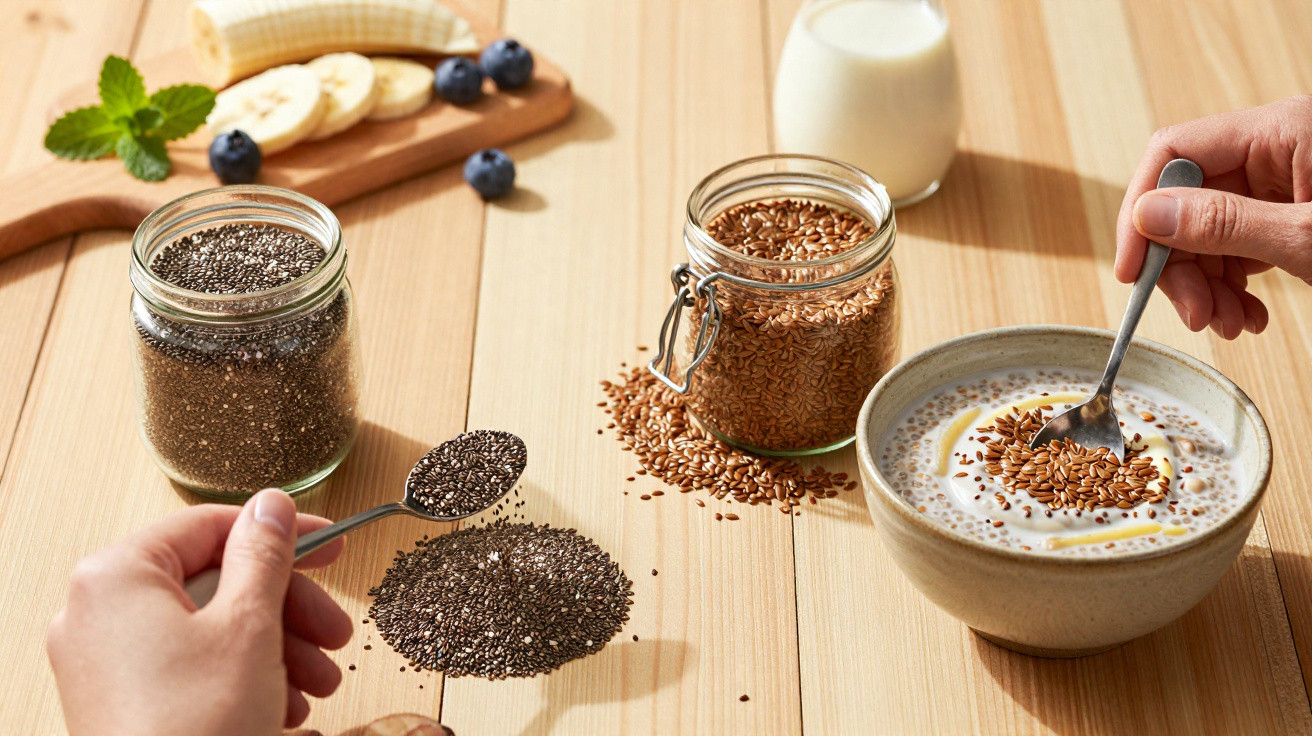
Chia seeds and flaxseeds are now found on supermarket shelves everywhere, often accompanied by bold health claims. Many people wonder whether these tiny seeds truly live up to their reputation. And if they do, which variety is best for what purpose – and how much should actually go on your plate?
Where these fashionable seeds come from
Chia: nutrient-packed seeds from Central America
Chia seeds come from Salvia hispanica, a plant that has grown in Central America for centuries. The Aztecs and Maya already used the seeds as an energy source for long journeys. Today, they are mainly added to bowls, puddings and smoothies.
They have one distinctive property: chia seeds absorb many times their own weight in water, creating a gel-like mixture. This is precisely why they are popular in pudding recipes and as a natural thickener.
Flaxseeds: an old favourite rediscovered
Flaxseeds are produced by the Linum usitatissimum plant, which people have cultivated for thousands of years, especially in the Middle East and Europe. Northern European growing regions are now among the most important producers.
Flaxseeds are particularly well known for their high omega-3 fatty acid and fibre content. They are considered a traditional remedy for a sluggish bowel and have long been used for digestive complaints.
Chia offers trend appeal and a gel-forming effect, while flaxseeds score through tradition and particularly high levels of plant-based omega-3.
Nutrients compared: chia seeds versus flaxseeds
Both seeds are tiny nutritional powerhouses, although there are clear differences in their individual nutrient profiles.
| Nutrient (per 100 g) | Flaxseeds | Chia seeds |
|---|---|---|
| Calories | 534 kcal | 486 kcal |
| Protein | 18.3 g | 16.5 g |
| Fat | 42.2 g | 30.7 g |
| Carbohydrates | 28.9 g | 42.1 g |
| Fibre | 27.3 g | 34.4 g |
| Omega-3 fatty acids | 22.8 g | 17.8 g |
| Calcium | 255 mg | 631 mg |
| Iron | 5.7 mg | 7.7 mg |
What does this mean for the body?
- Fibre: Both seeds are high in fibre and help to stimulate the bowel. Chia has a slight edge here and swells more strongly.
- Omega-3: Flaxseeds are among the best plant-based sources of omega-3 fatty acids, which is beneficial for the heart and blood vessels.
- Minerals: Chia seeds provide substantially more calcium and slightly more iron, supporting bones and the immune system.
If you want more omega-3, flaxseeds are the better choice. If calcium and iron are your priority, chia is a good option.
How the seeds can support your health
Digestion: support for a sluggish bowel
The fibre in both seeds binds water and increases volume in the bowel. This encourages bowel movement and may help to relieve constipation.
Flaxseeds mainly provide insoluble fibre, which makes stools softer and bulkier. In the digestive tract, chia forms a soft gel layer that protects the mucous membranes and is often perceived as more comfortable when the stomach is mildly irritated.
Heart and circulation: protection from within
Flaxseeds are rich in alpha-linolenic acid, a plant-based omega-3 fatty acid. Studies indicate that these fatty acids can have a positive effect on blood lipid levels. In particular, the “bad” LDL cholesterol level often falls slightly when people eat flaxseeds regularly.
Together with fibre, they may also help to stabilise blood pressure over the long term. Chia seeds contain omega-3 too, although in slightly smaller amounts, while also supplying many minerals involved in regulating blood pressure and muscle function.
Weight control: small serving, lasting fullness
Both chia seeds and flaxseeds swell considerably, making the stomach feel fuller. This can curb cravings and reduce snacking between meals.
Portion size is key: one to two tablespoons a day are usually enough to create a noticeable feeling of fullness without losing sight of the calories.
Plant-based protein: an advantage for vegans
With around 16 to 18 grams of protein per 100 grams, both seeds supply a worthwhile amount of plant protein. Anyone who eats little or no meat can use them to improve their protein intake.
Combining them with pulses or grains creates an even more complete amino acid profile. Conveniently, the seeds can be sprinkled into almost anything without changing the flavour much.
How to include flaxseeds in everyday meals
Why ground flaxseeds offer more benefits
Whole flaxseeds often pass through the bowel largely undigested. Because their outer shell is very tough, the body struggles to access their nutrients.
To make the most of their health benefits, grind flaxseeds freshly – for example, in a small coffee grinder – or use ready-ground varieties.
- Smoothies and yoghurt: A tablespoon of ground flaxseeds in a morning smoothie or yoghurt noticeably increases the fibre and omega-3 content.
- Bread and baking: When baking, some of the flour and fat can be replaced with flaxseeds. This gives bread, rolls or muffins a heartier texture and makes them more filling.
- Egg replacement in cooking: Mix one tablespoon of ground flaxseeds with three tablespoons of water; it swells within a few minutes and can replace one egg in many recipes – a popular choice in vegan cooking.
Whole flaxseeds mainly work mechanically in the bowel, while ground seeds also provide their valuable fatty acids and vitamins.
Using chia seeds cleverly
Whole or soaked – both work well
Chia seeds can also be digested well when eaten whole. They swell quickly and form a gel-like coating. Soaking them beforehand is gentler on the stomach and makes even more of their filling effect.
- Chia pudding: Mix two tablespoons of chia seeds with around 150–200 ml of milk or plant milk, refrigerate for a few hours or overnight, then top with fruit and nuts as desired.
- A salad extra: Sprinkle one to two teaspoons of chia seeds over salads. They add texture, omega-3 and fibre without overwhelming the flavour.
- Drink booster: Stir one tablespoon of chia seeds into a glass of water with lemon juice, leave it briefly, then drink – particularly popular on warm days.
How much is sensible – and are there any risks?
The German Nutrition Society does not specify a strict upper limit, but many experts advise moderate quantities. A rough guideline is:
- around 1–2 tablespoons of flaxseeds per day
- around 1–2 tablespoons of chia seeds per day
Anyone suddenly eating substantially more fibre should make sure they drink enough. Otherwise, the bowel may become overwhelmed, causing wind or bloating; in extreme cases, a bowel obstruction is possible if large quantities of dry seeds are consumed without fluid.
People with known bowel conditions, swallowing difficulties or regular use of blood-thinning medication should discuss introducing larger amounts of chia or flaxseeds with their doctor.
Who are the different seeds particularly suitable for?
Chia: useful for people who cannot tolerate milk
Because of their high calcium content, chia seeds can be especially useful for people who eat little or no dairy. Vegans also benefit, as chia provides iron as well as plant-based protein.
Flaxseeds: a strong choice for the heart and bowel
Anyone looking to specifically support heart health, or who already has raised cholesterol levels, can rely on flaxseeds as a strong omega-3 source. Many GPs have traditionally recommended them for persistent constipation too – naturally alongside enough water.
Practical combinations and kitchen ideas
Chia and flaxseeds can be combined without any problem. One simple breakfast example includes:
- 3 tablespoons of oats
- 1 tablespoon of ground flaxseeds
- 1 tablespoon of chia seeds
- 150 ml of milk or plant milk
- Fruit and a few nuts of your choice
Mix everything the evening before, leave it in the fridge overnight and enjoy it cold in the morning. This effortlessly adds a substantial serving of fibre, protein, omega-3, calcium and iron to your bowl.
If you prefer savoury food, stir flaxseeds into soups or scatter them over roasted vegetables. Chia seeds work well in bowls, in vegan sauces as a thickener or as a topping for a creamy vegetable soup.
In the end, there is no need to treat chia and flaxseeds as an “either-or” choice – combining them usually delivers the widest variety of nutrients in everyday meals.

















Comments
No comments yet. Be the first to comment!
Leave a Comment