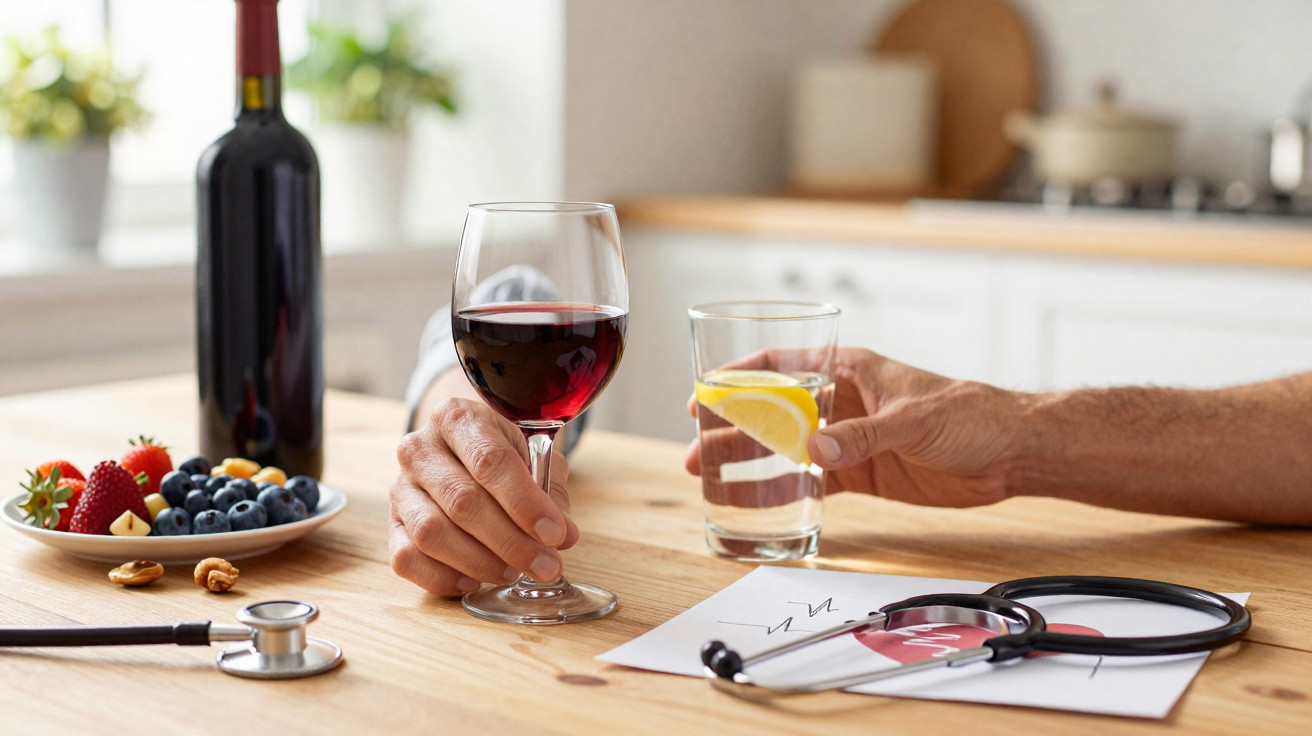
“New data is now tearing down this comforting health myth.
Many people will recognise the scene: at a family meal, someone raises a glass of red wine and says with a wink that it is simply training for the heart. For decades, the supposed cardiovascular benefit served as a polished excuse. Yet research from recent years has gradually dismantled that myth, revealing a far less comfortable picture of alcohol and health.
How a statistical curiosity became a national pastime
The story began several decades ago. Researchers noticed that people in certain regions with traditionally high-fat diets - rich in cheese, cured meats and butter - nevertheless experienced fewer heart attacks than people in countries such as the United Kingdom or the United States. At the same time, red wine was often present at the table in those areas.
A simple and highly convenient interpretation emerged from this observation: red wine must protect the heart. Suddenly, a daily glass seemed less like an indulgence and almost like a treatment. People who enjoyed drinking felt vindicated, doctors appeared on television chat shows, and wine producers benefited from the free publicity.
“I enjoy drinking” became “I drink for my heart” - a statement that science never genuinely supported.
Lifestyle, not a miracle drink
The issue is that correlation was prematurely treated as causation. People living in these regions generally did many other things considered good for the heart:
- eating regular, relatively structured meals rather than constantly snacking
- consuming plenty of vegetables, pulses, fruit and olive oil
- spending more time over relaxed meals instead of rushing through food in front of a screen
- often being more physically active in everyday life and eating fewer highly processed foods
Red wine may have been on the table, but it was only one component of an overall lifestyle - not automatically the healthy force behind it. The appealing shorthand, “red wine protects the heart”, ignored all these influences and reduced a complex interaction to a single product.
New studies, old excuses: the “healthy amount” is falling apart
For years, specialist articles and media reports repeated the famous “J-curve”: according to this idea, moderate drinkers were expected to live longer than people who did not drink alcohol at all. Only substantial misuse was thought to raise the risk sharply again.
Why the curve does not hold up
More recent and better-designed analyses have systematically taken this curve apart. One key issue is that the “non-drinker” group in many older studies included very different people:
- former heavy drinkers who had stopped because of heart problems, liver disease or cancer
- people with chronic illnesses who had never consumed alcohol
- people in generally poor health whose doctors had advised them not to drink
Comparing these already affected people with otherwise healthy light drinkers inevitably creates an apparent advantage for an evening glass. Once this error is corrected, and genuinely healthy abstainers are compared with healthy moderate drinkers, the supposed protection disappears.
The current evidence is clearer than ever: risk rises from the first sip - not only from the third bottle.
Resveratrol: the frequently cited wonder substance that is barely present in a glass
Another popular argument in favour of red wine is resveratrol. This plant compound from grape skins has shown antioxidant and blood-vessel-protective effects in laboratory settings. It sounds impressive, but it is unfortunately not realistically transferable to a glass of wine.
Why you would theoretically need to drink barrels
The quantities used in cell-culture studies are many times higher than the amount found in ordinary red wine. To achieve the effects observed there, a person would theoretically have to drink enormous quantities of wine - far beyond any survivable limit.
Before the body could reach a meaningful dose of resveratrol, the alcohol would already have severely damaged the heart, liver and brain. The supposed “protection argument” therefore collapses entirely.
Choose grapes rather than a bottle of wine
Anyone looking for antioxidants can find them in abundance in:
- fresh grapes
- red and purple berries, including blueberries, blackberries and blackcurrants
- unsweetened grape juice or berry smoothies
- nuts, herbs and green vegetables
All of these foods provide the desired compounds - without the toxic substance ethanol. The aim of protecting the body simply does not fit with a product that is known to damage cells.
What alcohol directly does to the heart and blood vessels
Moving away from the myth and towards the body: what really happens when alcohol enters the bloodstream? The romantic idea that a drink “opens the blood vessels” and therefore calms the heart does not withstand sober scrutiny.
High blood pressure and arrhythmias even at small amounts
Regular alcohol consumption, including the level of “just one glass in the evening”, is linked to raised blood pressure. High blood pressure places a continual strain on the heart and blood vessels, and is regarded as one of the strongest drivers of strokes and heart attacks.
Alcohol can also disrupt electrical activity in the heart muscle. Doctors know this as “holiday heart” - atrial fibrillation, a heart rhythm disorder that markedly increases stroke risk, can suddenly occur at weekends or after parties. For some people, occasional overindulgence is enough to trigger it.
The substance that directly harms heart-muscle cells
Ethanol attacks the body’s cells directly. In the heart muscle, years of heavy drinking can cause a particular form of heart failure known as alcohol-related cardiomyopathy. The muscle becomes weakened, pumps less effectively, and those affected become short of breath even with minor exertion.
Even people who remain well below this extreme level should understand one point: a substance that destroys heart muscle at high doses does not suddenly become a protective vitamin in smaller amounts.
When “heart protection” fails other organs
Focusing only on the heart is like shining a spotlight that leaves damage to other organs in the dark. Alcohol affects almost every system in the body, sometimes with drastic consequences.
Cancer risk with no safe lower limit
Medical expert bodies classify alcohol as an established cause of several cancers. These include:
- the mouth and throat
- the oesophagus
- the liver
- the breast in women
- the bowel
Even small daily amounts measurably increase risk. Based on current knowledge, there is no “safe” threshold. In the body, ethanol is converted into acetaldehyde, a substance that directly affects genetic material and disrupts repair mechanisms.
Liver, brain and sleep: the quiet cost in the background
The liver has to break down alcohol as a priority. While it does so, other tasks are left behind: fat metabolism, hormone breakdown and blood-sugar regulation. Over the years, this raises the risk of fatty liver disease, liver inflammation and eventually cirrhosis.
The brain is sensitive to this toxic substance: memory, concentration and mood can lose their balance. Even though many people believe alcohol helps them “sleep better”, sleep physiology shows a different picture: it may help people fall asleep more quickly, but sleep becomes more restless, with more interruptions and less deep sleep. The restorative effect of the night suffers noticeably.
Why we still defend the myth so persistently
If the evidence is so clear, why does the belief in heart-friendly red wine remain so deeply rooted in everyday life?
Culture, identity and the discomfort of admitting it
Wine represents pleasure, tradition and sociability. Few people welcome being told that this very symbol has a risky side. It creates an internal tension: you enjoy something that causes harm, yet do not want to see yourself as an “unhealthy person”.
To reduce this contradiction, the brain looks for reassuring explanations. A report about alleged “protective compounds” is remembered, while a major cancer study is pushed aside. This creates the feeling: “It cannot be that bad; I read that it was good for the heart.”
Marketing that gladly plays on health
The wine industry deliberately uses romantic imagery: vines at sunset, happy couples and country-house cooking. It all appears harmless, even almost healing. The fact that it is an addictive and cell-damaging toxin recedes completely into the visual background.
When idyllic scenery dominates the label, the fact “contains alcohol” automatically moves into second place.
Advertising and lobbying have for years reinforced the message: “In small quantities, it is simply part of life, and perhaps it is even healthy.” The problem is that there is no scientific basis for this reassuring addition.
Enjoy it, yes - but without a medical excuse
The question, then, is less: “Am I still allowed to drink red wine?” It is instead: “Am I prepared to deal honestly with the risks?” Health authorities put it plainly: the less alcohol, the better for the body.
What a realistic approach can look like
People who still wish to drink can use a few practical guideposts:
- Avoid making it a daily ritual: plan alcohol-free days rather than automatically pouring a drink every evening.
- Keep track of quantity: use smaller glasses and make a conscious decision before topping up.
- Enjoy it purely for pleasure, not “for the heart”: drink because you like the taste, not as supposed medicine.
- Question the occasion: does it really have to be an “after-work wine”, or would tea, a fruit spritzer or alcohol-free beer do?
Many people notice after just a few alcohol-free weeks that they sleep better, have steadier blood pressure and wake with more energy. That contrast can make a previous habit feel worth questioning.
What genuinely protects the heart and blood vessels
Anyone who truly wants to support their heart and circulation has much more effective options than a glass of wine:
- daily physical activity, ideally enough to work up a light sweat
- plenty of vegetables, wholegrains, pulses, nuts and high-quality oils
- reducing stress through sleep, breaks and social contact
- not smoking, and taking a mindful approach to weight and blood pressure
All of this can be combined with occasional, consciously chosen enjoyment - but not with the illusion that alcohol is some kind of heart vitamin. Anyone who simply sees their glass for what it is in future - a pleasure product with a cost - can make better-informed choices. And that clarity ultimately brings more freedom than any conveniently reassuring drinking myth.














Comments
No comments yet. Be the first to comment!
Leave a Comment