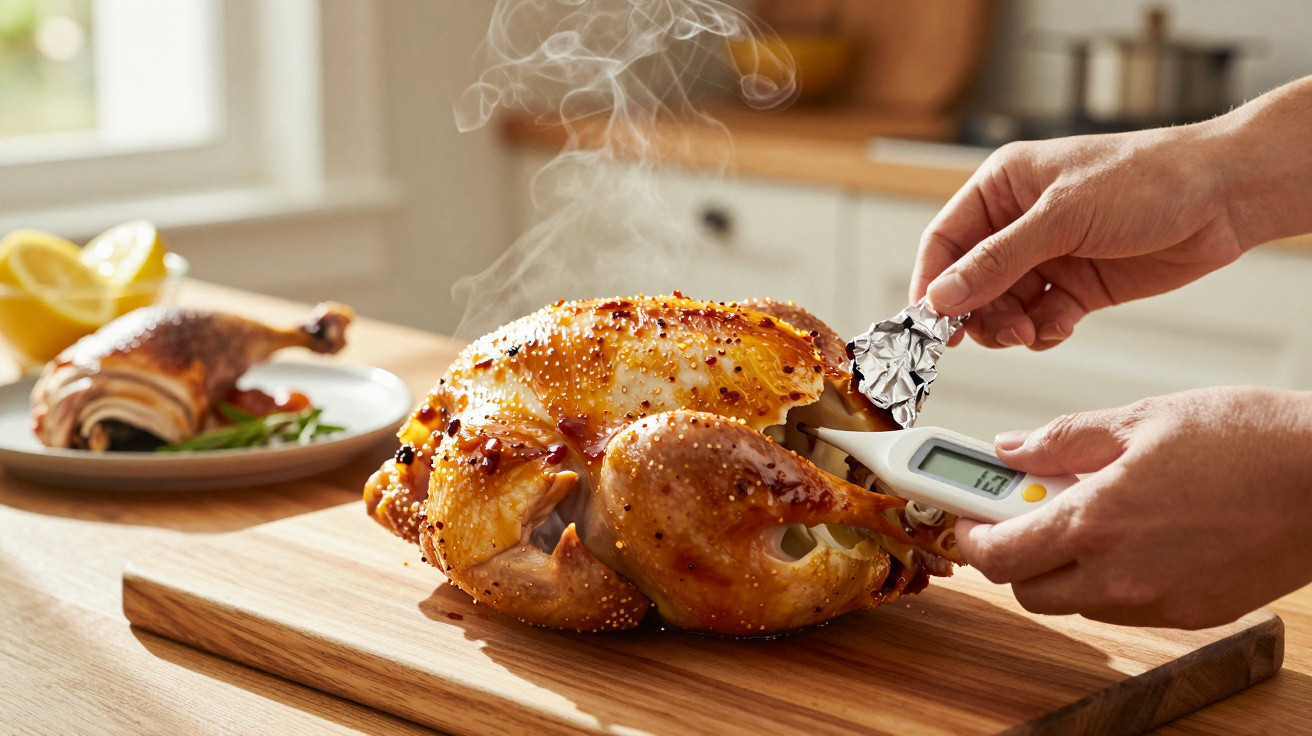
Used correctly, it also stops the breast meat from drying out.
The question comes up at every big family meal: should you cover a chicken, turkey or guinea fowl while it roasts in the oven? Many people do so automatically, from the moment it goes into the oven until it is served. Cooking professionals tend to favour a more measured approach. Aluminium foil is genuinely useful, provided it is not left on for too long.
Protection when poultry pieces cook at different rates
The various parts of a whole bird respond differently to heat. The breast, positioned at the top, is exposed directly to the oven's heat. It heats up quickly and can readily lose moisture. The legs, being thicker and containing more connective tissue, often need longer.
This is where covering the dish is especially helpful. Loosely placed over the roasting tin, it slows down browning on the most exposed areas. It also reduces evaporation from the surface of the meat. Wings in particular benefit from this protection, as they can burn before the legs have cooked through.
“Aluminium foil does not cook the meat for you: its main purpose is to help the breast and extremities wait while the legs finish cooking.”
This step is useful for a large turkey as well as for a plump free-range chicken. It prevents the disappointing combination of dry breast meat and legs that are still firm. With smaller birds, however, regular checking can sometimes be enough.
Why aluminium foil should not stay on until the end
The main drawback of keeping a cover on throughout roasting is moisture. Steam is trapped around the skin, so while the flesh may remain tender, the exterior lacks texture. The skin turns pale and soft, and can sometimes become almost rubbery.
Part of the appeal of roast chicken lies in that contrast: beneath crisp, golden skin, the meat should stay succulent. Achieving this requires dry air and direct oven heat during the final stage of cooking.
The best approach, then, is to remove the foil before the end. The right timing varies according to the bird's weight, the oven's power and how much colour it has already developed. For a chicken weighing around 1.5 kg, many cooks cover the roasting tin for the first part of cooking, then remove the cover for the final 20 to 30 minutes.
- Position the shelf in the centre of the oven to avoid overly fierce heat from above.
- Lay the foil over the dish without pressing it against the skin, so that it does not stick to the cooking juices.
- Take it off when the meat is nearly cooked but the skin is still pale.
- Baste once or twice with the juices from the roasting tin, without opening the oven every five minutes.
- Keep an eye on the wings: they can be covered on their own with small strips of foil.
Internal temperature is the most reliable guide
Colour alone does not always show whether the poultry is cooked. A kitchen thermometer provides a safer answer. Insert it into the thickest part of the leg, taking care not to touch the bone. For thoroughly cooked poultry, the centre should reach approximately 74°C.
If the breast is already deeply browned but the leg temperature is still too low, loosely cover the top again. This allows the bird to cook for longer without drying out the breast. Conversely, if the skin has not coloured enough right at the end, a brief increase in temperature can help, provided it is watched closely.
Resting roast poultry: a step too often rushed
Once it comes out of the oven, the bird should not be carved straight away. That can be hard to resist, particularly when its aroma fills the kitchen. Yet resting it for 10 to 20 minutes makes a real difference.
During roasting, the juices gather towards the centre of the bird. Carve it too soon and they will run out freely onto the board. After a few minutes' rest, they redistribute through the fibres. The meat is then more tender and retains its moisture better on the plate.
“After cooking, a loose cover keeps the heat in. It must not be tightly sealed, otherwise the skin will lose the crispness achieved in the oven.”
Simply tenting a sheet of foil over the roasting tin is sufficient. The chicken should not be wrapped airtight. A small amount of air must still be able to circulate around the skin.
Alternatives for anyone avoiding aluminium foil
Baking parchment is a practical alternative. It shields the surface of the meat while remaining easy to remove. It can withstand the temperatures stated by its manufacturer and is well suited to conventional oven roasting.
Some cooks prefer to cover the breast with thin rashers of bacon. The fat melts gradually, moistening the surface and flavouring the juices. This method needs a little care: the bacon must be removed early enough for the skin to brown. It is better suited to a generous meal than to a lighter dish.
Another method is to add a few onion wedges, a crushed garlic clove, thyme and a little water or stock to the roasting tin. These ingredients create gentle moisture and add flavour to the juices. They do not fully replace protection for the breast, but they lower the risk of it drying out.
Take care with highly acidic preparations
Aluminium foil is not always suitable for highly acidic marinades containing plenty of lemon, vinegar or tomato. Extended contact with these ingredients may slightly affect the flavour of the dish. In that situation, baking parchment or a lid designed for the roasting dish is a better choice.
For properly crisp skin, pat the chicken dry thoroughly with kitchen paper before seasoning it. A drizzle of oil, salt, pepper and a few herbs are often all that is needed. The real difference comes less from the amount of seasoning than from getting the sequence right: protect it at the start if needed, uncover it at the proper time, then let it rest before serving.

















Comments
No comments yet. Be the first to comment!
Leave a Comment