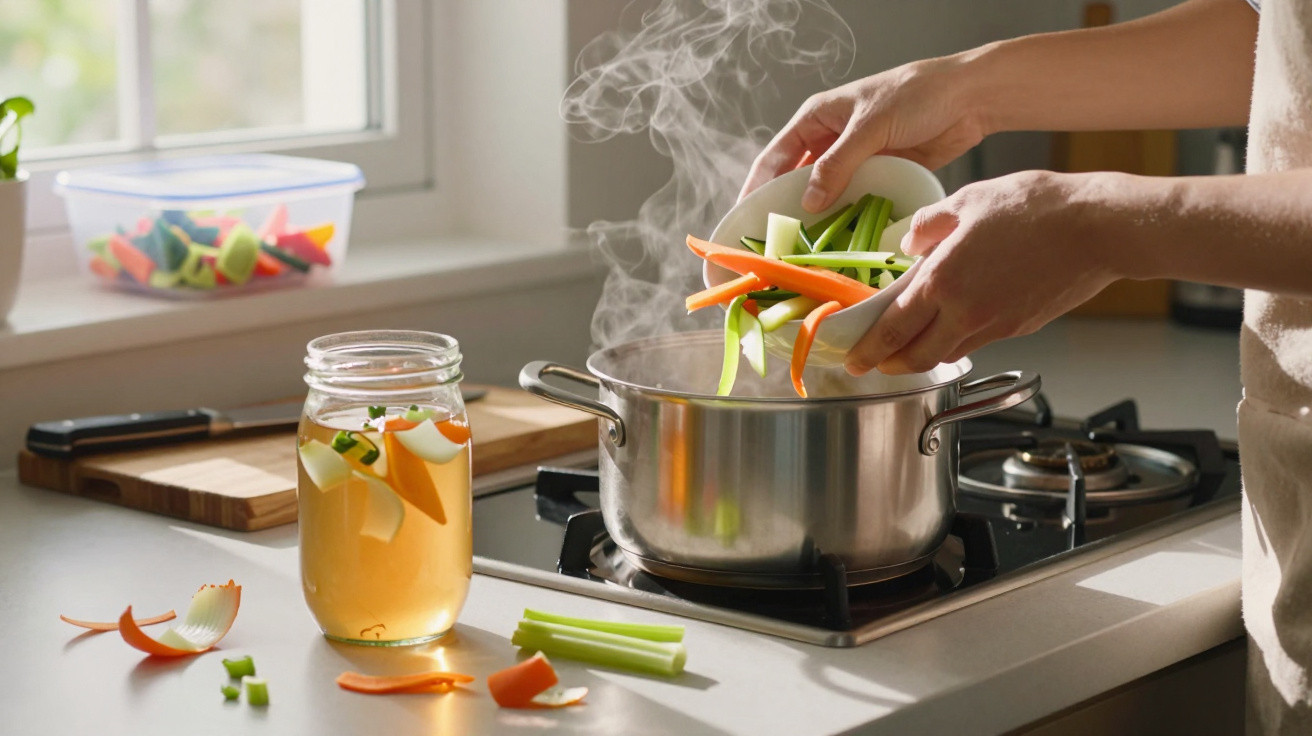
The meal is almost over, the bin is already open, and the carrot peelings, leek greens and parsley stalks are waiting for their usual fate. We all know the quick routine: peel, chop, throw away, without giving it much thought – especially on a weeknight when everyone simply needs feeding. Yet that slightly uneven handful of peelings still holds fragrance, colour and real depth of flavour. With nothing more than a saucepan, water and a little patience, it can become a homemade stock that lifts a soup, risotto or sauce. Sometimes, the change starts with something very small.
Vegetable scraps that still smell of cooking
In the kitchen, stock often begins with a scent: onion drying on the chopping board, freshly sliced celery, or carrots that still smell earthy even after washing. The parts we assume are useless can contain remarkable flavour, particularly when they have been selected carefully from fresh vegetables. Tops, ends, clean outer leaves and cores can all become an understated but extremely useful base. That flavour is the real luxury: a gently simmering pot that has cost very little.
Depending on the meals cooked at home, a family of four can easily generate between 500 grams and 1 kilo of vegetable trimmings in a week. One reader described keeping fennel fronds, mushroom stems and carrot peelings in a large freezer bag until Sunday. She then simmered the lot for an hour before filling jars for the week ahead. Her son, usually suspicious of soup, asked for “the orange soup with the nice flavour”. It goes to show that the most persuasive savings do not always make a fuss.
Shop-bought stock cubes are useful when the cupboard is bare or time is genuinely short, but they often contain plenty of salt and standardised flavourings. Stock made from peelings works differently: it supports food rather than overpowering it, offering a rounder, less harsh taste. Onion skins bring an amber hue, leek greens add a vegetal note, and herb stalks provide fragrance without weighing the dish down. It is not a perfect recipe; it is a habit that develops over time.
The simple method for genuinely useful homemade stock
Keep a bag or airtight container in the freezer, adding peelings as you prepare meals, but only once they have been washed thoroughly. When it is full, put around 700 grams of vegetables into a large saucepan with 1.5 to 2 litres of cold water, a bay leaf, a few peppercorns and a garlic clove if you fancy it. Bring it slowly to a gentle simmer, then cook for 45 minutes to an hour without letting it boil vigorously. Strain, taste and add only a little salt at the end.
The most common mistake is putting every scrap into the bag indiscriminately, whether through enthusiasm or a dislike of waste. Potato peelings, cabbage cores, very damaged leaves, large quantities of beetroot skins and vegetables that have already turned slimy can make the liquid cloudy, bitter or simply disappointing. Let us be honest: nobody does this perfectly every day. A small, carefully sorted collection is better than a pot that tastes of the fridge, and mouldy scraps should never be used, even after cooking.
The best approach is to make a fairly mild blend, then tailor it to the dish you have planned: more leek for soup, extra mushrooms for risotto, or a few coriander stalks for an Asian dish.
“A good stock does not try to steal the spotlight: it simply makes everything else taste better.”
To fill your bag without unpleasant surprises, choose in particular:
- carrot peelings and courgette ends;
- leek greens, parsley stalks and celery stalks;
- mushroom stems and clean onion skins;
- radish or carrot tops, in moderate amounts.
A small habit that changes the way you cook
Once cooled, the stock will keep for three days in the fridge in a clean bottle, or for up to three months in the freezer. Ice-cube trays are especially useful: a single cube of homemade stock is enough to deglaze a frying pan, loosen a sauce or add depth to lentils. This quiet reserve also prevents that familiar moment when you begin a recipe enthusiastically, only to realise the key ingredient is missing. One bag of vegetables is often enough to rescue dinner.
This stock does not claim to solve food waste on its own, nor to turn every kitchen into a model of virtue. Instead, it encourages us to see differently what passes through our hands before it reaches the bin. On a rainy Sunday, a gently trembling saucepan can become a small lesson for children, or a reassuring ritual when the weeks seem to rush by too quickly. Sharing favourite blends, trying a batch with squash peelings, or adding a Parmesan rind to another recipe: these small details keep cooking alive far beyond printed recipes.
| Key point | Detail | Added value for the reader |
|---|---|---|
| Sorting peelings | Use washed, fresh vegetables that are not damaged | A more fragrant stock, without bitterness or unpleasant flavours |
| Gentle cooking | Simmer for 45 to 60 minutes in 1.5 to 2 litres of water | Balanced flavours and a versatile base |
| Storage | Three days chilled or three months frozen | A ready-to-use alternative to shop-bought stock cubes |

















Comments
No comments yet. Be the first to comment!
Leave a Comment