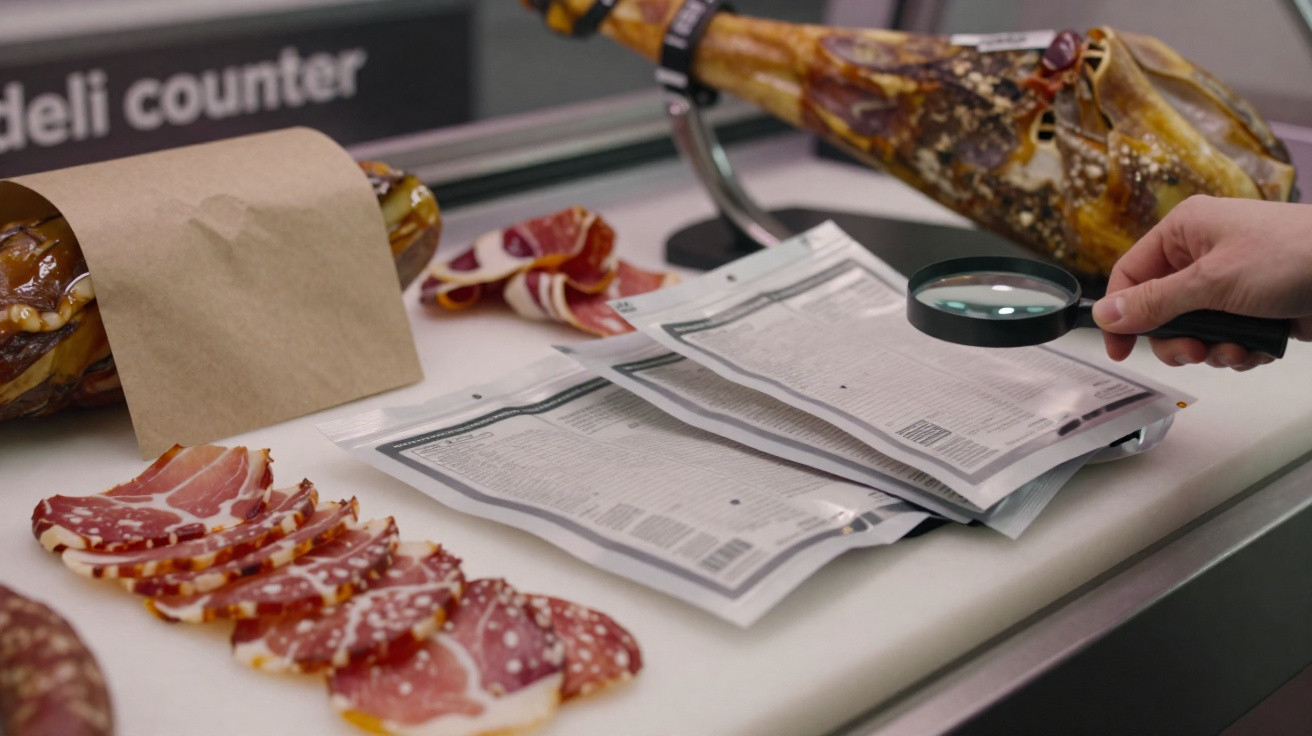
It is easy to be persuaded by a confident headline about “official” changes to ham, chorizo and cold cuts. Shoppers want to know whether a new rule means better ingredients, fewer additives or safer food - especially when a packet uses words such as “natural”, “traditional” or “artisan”.
But the claim in that headline goes much further than food labelling can support. A regulation may set rules for particular wording or traceability in one country; it cannot, by itself, “forever change” the quality of every ham or cold cut. The practical trick is to treat prominent claims as a starting point, then check the ingredients, date mark, storage instructions and origin on the pack.
Start by separating a claim from a fact
A label can tell you something useful, but it is not a complete verdict on quality, nutrition or safety. “Natural”, “traditional”, “hand-finished” and similar wording may refer to a recipe, a production step or a marketing style. Their legal meaning can also vary between countries and products.
The draft claim about a specific Spanish rule should not be treated as settled information without checking the official legal text, its commencement date and exactly which products it covers. Detailed references to decree numbers, legal definitions and mandatory marks need a reliable primary source. Without that, they risk misleading shoppers.
This matters particularly for UK readers. Food rules in Spain do not automatically become rules in England, Scotland, Wales or Northern Ireland. Imported products sold here still need to meet applicable UK labelling requirements.
A reassuring word on the front of a packet is useful only when the rest of the label backs it up.
What food labels can realistically tell you
The information panel is usually more valuable than the design on the front. For pre-packed food sold in the UK, shoppers can generally expect key details such as:
- a name that describes the food;
- an ingredients list, with allergens emphasised;
- a best-before or use-by date where required;
- storage instructions where needed for safe use;
- the name and address of the responsible food business;
- nutrition information in many cases;
- a lot or batch code, which helps identify a production batch.
Some details depend on the product and how it is sold. A deli counter, for example, may provide information differently from a sealed supermarket pack. If you have an allergy or dietary requirement, ask staff for the product information rather than relying on an informal description.
Country-of-origin information can also be helpful, but it should not be confused with a guarantee of a particular recipe or production method. A product made in Spain may contain ingredients from elsewhere, while a Spanish-style product may be produced in the UK.
Why “natural” is not a nutrition score
“Natural” is one of the most easily misunderstood terms on food packaging. Even where a producer uses it carefully, it does not automatically mean low in salt, low in saturated fat, additive-free, organic, handmade or suitable for every diet.
Cured meats are preserved foods. Salt is commonly part of the curing process, and the salt content can vary considerably between products. Comparing the nutrition table per 100g is a straightforward way to see the difference between two similar packs.
An ingredients list can also show whether a product contains preservatives, sugars, starches, flavourings or other ingredients that matter to you. That does not make one list automatically “good” and another “bad”. Permitted food additives have legitimate functions, including preservation and consistency.
A practical label check in three steps
- Read the product name first. Check whether you are buying cured ham, cooked ham, a reformed meat product, chorizo or a meat-based alternative. Similar-looking products can be made quite differently.
- Compare ingredients and allergens. Put the pack back if the information is missing, unclear or unsuitable for your needs.
- Check salt, date and storage guidance. These are often more immediately useful than broad claims on the front.
Artisan-looking is not necessarily artisan-made
String, kraft paper, farmhouse illustrations and old-fashioned typefaces are design choices. They may suit the product, but they do not prove that it was made on a small scale or by hand.
A genuine production claim should be clear enough to understand. It might identify a particular curing method, a named region, a protected designation or a producer’s own process. Even then, consider what the claim does and does not say.
For example, a handmade or traditionally cured product may be appealing for flavour or craftsmanship, but that alone does not tell you its salt level, allergen status, animal-welfare standards or whether it is suitable for a particular diet.
Be especially cautious with vague phrases that cannot be checked from the packet. If a retailer makes a specific claim about production, origin or ingredients and it matters to your purchase, ask for written product information.
Batch codes and dates have different jobs
A batch or lot code is not a freshness rating and does not identify the “best” ham in the fridge. It helps the producer, retailer and enforcement authorities trace a group of products if there is a problem.
The use-by date is the key food-safety date on products that spoil quickly and should be followed carefully. A best-before date is mainly about quality rather than safety, although storage instructions still matter.
Keep the outer packaging until you have finished the food, particularly if you are serving it to guests or using several packs for a buffet. It preserves the date, storage guidance, allergen information and batch details if you need them later.
Batch information is there for traceability, not for judging flavour or maturity at a glance.
Store cold cuts carefully after opening
Cured meat can look robust, but sliced and cooked products still need sensible handling. Follow the pack instructions, especially where it says “keep refrigerated” or gives a use-within period after opening.
Safer everyday handling
- Refrigerate products promptly after shopping, particularly in warm weather or after a long journey home.
- Use clean hands, knives and serving tongs. Avoid returning food that has been on a serving plate to the original pack.
- Keep opened packs sealed or covered to reduce drying out and cross-contamination.
- Do not use food after its use-by date, even if it looks and smells normal.
- For buffets, put out smaller portions and replenish them rather than leaving a large plate at room temperature for hours.
If a pack is swollen, leaking, badly damaged or smells unusual before its date, do not taste it to test it. Return it to the retailer or follow the manufacturer’s contact instructions.
Common mistakes to avoid
Assuming imported food follows a single set of rules. Products may be made under the rules of the country of production, while labels for UK sale must also provide the information required here.
Treating “natural” as proof of better nutrition. It does not replace checking salt, ingredients and portion size.
Believing a rustic package proves a handmade product. Packaging is not evidence of a particular production method.
Reading a batch code as a quality grade. Its main purpose is traceability.
Leaving sliced meats out during a long gathering. Follow chilling and storage instructions, and use clean serving equipment.
Relying on a headline instead of the pack. Headlines often simplify complex rules and can exaggerate what has actually changed.
A better way to choose ham and chorizo
There is no single 2026 change that makes all ham, chorizo or cold cuts permanently better. Food quality remains product-specific: it depends on the recipe, production, storage, freshness and what you personally value.
For an everyday sandwich filling, compare ingredients, salt and the use-by date. For a special meal, you may also want to consider origin, curing style and flavour. For an allergy or dietary requirement, prioritise the full ingredient and allergen information over any attractive wording on the front.
The most useful shopping habit is simple: look beyond the headline claim, read the small print and store the food properly once you get it home. That approach works in a UK supermarket, an independent deli or when ordering imported cured meats online.

















Comments
No comments yet. Be the first to comment!
Leave a Comment