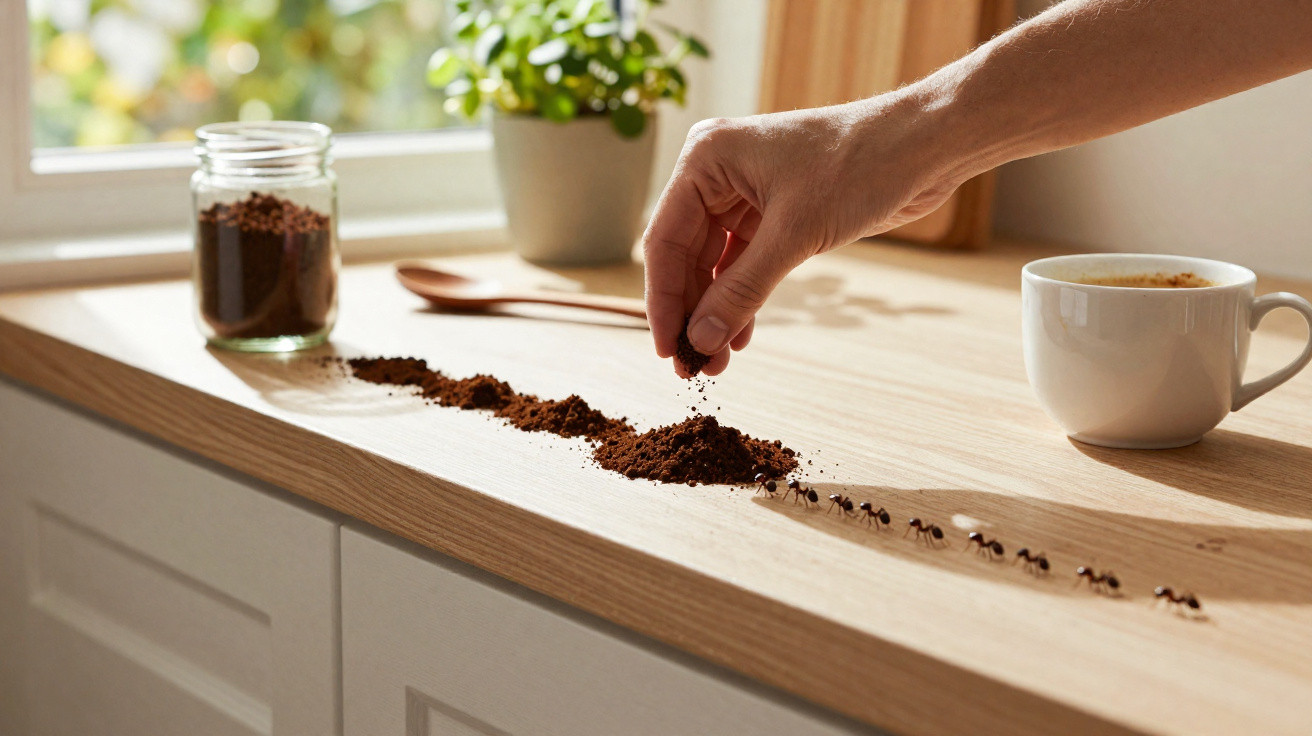
Coffee grounds are usually thrown away as soon as the drink has been made, yet they can serve a useful purpose both indoors and outdoors: as a natural ant repellent. They can help deter insects at key locations without relying on harsh chemical products, provided a few precautions are taken to prevent mess, excess moisture and unpleasant odours.
How do coffee grounds deter ants?
Coffee grounds work mainly through two characteristics: their strong scent and granular texture. Their intense aroma disrupts the ants’ chemical communication, as they navigate by pheromone trails, making it harder for them to move towards food and household waste.
Their uneven texture also forms an uncomfortable barrier, making the route less appealing and more difficult to cross. It is worth remembering that coffee grounds are not a poison; they offer temporary deterrence and need replacing whenever the smell fades or the material breaks down.
How can coffee grounds be used indoors to deter ants?
Indoors, they should be placed at strategic points, away from food and areas with heavy foot traffic from people and pets. In kitchens and utility rooms, they are commonly positioned along skirting boards, behind cookers, in cupboard corners and close to bins, while avoiding direct contact with food-preparation surfaces.
To minimise mess and make cleaning easier, many people choose shallow containers or small “sachets” made from fine cloth or paper filters. The grounds are generally replaced every 3 to 7 days, according to ventilation and humidity. Used material should be put in the organic waste bin once its scent has weakened or mould appears.
How should coffee grounds be applied outdoors?
In outdoor spaces such as gardens, yards and balconies, coffee grounds can be used more freely to create barriers near doors, thresholds, drains, and around frequently affected pots and flower beds. In well-drained soil, they can be lightly worked into the surface to keep their scent more noticeable to ants.
Because rain and watering lessen the effect, reapplication is usually needed more often, sometimes every 2 or 3 days during wet periods. In dry weather, the interval may be longer, but the grounds should be replaced whenever the visible barrier disappears or the scent becomes faint to continue deterring insects.
Precautions, combinations and extra tips for using coffee grounds
A few measures can make the use of coffee grounds more effective and safer at home. For indoor use, it is advisable to dry the material before application to prevent mould, and to keep it out of pets’ reach, since large amounts of coffee can be harmful to curious dogs and cats.
To improve the results and make coffee grounds part of an ant-control routine, many people combine cleaning, other natural ingredients and monitoring of ant trails. Common practices include:
- Cleaning the area with a vinegar-and-water solution to erase chemical trails before applying the grounds.
- Adding crushed citrus peel, such as lemon or orange, to the coffee grounds to strengthen the scent ants dislike.
- Carefully identifying entry points and concentrating the barrier in those locations.
- Keeping bins tightly closed and avoiding exposed food scraps, which reduces the attraction for insects.
When paired with good hygiene habits, dry floors and proper disposal of organic waste, coffee grounds provide an additional layer of simple, affordable protection. They make creative, useful use of an everyday residue in household ant control.

















Comments
No comments yet. Be the first to comment!
Leave a Comment