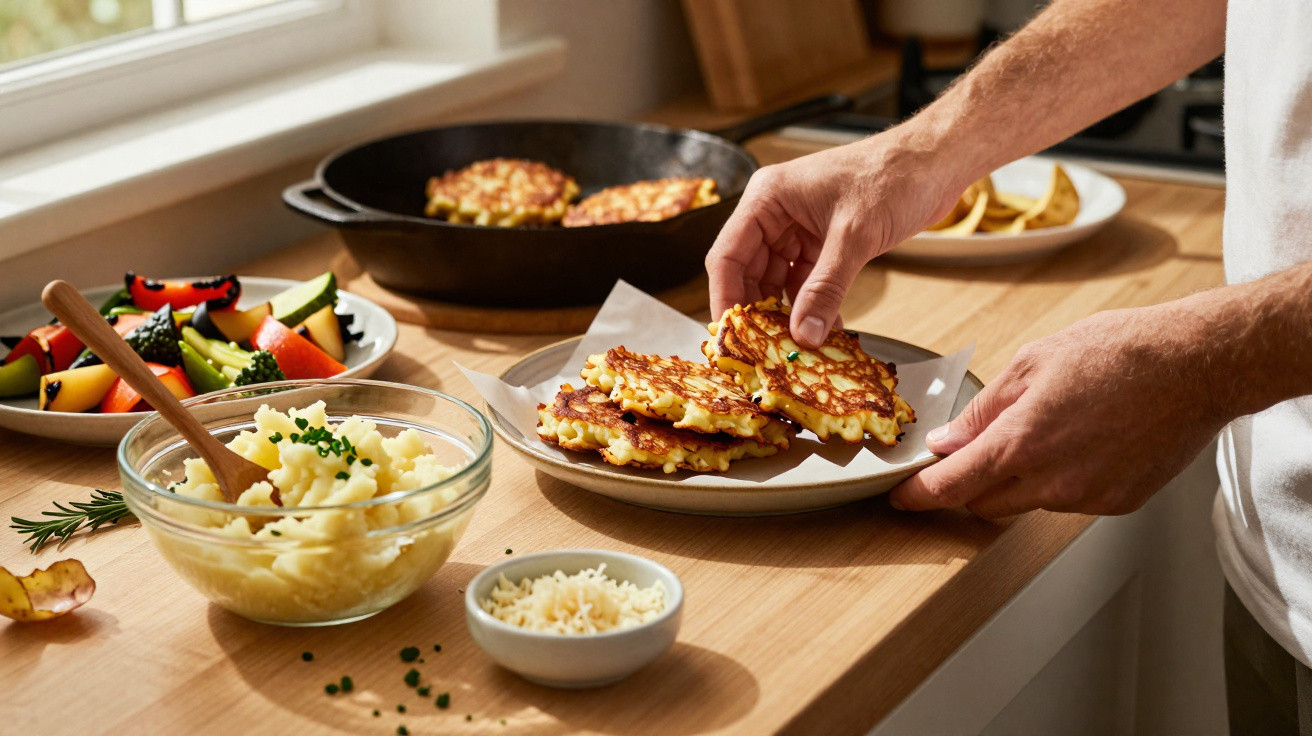
Is there a sad leftover portion of mashed potato waiting in the fridge?
Do not throw it away – it can be turned into a surprisingly crisp comfort dish.
Many people will recognise the scene: at the back of the fridge sits a bowl of yesterday’s mashed potato, its surface greyish and firm, hardly looking appetising. Yet this unassuming leftover can become the starting point for a new crunchy favourite – with very little effort, no expensive ingredients and a clear benefit in reducing food waste.
Why leftover mashed potato is far too good for the bin
Every year, large quantities of cooked potatoes and mashed potato are thrown away in German households. Sometimes it is down to convenience, sometimes uncertainty: “It looks odd, so it’s better to throw it out straight away.” Cold mashed potato actually has plenty of potential.
In just a few minutes, the firm lump in the container can become golden-brown potato galettes with a crisp crust and a soft centre.
Cooked potatoes are easy to use again. They bind well, keep you full for a long time and work with almost anything the fridge has to offer. Anyone taking leftover cooking seriously should therefore regard mashed potato as a useful wild card, not a problem.
The basic recipe: turning leftovers into crisp potato galettes
These ingredients are all you need
The basic version requires only a few items that are usually already in the kitchen:
- 300 g cold mashed potato (from the fridge)
- 1 egg
- 2 tablespoons flour
- Salt and pepper, to taste
- A little oil or butter for frying
The quantities can easily be adjusted. The key is the balance: use enough flour to keep the mixture shapeable, but not so much that it becomes dry.
Step by step to the perfect crisp crust
The method is straightforward and suitable for complete beginners:
- Put the cold mash into a bowl and loosen it briefly with a fork.
- Add the egg and mix thoroughly until the mash becomes creamier again.
- Work in the flour until you have a soft but shapeable mixture that no longer spreads.
- Season with salt and pepper.
- Heat the oil or butter in a frying pan.
- Spoon small portions of the mixture into the pan and press them down lightly.
- Fry for around three minutes per side over a medium heat – do not move them during this time.
- Turn them over and fry for another three minutes, until the surface is golden brown and crisp.
The most important rule is patience. Moving the galettes too soon breaks the crust and means losing exactly what makes them so appealing.
The result is a plate of small, round potato cakes: crisp on the outside, soft and warmly potato-like within. They are ideal as a side dish, snack or light main meal with a salad.
Leftover cooking with a system: what else you can mix in
The greatest advantage of this approach is that it does not just use up the mashed potato itself; it also gives other fridge leftovers another chance.
A savoury upgrade with vegetables and herbs
The mashed potato mixture works well with plenty of ingredients that might otherwise end up in the bin:
- Small portions of cooked vegetables, such as broccoli, carrots, peas or leeks
- One lone mushroom, finely chopped
- Leftover onions or spring onions
- Herbs such as chives, parsley or dill
- A small piece of cheese, coarsely grated
This makes each batch of potato galettes slightly different – sometimes more savoury, sometimes fresher, and sometimes with strands of melted cheese in the middle.
Seasoning like a professional: small changes, big results
Spices can deliberately change the character of the dish. Here are a few examples:
| Spice | Flavour | Goes well with |
|---|---|---|
| Nutmeg | Warm, gently nutty | Potatoes, cream, cheese |
| Sweet paprika | Mild, lightly smoky | Onions, bacon, cheese |
| Garlic powder | Bold, savoury | Vegetables, herbs, dipping sauces |
| Curry blend | Exotic, aromatic | Chickpeas, spinach, yoghurt dip |
If you are cooking on the spur of the moment, simply use what is available and gradually try more strongly flavoured versions.
How long can old mashed potato actually still be used?
One key question remains: when does mashed potato genuinely belong in the bin? A few simple rules can help.
- Storage time: Cooked potatoes and mashed potato generally keep for two to three days in the fridge when well covered.
- Smell: If the mash smells sour or “odd”, do not use it.
- Appearance: Slight discolouration on the surface is normal, but mould is a definite no.
- Temperature: Always cool mashed potato promptly, then keep it chilled; do not leave it at room temperature for hours.
When in doubt, use common sense: if the mixture looks questionable or feels slimy, it is better not to put it in the pan.
If leftovers are transferred to a clean container and refrigerated immediately after the meal, they will usually still provide a good base for galettes the following day or the day after that.
Serving ideas: from a quick evening meal to a party snack
Crisp potato galettes are remarkably versatile and can be adapted to many occasions.
Suitable for everyday meals and families
For an easy evening meal, these combinations work especially well:
- Galettes with a green salad and a spoonful of yoghurt and herb dip
- As a side dish for grilled sausage, fish or a portion of fried vegetables
- With a fried egg or scrambled eggs for a savoury “breakfast for dinner”
Children will usually enjoy their crunchy shape and convenient size. Mixing cheese or a little sweetcorn into the mixture is especially likely to appeal to many younger eaters.
Finger food and meal prep
For visitors or lunch at work the next day, shape the galettes into smaller portions. This turns them into handy finger food:
- Fry mini galettes in the pan, then drain them on kitchen paper
- Serve with herbed quark, ajvar or guacamole
- Re-crisp briefly in a frying pan or oven the following day
Anyone making a larger batch at once will have several meals prepared in one go.
Why recipes like this can make a real difference to sustainability
Food waste has long ceased to be a marginal issue. With products such as potatoes, bread and milk in particular, everyday life can quickly reach the point where something seems as though it simply has to go. Leftover recipes change that perspective.
Seeing mashed potato not as waste but as the beginning of a new dish encourages more mindful shopping and cooking. It saves money, conserves resources and can ideally even be enjoyable. Many people say that these improvised dishes later become some of their favourites.
This approach also improves your feel for quantities: over time, it becomes easier to judge how much mash the family actually eats and how much is worth planning for the next day. At best, several regular leftover routines emerge – from fried potatoes and potato soup to these very crisp galettes.
Once you have seen a dull, cold lump become a fragrant stack of golden-brown potato cakes, you will think twice before reaching for the bin next time. That is where everyday sustainability begins: with a simple recipe, three ingredients and a little patience at the frying pan.

















Comments
No comments yet. Be the first to comment!
Leave a Comment