It sounds clever, but it comes with a serious hidden risk.
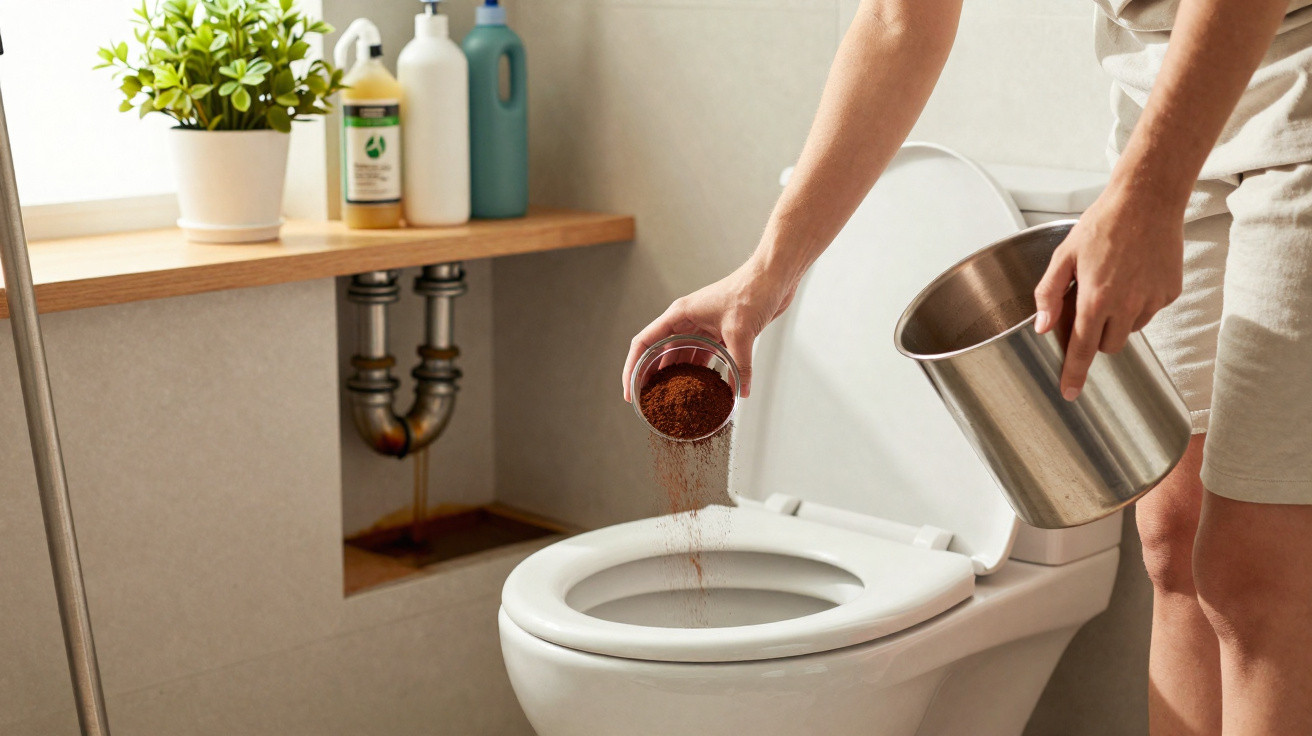
A tip currently circulating on TikTok, Instagram and cleaning forums sounds almost too good to be true: put a spoonful of coffee grounds into the toilet, brush briefly, flush, and the bowl is supposedly cleaner and fresher-smelling. Although it may seem like a brilliant zero-waste solution, it can put considerable strain on the pipework behind the scenes.
Why coffee grounds are ending up in the toilet
The idea is straightforward: after making morning coffee, the used grounds go directly into the toilet rather than the bin. A spoonful – usually one tablespoon – is tipped into the bowl, spread around with the toilet brush and then flushed away.
Many people are drawn to the routine because it appears to satisfy several trends at once: fewer chemicals, less waste and less money spent on toilet blocks and fragranced rim products. Anyone who makes coffee every day effectively has this “cleaner” waiting in the filter at no extra cost.
“The coarse coffee grounds act in the bowl like a very mild scouring powder – and are also said to absorb odours.”
Coffee grounds are also regarded as a natural odour absorber. Cleaning groups recommend leaving some in the toilet before going away, so that they mask rising sewer smells while nobody in the household is flushing.
What coffee grounds really do in the toilet
Inside a ceramic toilet bowl, coffee grounds can genuinely have a minor effect. Their particles can rub at light deposits around the waterline without putting the glaze under as much stress as conventional cream cleaner. Anyone looking to remove only slight discolouration may sometimes notice a difference immediately after cleaning.
The issue starts as soon as the toilet is flushed. Coffee grounds do not dissolve in water. The brown particles travel through the trap and straight into the drainage system. That is where this “natural cleaning idea” can quickly turn into a job for an emergency plumber.
When one spoonful becomes a blockage in the pipe
Plumbing firms have classified coffee grounds for years as something that should not be put down the toilet, alongside wet wipes, cotton buds and cooking fat. The reason is that the particles can cling to rough internal pipe surfaces, settle in bends or combine with other materials.
A typical mixture inside a wastewater pipe includes:
- coffee grounds as solid particles
- fats and oils from the kitchen and bathroom
- limescale from hard tap water
- remnants of paper and other fibres
Over time, this can form a dense plug that increasingly narrows the pipe’s internal diameter. At first, there may be little sign of a problem; later, the toilet flush drains more slowly, until eventually nothing will pass through.
“Even small quantities of coffee grounds flushed regularly can be enough in old pipes to cause an expensive burst pipe or blockage.”
The trend is especially problematic in the following situations:
- Old household pipework: Rough internal surfaces, deposits and tight bends provide ideal places for coffee grounds to stick.
- Blocks of flats with shared drainage stacks: What seems harmless upstairs accumulates in the main pipe below, together with grounds from every neighbour.
- Septic tanks and small sewage treatment plants: Solid matter places additional pressure on the system, requires more frequent emptying and can disrupt both the equipment and biological processes.
What experts say about the coffee grounds social media trend
Many local authorities and drainage providers now advise against disposing of coffee grounds via the toilet. Technical guidance increasingly lists them alongside sanitary products, cotton buds and cooking oil.
Plumbers also report repeatedly finding clearly recognisable coffee residue in blocked pipes. This is particularly likely where the drainage already has too little fall or limescale has narrowed the pipes: just “a little extra material” can be enough to tip the system over the edge.
There is an aesthetic drawback, too. If coffee grounds stick to the porcelain or remain in the trap, they can leave brown streaks that look more like dirt. If harsher products are then used to clean again, the result is more chemicals than there were before the trend began.
Useful ways to use coffee grounds without putting the toilet at risk
Rather than sending used grounds into the wastewater system, there are many uses where they can genuinely be useful, without risking either the pipes or your wallet.
Odour control without flushing
Anyone wanting the smell of coffee or some odour absorption in the toilet can simply place dried coffee grounds in a small dish in the bathroom or beside the toilet. They absorb odours from the air without affecting the drains.
As a practical measure, lightly loosen the surface regularly and replace the contents every few weeks. This helps maintain the effect, after which the grounds can go into general waste or, preferably, food and garden waste.
A gentle abrasive for the kitchen
Coffee grounds are much safer to use for their texture in the kitchen. Putting a small amount on a cloth or sponge can help, for example, to:
- remove onion or garlic smells from wooden chopping boards
- loosen dried-on residue from pots and pans, though not from delicate coatings
- clean strongly smelling hands after handling fish or garlic
Afterwards, the remaining grounds should go into food and garden waste or onto the compost heap – not down the kitchen sink.
Coffee grounds in the garden and compost
Gardeners have used coffee grounds for a long time, but in moderation. They contain, among other things, nitrogen, potassium and a small amount of phosphorus, making them suitable as an addition to compost or flower beds. When spread directly on soil, they should be applied in a thin layer and worked in lightly so that they do not go mouldy.
Many people mix coffee grounds, for instance:
- into compost to encourage decomposition
- into the soil in balcony planters containing heavy-feeding plants
- over the surface of beds before mulching
The same principle applies here: move them from the kitchen into the organic waste cycle – but not through the toilet.
If you still want to try the coffee grounds trick: how to reduce the risk
Despite the warnings, some people still want to test the trend at least once. Forums often suggest following a few safety guidelines:
- Use it only rarely, rather than as a daily habit.
- Use no more than one tablespoon of coffee grounds.
- Flush very thoroughly straight afterwards, ideally twice.
- Do not test it in older properties with known drainage problems.
- Do not use it with septic tanks or small sewage treatment plants.
This does not make the method completely risk-free. Nobody can tell from the outside what their own pipes look like internally or whether deposits have already built up.
Why the trend is so tempting – and where the mistake lies
The enthusiasm for coffee grounds in the toilet clearly shows how strong the desire is for simple, natural household solutions. A leftover product that would otherwise be thrown away suddenly has a new purpose. No aggressive cleaner, no plastic container: it all appears logical and sustainable.
The flaw in the thinking is that many tips stop at the ceramic bowl. The trend ignores what happens in the pipe after flushing. There, fragrance and appearance are irrelevant; flow behaviour, pipe diameter, material and existing deposits are what matter.
“Cleaning sustainably means not only using fewer chemicals in the bowl, but also putting no additional problematic materials into the wastewater system.”
For anyone who genuinely wants to clean in a more environmentally friendly way, established methods are usually the better choice: a good toilet brush, occasional citric acid or vinegar-based cleaner, sparing use of cleaning products and regular maintenance of the pipes – without coffee grounds and without social media experiments in the drain.

















Comments
No comments yet. Be the first to comment!
Leave a Comment