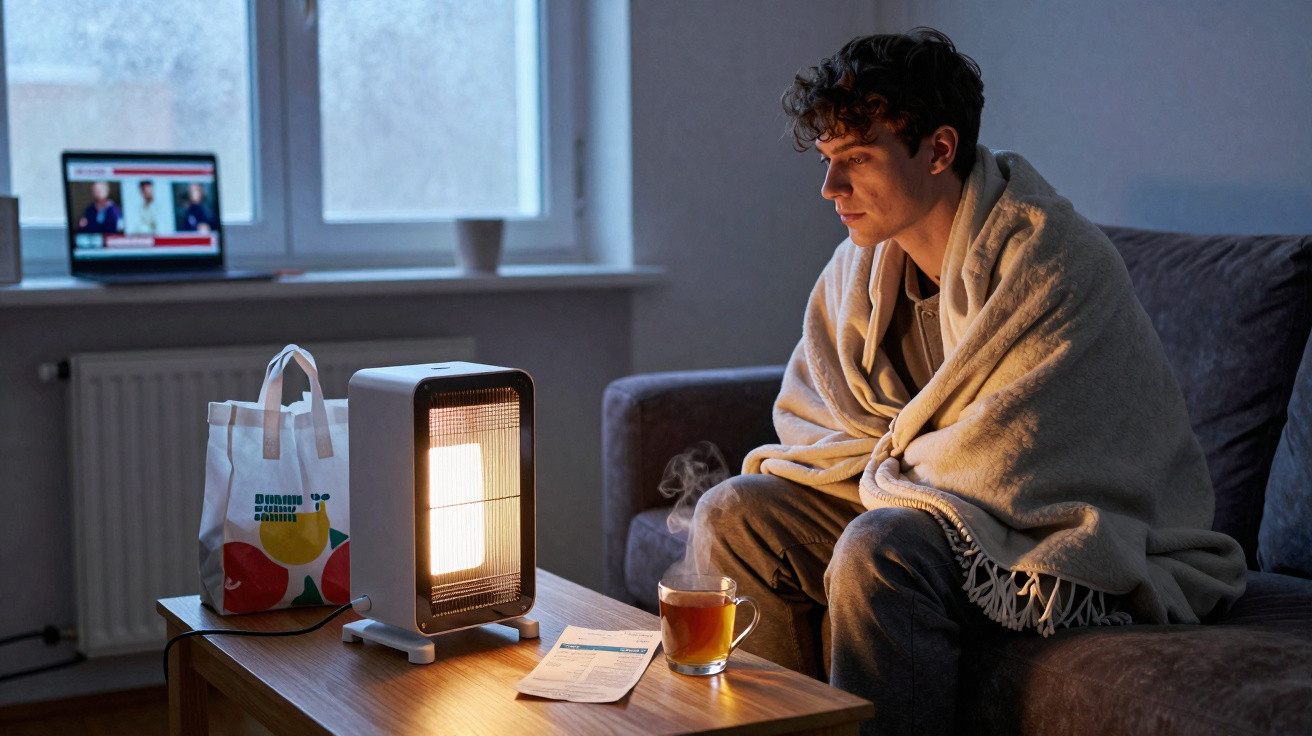
In early January, the queue at Lidl had a noticeably different feel. There was less fizzy Prosecco and more woolly socks, hot-water bottles and odd-looking grey heating pads being held like essential supplies. A woman wearing a school-uniform coat turned a “heated seat cover” over in her hands, silently working out the cost. Beside her, a man in a high-vis jacket murmured, “Well, if Martin Lewis says it’s worth it…” before shrugging and putting one in his basket.
The middle aisle around them was lit up with winter devices that offered warmth for pennies.
The air outside was sharply cold. Indoors, however, a much bigger argument was beginning.
Why a £24.99 Lidl winter gadget sparked a national row
As is often the case now, it began with a social-media clip. Martin Lewis, the money-saving expert trusted by many people more than most politicians, outlined ways to keep warm without switching on the heating. His recommendations included heated throws, heated seat pads and electric blankets. When Lidl put an inexpensive alternative on sale, its middle aisle was soon hit by a rush of shoppers.
People did more than purchase them. They recorded videos, posted them online, tagged friends and asked: “Is this really what we’ve come to?”
A low-priced plug-in heated cushion was among the most sought-after products: the kind placed over a sofa or office chair. Lidl’s model said it cost only a few pence an hour to operate. Shoppers uploaded smart-meter screenshots that showed barely any increase in consumption. Others posted pictures of children doing their homework beneath heated throws rather than with the central heating running.
Then the other sort of post appeared: pensioners beside cold, empty radiators, displaying their new gadgets with smiles that seemed only half convincing. What had started as practical advice quickly became something more painful.
Beneath viral clips and well-meaning advice threads, a more troubling question emerged. Were these devices sensible solutions during difficult times, or merely a sticking plaster on a system that is broken? Some applauded Lewis for being practical and compassionate, providing ways to cope while energy costs remained punishingly high.
Others felt the entire situation was bleakly absurd: a wealthy nation urging people to curl up under a £25 Lidl blanket rather than dealing with energy bills, poor housing and low pay. The dispute was never truly about a single item on a middle-aisle shelf. It was about everything that item represented.
“Heat the human, not the home” and the unease it creates
Lewis has promoted the same principle for some time: “heat the human, not the home”. The reasoning is straightforward. Heating an entire property with gas or electricity can be costly and inefficient when you are only using one room. A heated throw, electric blanket or Lidl seat pad directs heat to the place where you are sitting.
In theory, it is a sensible, almost self-evident approach. This is particularly true when the alternative is sitting in the lounge in three jumpers, able to see your breath.
Most of us know the feeling of opening an energy bill and immediately feeling sick with worry. On X, formerly Twitter, a mother in Manchester described how her 12-year-old would not take his coat off at home because “he didn’t want to cost any more money.” After watching Lewis discuss them, she bought a Lidl heated throw and said that on cold evenings it reduced her gas use by almost a third.
However, she ended her post by saying it was “absolutely dystopian” to depend on supermarket devices and money experts simply to stay warm through winter.
That is where the anger takes hold. Some argue that these products are a lifeline and that dismissing them as ‘gimmicks’ is a luxury view. When a £24.99 pad prevents even one older person from developing hypothermia, it is difficult to make the case against it. Others contend that relentless coverage of “clever winter gadgets” allows politicians and energy companies to escape responsibility.
In reality, nobody wants to live in a country where ordinary households must calculate whether they can afford to heat one room. Lidl’s aisle becomes a setting for much larger failures, with polyester throws and budget thermostats serving as the props.
Using Lidl-style winter gadgets without buying into a fantasy
If you have bought, or are considering buying, one of these Lidl-style winter gadgets, view it as one part of a wider kit for getting through a difficult period, rather than as a miracle answer. Identify the place in your home where you spend most of your time and create a “warm zone” there. It could be the end of the sofa closest to a socket, or the particular dining chair you have claimed for yourself.
Then add layers. Use the heated pad or throw, place a cushion behind your back, and put on thick socks and a hoodie. The aim is to make a personal microclimate, not to make your entire home feel like the Bahamas.
Many people purchase these items, use them once, and are then underwhelmed. Sometimes that is because they expected the same level of heat as central heating; sometimes it is because the emotional impact arrives afterwards. There can be a private sense of shame in relying on a supermarket device for warmth, although there should not be.
It can help to look at the item differently. Rather than treating it as evidence of failure, think of it as short-term crisis equipment while you steadily and persistently seek better alternatives: insulation grants, social tariffs or simply a more favourable fixed-rate deal when one eventually becomes available.
Martin Lewis has repeatedly stressed that these gadgets “are not the answer to the energy crisis, they are coping mechanisms.” That nuance gets lost on social media, where clips are cut down to 30 seconds and context vanishes. Many people only see the blanket, not the bigger fight he keeps shouting about.
- Check running costs: Look at the wattage shown on the label. A 50–100W heated pad used for several hours may cost pennies, whereas central heating for a full evening can cost several pounds.
- Try your “warm zone” for a week: Sit in the same place with the gadget, pay attention to when you actually feel warm, and alter your layers before immediately turning up the setting.
- Seek comfort rather than sauna-level heat: The objective is not to overheat, but to prevent the cold from making your bones ache.
- Discuss it with other people: Exchanging ideas with neighbours, work colleagues or online communities can reduce the stigma and may reveal more useful local options.
Gadgets, resentment and the question people would rather avoid
Remove the branding and “Special Buy” labels, and one difficult question remains: when does a country stop delivering meaningful solutions and begin offering gadgets instead? To some, Martin Lewis supporting heated Lidl throws demonstrates compassion and realism. To others, it is a warning sign that hardship is being made normal instead of being resolved.
The uncomfortable reality is likely somewhere between those views. At once, these devices can provide real support and stand as symbols of a more profound failure.
You may be reading this beneath one of those throws, holding your phone and hoping your direct debit does not rise again next month. Or you may be furious that anyone in a wealthy country needs to hear “heat the human, not the home”. Gratitude and anger coexist throughout this debate.
What is often overlooked is the understated strength of people sharing the solutions that genuinely help them, then using the resulting breathing room to press for something better.
When Lidl’s middle aisle becomes a winter-survival department, it reveals something about the country’s position. It points not only to colder homes, but also to weaker safety nets and a public ever more reliant on consumer workarounds to fill political gaps. The next viral post about a £24.99 heated pad may look like more than a bargain. It may be a picture of a nation debating what “help” should mean and who ought to provide it.
| Key point | Detail | Value for the reader |
|---|---|---|
| Gadgets are tools for coping, not cures | Lidl-style heated pads and throws reduce costs by warming the individual rather than the whole property. | Helps you make effective use of them without expecting miracles. |
| Emotional backlash is normal | Many people are thankful for the warmth but resentful that they need these gadgets at all. | Reassures you that others share your mixed emotions. |
| Short-term hacks, long-term pressure | Gadgets can create time while you seek insulation, better tariffs and political change. | Encourages practical steps now alongside pressure for deeper solutions. |

















Comments
No comments yet. Be the first to comment!
Leave a Comment