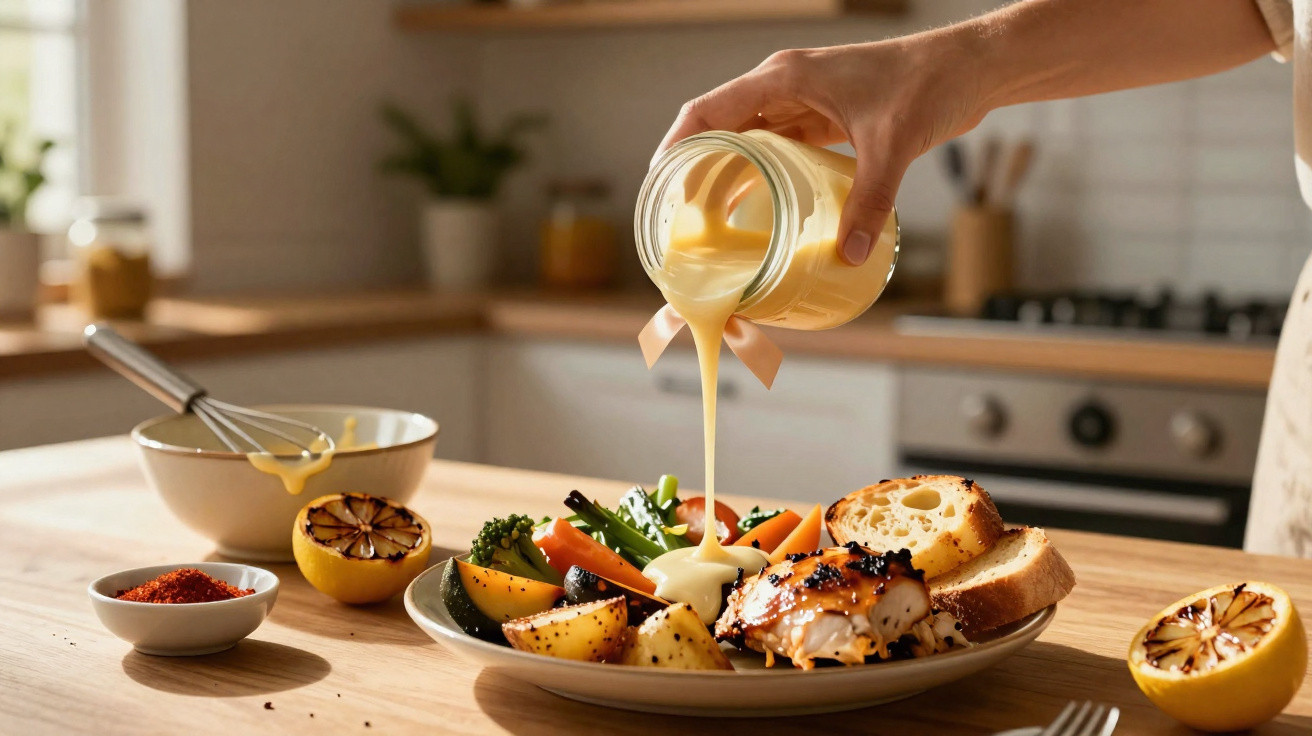
The first time I made this sauce, I was simply trying to save an uninspiring midweek supper. You know the sort: the pasta is acceptable, the chicken is acceptable, yet you look at the plate and think, “Is this… all there is?” I had half a carton of cream, one neglected onion, some tomato purée and the end piece of a Parmesan wedge. Determined not to waste them, I began adding everything to a pan and building flavour without any proper strategy.
Two songs and a glass of red wine later, the kitchen smelled like a little trattoria. I tasted it from a spoon, slightly scorched my tongue, and genuinely said aloud: “Wait. This is ridiculous.”
That was the evening everything changed.
Since then, this rich, velvety, gently smoky sauce has appeared in almost every meal I make.
At times, it even becomes the star of the plate.
The evening the “use-it-on-everything” sauce came to life
Its magic began in the least glamorous circumstances: leftovers and very limited expectations. I slowly cooked a chopped onion in olive oil until its edges turned golden, then mixed in a spoonful of tomato purée until it became sticky and brick-red. A splash of white wine hit the pan with a hiss, lifting all the browned flavour from the base.
Next came a modest pour of cream, a handful of grated Parmesan, a pinch of smoked paprika and far more black pepper than any sensible recipe would recommend. As it thickened, the sauce took on a deep sunset shade and an aroma that felt both comforting and mischievous.
I first mixed it through plain penne, purely as a test. The pasta became glossy, with every tube filled with sauce as though it had spent its whole dried existence waiting for this. The first mouthful was buttery, sharp, smoky and gently hot only at the finish. I cleared the bowl, then did something a little unhinged.
I spooned the remaining sauce over roast potatoes.
The following day, I added it to some rather sad vegetables from the fridge.
By the third day, I was using it as a dip for toasted bread, and my partner looked at me and said, half-jokingly, “Are we… a sauce household now?”
In hindsight, my fixation was not truly about the recipe. It was about the problem this sauce solved. With almost no effort, it made a collection of random ingredients feel like a “real meal”. One pan, one flavour foundation, and the reassuring sense that supper was handled even when I was tired or distracted.
There is something quietly powerful about having a reliable standby like this. You no longer need to hunt down elaborate new dishes every evening; instead, you start with one dependable thing and build around it. That sort of kitchen confidence is oddly liberating.
Let’s be honest: no one creates a completely new, from-scratch meal idea every single day.
Sometimes, you simply need a signature move.
What goes into this rich, put-it-on-everything sauce?
This is the stripped-back approach I use when nobody is watching, filming or weighing ingredients. I begin with a wide frying pan, a generous glug of olive oil and a medium heat. Add one finely chopped onion with a pinch of salt, then cook it slowly until soft, sweet and beginning to caramelise around the edges.
After that, add two minced garlic cloves and cook for roughly 30 seconds: just long enough for them to become fragrant, but not brown. Then comes the foundation: about a tablespoon of tomato purée, stirred until it darkens and begins sticking to the pan.
When the purée smells rich and toasted, pour in a generous splash of white wine or stock. It will sizzle as it releases everything from the bottom of the pan. Once reduced by around half, turn down the heat and stir in about 240 ml of double cream. The sauce will become pale orange. Add grated Parmesan a small handful at a time, tasting as you go, then season with a pinch of smoked paprika and plenty of black pepper.
If it becomes overly thick, loosen it with a little pasta water or stock.
If the flavour seems dull, brighten it with a squeeze of lemon or the tiniest pinch of sugar.
There are several simple ways to spoil it, and I have managed every one of them. Hurrying the onions creates a sharp, thin flavour. Boiling the cream too vigorously may cause it to split and look rather sad, even if it still tastes fine. Holding back on salt and acidity leaves a sauce that seems heavy rather than rich.
If it is not quite right on your first attempt, be gentle with yourself. Learning to cook this sauce is a little like getting to know someone: you discover the heat it prefers, the amount of salt it needs, and the thickness that feels “just right” to you.
“The real flex isn’t mastering a hundred recipes. It’s mastering one base you can bend to your life.”
- Caramelise the onion properly: this gives deeper flavour and less harshness.
- Toast the tomato purée: it draws out sweetness and umami.
- Choose real cream rather than milk: it creates a thicker, more stable sauce.
- Season at the end: salt, pepper and acidity determine whether it sings.
- Loosen with pasta water or stock: this keeps it silky instead of stodgy.
All the unexpected, delicious ways this sauce finds its way into everything
Keeping a tub of this sauce in the fridge changes everything. Toss a spoonful through hot pasta with frozen peas and supper is done. Pour a ladle over roasted chicken thighs or simply baked fish and it feels restaurant-worthy. I have used it in place of béchamel for lasagne, layering it between pasta sheets and vegetables, and people assumed I had spent hours cooking.
In reality, the sauce was already there. I only reheated and reused it: a culinary cheat code waiting quietly at the back of the fridge.
On especially lazy days, I have stirred a little into scrambled eggs, making them soft and custardy. I have spread it over pizza dough instead of ordinary tomato sauce, then added mushrooms and mozzarella. I have thinned it with a splash of stock to create a soup base for chickpeas and spinach.
One evening, I even loosened it with pasta water, poured it over gnocchi and called it “vodka sauce” without the vodka. Nobody objected.
This is the sort of sauce that does not punish you for failing to plan ahead.
There is a reason it stays in rotation beyond its flavour. In the best possible way, it lowers the standard for what counts as a “good enough” meal. When the sauce is ready, you can roast whichever vegetable is available, boil any pasta shape or sear any protein, and still end up with something comforting and satisfying. It is not about pursuing perfection; it is about feeding yourself well with less pressure.
It is a small adjustment, but it changes the mood of the entire week.
All of a sudden, supper becomes less about performance and more about enjoyment.
The amusing thing is that, once you depend on a sauce like this, you begin to see how many other parts of life could benefit from a “base recipe” too. A straightforward routine that can be dressed up or down. Something that does not require your best energy every time yet still delivers.
Some people find that in an excellent salad dressing or a roasting rub. For me, it is this creamy, onion-filled, tomato-rich pan sauce, endlessly changing shape around whatever I happen to cook.
Perhaps you already have a sauce like this but have never given it a name. Or perhaps this will encourage you to make your own version, with your own spices, shortcuts and slightly burnt-but-still-good onions.
The real question is not whether you will put it on everything.
It is which “everything” you will begin with tonight.
| Key point | Detail | Value for the reader |
|---|---|---|
| Slow flavour base | Caramelised onion, toasted tomato purée, gently cooked garlic | Deeper flavour without complicated techniques |
| Creamy structure | Cream + Parmesan, loosened with stock or pasta water | A silky texture that clings to pasta, vegetables and protein |
| Flexible use | Pasta, pizza, roasted meats, vegetables, eggs, soups | One prepared sauce, many low-effort meals throughout the week |

















Comments
No comments yet. Be the first to comment!
Leave a Comment