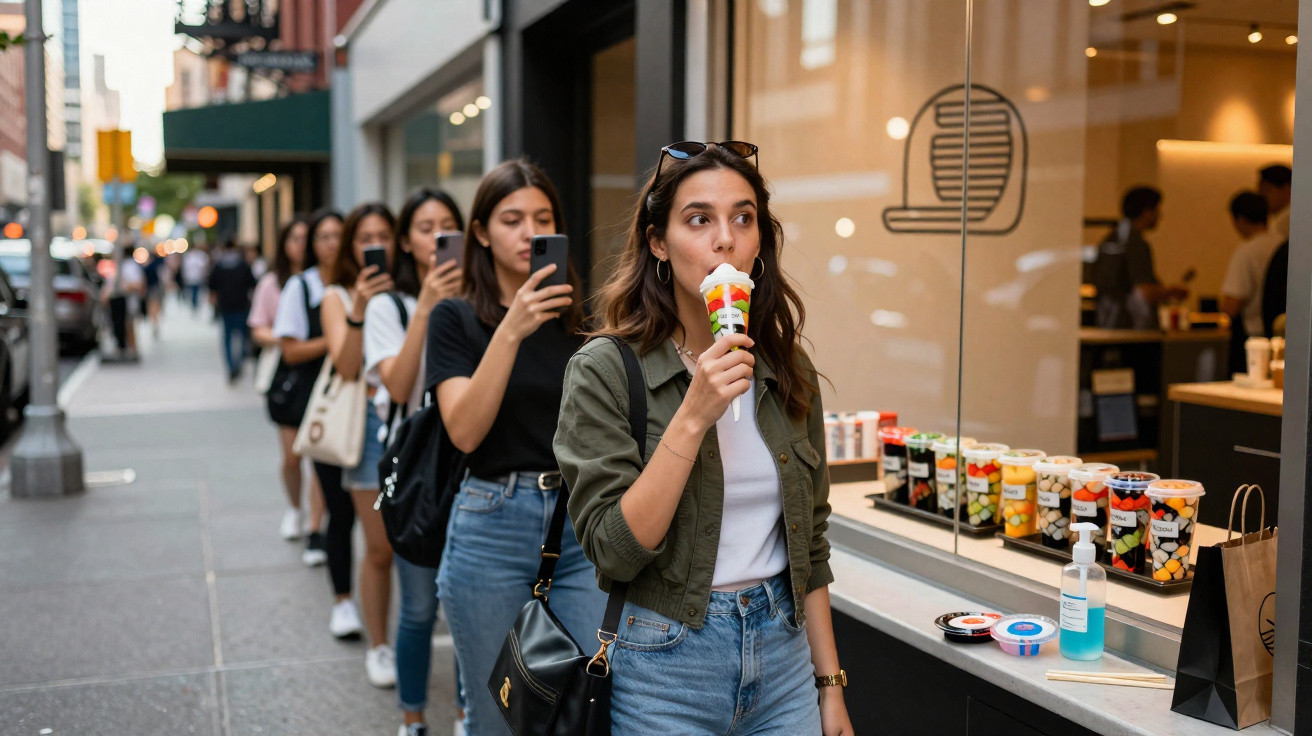
Across the Atlantic, a low-key food revolution is transforming a very familiar dish into a street-food spectacle - and customers are queuing for it.
In New York, and now Paris, an ordinary combination of rice and seaweed has become a portable fixation. The recipe is scarcely different, but the packaging alone has sparked queues, viral clips and a fresh bout of snack envy.
A tube, some rice, and plenty of hype
The newest New York craze is neither a futuristic beverage nor a laboratory-grown burger. Instead, it is quite simply a cardboard tube filled with sushi rolls. There are no premium fillings or gold leaf: just maki arranged one after another in a push-up container.
The idea gained momentum in Manhattan at Suka Sushi, where queues can run for hours and buyers are restricted to one tube apiece. That limited availability, combined with its eye-catching presentation, has made it a social-media draw. Instagram and TikTok videos show diners gradually pushing orderly cylinders of rice from the tube, much like ice lollies.
What used to be a quiet plate of maki has been repackaged into a handheld street snack that is built for cameras as much as for taste buds.
The premise is straightforward: leave the sushi exactly as people recognise it, while altering how it is presented and eaten. That modest change has been sufficient to pique public interest and, importantly, generate content.
From New York to Paris via Instagram
The “sushi tube” phenomenon has reached Paris, where it is already attracting notice at C’Roll Sushi, a Japanese restaurant on rue Saint-Martin in the 3rd arrondissement. Influencers were quick to seize on it. Their videos assess the concept rather than the taste, centring on the action of pushing out each piece.
French lifestyle creator Monelle Godaert, better known online as @notsosuperflu, pointed to the scale of the excitement across the Atlantic. In New York, she says, waits can last hours and customers may purchase only a single tube. Restrictions of that sort often heighten demand: if something is difficult to obtain, it must be worth trying.
In Paris, it is presented less as a luxury item and more as a fun street snack. Even so, the visual formula remains unchanged: a stripped-back tube, a precise stack of maki, a satisfying thumb push and a phone filming the entire moment.
What exactly is in sushi tubes?
Behind the hype, the contents are well known. Every tube contains ten maki rolls - the sort that could be included in any standard sushi selection.
- Salmon, avocado and cream cheese maki
- Tuna, avocado and mayonnaise maki
- Prawn, cucumber and cream cheese maki
In Paris, prices sit between €9 and €12 according to the recipe. This puts the tubes towards the pricier end of everyday takeaway sushi, while remaining affordable for most people seeking a small treat.
The innovation is not in the rice or the fish, but in the tube: a portable, one-handed format designed for eating on the move.
Every tube includes an additional feature: a narrow sachet, or “straw”, of soy sauce fixed to its side. Open it, drizzle the sauce as you eat, and there is no need to dip the rolls into a plastic pot that could spill over your clothes. That is useful for commuters and tourists eating while walking.
Why people queue for something they already know
When the flavour is largely unchanged, why will people stand in line for it? The explanation is partly psychological and partly rooted in social-media behaviour. The product is:
- Highly photogenic: the tube and its column of rolls appear neat and unusual on screen.
- Simple to film: the repeated, satisfying pushing motion works perfectly in short clips.
- Restricted in availability: in New York, buying limits and lengthy waits create a feeling of scarcity.
- Familiar but different: the flavours are known, so the only “risk” lies in the format.
Together, these qualities fuel the attention economy. People want to demonstrate that they have sampled the item everyone else is watching. Waiting, pushing and filming become as significant as actually eating it.
From pastry art to sushi gadgets
The sushi tube trend emerges amid a culture already influenced by highly visual desserts. In Paris, chef Cédric Grolet has attracted a following for ultra-realistic pastries modelled on mangoes, hazelnuts and pistachios. Customers queue not solely for flavour, but also for the immaculate image of a pastry that does not resemble a pastry at all.
The same dynamic is at work here. An everyday food is recast as a short performance. Rather than simply eating it, you put it on display for the camera first. For many customers, the phone gets its meal before they do.
The queue, the reveal, the first bite on video - all of this transforms a basic snack into a shareable event.
Brands understand the appeal. Packaging and form have become nearly as strategically important as the recipe. The sushi tube takes cues from childhood push-up ice pops, evoking nostalgia while slipping easily into a contemporary, phone-led routine.
Practical side: is it actually convenient?
Beyond its visual appeal, the tube format does address a few everyday issues. Conventional takeaway sushi arrives in boxes alongside open soy sauce, wasabi and ginger. Eating it on a park bench or a busy pavement can be untidy. The tube keeps the rolls in line and offers some protection from fingers and the elements.
| Feature | Classic sushi box | Sushi tube |
|---|---|---|
| Portability | Requires a flat surface and two hands | Made for one-handed eating while on the move |
| Mess factor | Soy sauce can spill easily | Attached “straw” allows a controlled pour |
| Visual impact | Standard plastic tray | New vertical format suited to photographs |
| Sharing | Simple to pass around | More personal, individual serving |
There are compromises, however. You forgo the variety of a mixed box, in which sashimi, nigiri and maki can be placed together. You also have less control over the quantity of soy sauce than with a traditional small pot. For certain people, the tube is enjoyable once before its novelty fades.
Trends, algorithms and targeted cravings
One point customers frequently raise is how these products appear to “follow” them on their phones. Search once for a pastry or sushi venue, and targeted adverts and recommendation algorithms may serve similar content for days. Such repetition can make a trend seem as though it is growing all around you, even when it began with only a small number of shops.
For food businesses, this landscape favours concepts that make an impact in a single image: a coloured croissant, a cube croissant or a tube of rice. Taste enters the narrative only after people have seen the visual. If that first bite is good enough, word of mouth takes over.
How to judge if a food trend is worth your queue
Not every viral snack warrants a two-hour wait. These straightforward questions may help you choose:
- Would you buy the same item in an ordinary container for the same price?
- Are you there for the flavour, the photograph, or both?
- Is queuing with friends part of the enjoyment, or an unpleasant task?
- Could somewhere nearby provide a similar taste without the spectacle?
If your honest answer is that you mostly want the video and the bragging rights, that can still be perfectly acceptable. Food has always had a social role, from brunch venues to cocktail bars. The sushi tube merely packages that into a shareable, snack-sized format.
For anyone most concerned with value and taste, the trend may still offer something of interest. It suggests how familiar dishes could change: not through extreme ingredients, but through intelligent packaging that suits new routines - commuting, streaming, scrolling and snacking all at once.

















Comments
No comments yet. Be the first to comment!
Leave a Comment