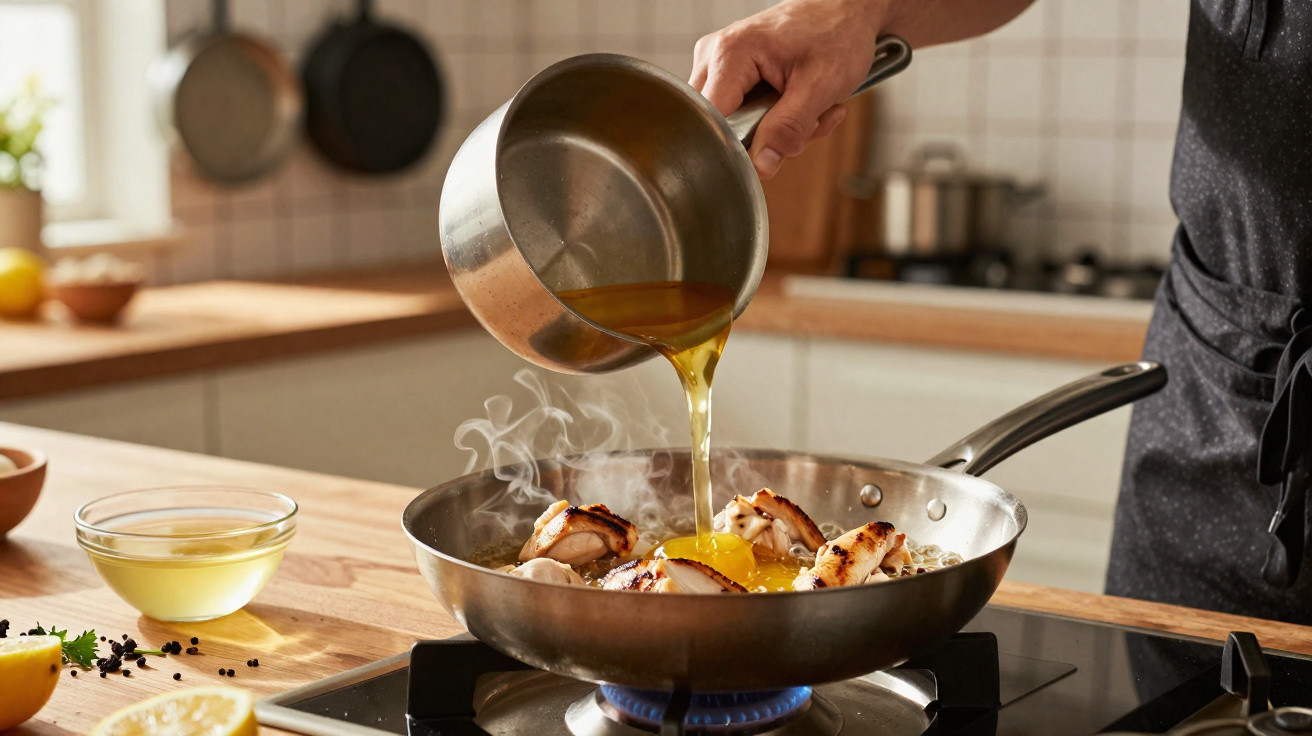
The first time I watched someone add cream to a pan of chicken that was already beautifully golden, I winced slightly. Garlic and thyme filled the kitchen with an incredible aroma, yet that thick white ribbon seemed as out of place as a winter coat on a summer’s day. The cook laughed and told me, “That’s how you get flavor.”
I wasn’t convinced.
A few months later, I was in a tiny bistro kitchen powered by more chaos than floor space when I saw another approach. It was the same chicken and the same stock, but this time the pan remained over the heat as the liquid bubbled away into a glossy, fragrant sauce. There was no cream in sight. The chef simply smirked, spooned the sauce across the meat and said, “Taste this. That’s how you get flavor.”
He was right. The answer was simple: reduction.
Why this no-cream chicken has more impact than the classic version
What nobody tells you about this style of chicken is how quickly a room falls silent when it reaches the table. The portions appear almost unremarkable: browned, gleaming chicken in a shallow layer of rich amber sauce. Then somebody takes that first mouthful, followed by a quiet, instinctive “oh.”
Reducing stock has a subtle effect. It does more than cover the chicken; it brings it to life. The flavours become tighter and brighter, somehow more sophisticated. Rather than a dairy layer softening every edge, you get concentrated chicken, garlic, herbs and stock. It remains comfort food, but without leaving you ready for a nap ten minutes afterwards.
Imagine a weeknight when ordering a takeaway feels tempting yet again. There are chicken thighs in the fridge, a carton of stock at the back of the cupboard, and very little patience remaining. You put the chicken into a hot pan, hear it sizzle, and suddenly the kitchen feels lively once more.
After browning the chicken, add a splash of stock, some white wine if you have it, and perhaps a spoonful of mustard. Watch as the liquid simmers down, becoming darker and thicker and leaving a clear line when you pull a spoon through it. There is no cream and no elaborate cupboard ingredient. It is simply heat and time working their gradual magic. Once the sauce clings to the chicken, supper suddenly looks…intentional.
There is straightforward reasoning behind why this technique works so well. Adding cream brings fat, volume and sweetness to a dish. That can feel comforting, but it also dilutes the flavours. They spread out, soften and can sometimes lose their edge. Reducing stock, by contrast, concentrates what was already in the pan: salt, aromatics, meat juices and the tiny browned pieces left behind.
Rather than hiding the flavour of the chicken, you are increasing its volume. The sauce thickens without flour or starch because the water evaporates, leaving the flavour behind. What started as a loose, pale liquid ends up tasting like you spent hours layering ingredients, when really, you just let it bubble a little longer than usual.
The no-cream chicken reduction method for weeknight cooking
The technique is reassuringly simple. Begin by patting the chicken dry and seasoning it generously. Not a restrained dusting: proper seasoning. Heat a wide frying pan until a drop of water skitters over its surface, then add neutral oil and sear the chicken until it is deeply golden on both sides. This stage cannot be skipped, as the browned pieces stuck to the base are your flavour savings account.
When the chicken has browned, transfer it to a plate and reduce the heat. Add sliced garlic or shallots, stirring only until they smell nutty, before deglazing the pan. Use stock alone, or stock with a splash of wine or lemon. Scrape up every stuck-on piece with a wooden spoon, return the chicken to the pan and allow the liquid to simmer uncovered until it reduces.
This is where many home cooks start to worry. The pan may seem a little dry, the sauce might look too thin or, alternatively, feel too intense. The natural urge is to correct it with cream, flour or a last-minute shortcut. None of that is necessary. You only need to keep an eye on it.
The rapid bubbling changes to slower, weightier blips. The liquid becomes darker. When you tip the pan, the sauce no longer rushes to the edge but moves more like syrup. That’s when you should take it off the heat. Should it reduce too far and become overly thick, loosen it with a spoonful of stock and swirl the pan. Honestly, nobody manages this perfectly every day. However, the more often you observe that transformation, the more instinctive it becomes.
Burning is another genuine concern. An overcrowded pan, excessive heat or stepping away “just for a second” can leave you with a bitter, sticky mess instead of a glossy sauce. Use a wide pan, arrange the chicken in one layer and maintain a lively rather than aggressive simmer. If the sauce begins catching, a quick splash of stock and a gentle shake of the pan can rescue it.
“I stopped buying cream for ‘emergency sauces’ a year ago,” admits Clara, a 39-year-old home cook who went all-in on reduction. “Once I understood that patience is an ingredient, not a virtue, my chicken changed. My grocery bill did, too.”
- Brown the chicken thoroughly before adding any liquid to the pan.
- Deglaze with stock, plus wine or lemon if desired, while scraping up the fond.
- Simmer without a lid until the sauce coats the back of a spoon.
- Make final adjustments with a knob of butter or a squeeze of citrus for balance.
- Serve straight away, spooning every last drop of reduced sauce over the chicken.
A lighter meal, bolder flavour and a quietly radical change
Cooking chicken this way is more than a smart means of avoiding cream. It encourages a different relationship with the pan, your time and the ingredients you use. Stock stops being merely “stock for soup” and becomes liquid flavour to concentrate rather than dilute. You begin to notice the sound of simmering, how the spoon moves through the sauce and how its aroma shifts as water evaporates while flavour remains.
There is a quiet freedom in that realisation. You discover that restaurant-level depth does not require a heavy carton of dairy or a complicated recipe. It calls only for a little attention and the willingness to let heat do its slow, unseen work. We have all had those moments when making supper feels like a task rather than a pleasure. Simple chicken with reduced stock can turn that around, making cooking feel like a small, satisfying victory that you can eat.
| Key point | Detail | Value for the reader |
|---|---|---|
| Use stock reduction instead of cream | Simmer stock and pan juices uncovered until thick and glossy | Richer flavour with fewer ingredients and less heaviness |
| Rely on browning and fond | Sear chicken deeply and scrape the browned pieces into the sauce | Turns basic chicken into a restaurant-style dish |
| Adjust at the end, not the start | Balance with butter, lemon or herbs after reducing | Tailors flavour and texture without making the recipe unnecessarily complicated |

















Comments
No comments yet. Be the first to comment!
Leave a Comment