It began on a Tuesday evening - one of those nights when you are already worn out and wish dinner would simply materialise. My thumb flicked between delivery apps and speedy recipe ideas, while I skimmed ingredient lists and mindlessly scrolled at the same time. Frozen nuggets, bottled sauce and microwaved accompaniments: all of it felt like hitting a huge “skip” button on real life.
Then I noticed a dusty notebook tucked at the back of the kitchen shelf. Its pages held my grandmother’s slightly slanted handwriting, marked by oil and age, setting out a “simple, honest” homemade tomato sauce recipe. There was no ready-made mix or industrial shortcut - only basic ingredients and patience.
I nearly laughed. Who actually has time for that on a weekday evening?
Even so, I made it once. That night, something shifted - softly. Very softly.
When a “quick fix” began to feel empty
In truth, I had relied on shortcuts for years without properly recognising it. Pre-chopped vegetables in plastic tubs, bottled dressings claiming “homemade taste”, frozen dough that never browned quite as it should. Everything was designed to be fast, but none of it was especially memorable.
Then there was that notebook and that sauce. I diced the onions slowly, feeling partly irritated and partly intrigued. The scent of garlic brought back my grandparents’ small kitchen, with its squeaking window and ever-simmering pan. I allowed the tomatoes to bubble away for longer than any app-based recipe would recommend.
When I finally ate, the plate looked… unremarkable. Yet the first mouthful felt unexpectedly emotional, rather like hearing an old favourite song on the radio when you least expect it.
The following week, I went back to bottled sauce “just for convenience”. The pasta, bowl and late hour were all the same. But the food tasted muted, as though somebody had turned the flavour volume down to 5.
That was when I found myself wondering why I was outsourcing enjoyment to a factory when I had a hob. Not in a smug way - it felt more like a modest act of rebellion. I began to see how often I automatically chose ready-made products: instant mashed potato, pre-marinated meat and sauces whose ingredient lists were longer than my shopping receipt.
One evening, I checked the labels: the bottled sauce contained 18 ingredients, while mine used 6. The difference was not just about the food. It was about control, pride and an unfamiliar sense of calm that had been missing from my kitchen.
Gradually, that one sauce became a gateway to more. First came homemade granola, then salad dressing, then a basic loaf that rose too far on its first attempt and sank like a dejected balloon.
The aim was never to become a flawless domestic hero. It was simply this: whenever I made the “real” version of something, I felt more involved in my own life. There was no algorithm, delivery app or corporate slogan between me and my plate.
Let’s be honest: nobody really does this every single day. I still keep emergency meals for lazy evenings. But once you know the difference, relying on shortcuts all the time feels rather like viewing life through a slightly grimy window.
The homemade tomato sauce habit that changed everything
If one homemade staple truly ended my shortcut habit, it was tomato sauce. It is straightforward, inexpensive and endlessly flexible. This is the precise version that stopped me buying jars as a default.
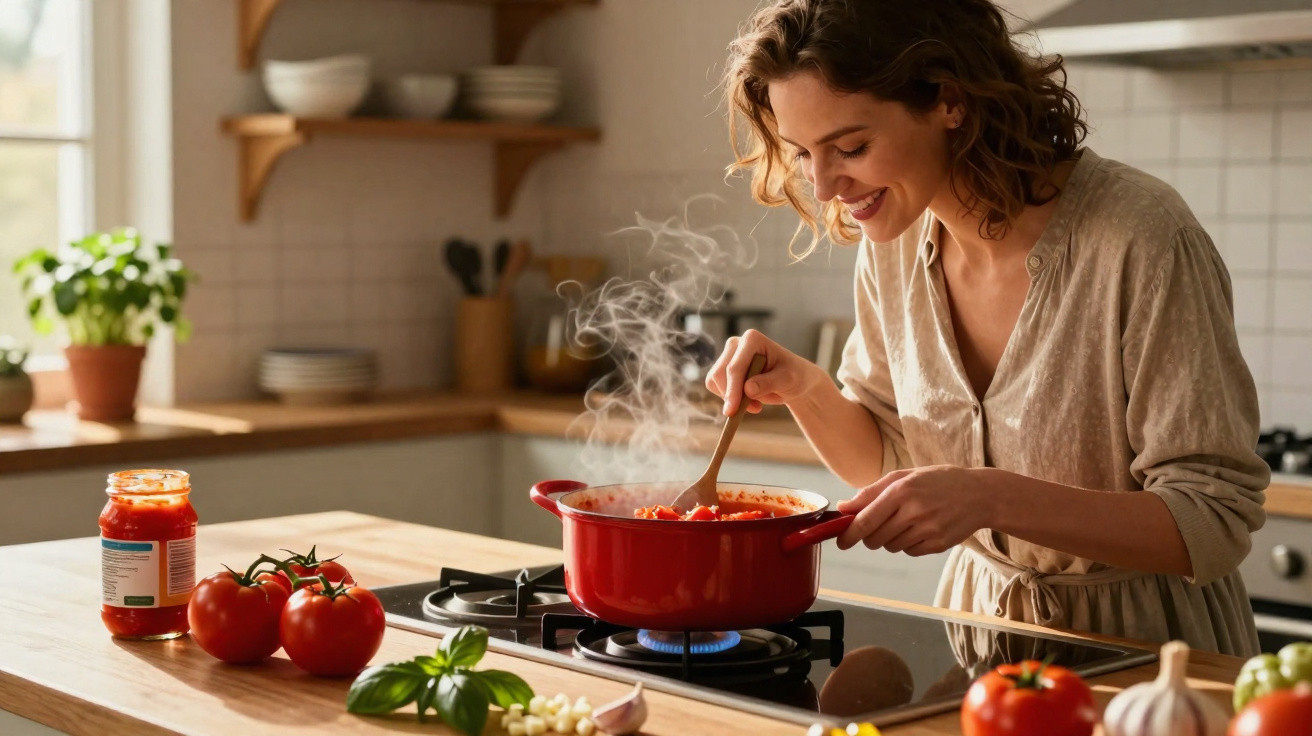
I heat a generous pour of olive oil in a heavy-based pan. First, I add half a finely diced onion and cook it gently until it is soft, sweet and translucent. Next come two sliced garlic cloves, cooked only until aromatic. Then I add a large tin of chopped tomatoes, a pinch of sugar, salt, black pepper and one small carrot cut in half - my grandmother’s method for balancing the acidity.
After that, I turn the heat down and leave it to murmur on the hob for at least 30 minutes. Sometimes 45. That is all it needs.
At first, it is tempting to make it more complicated. We live among endless recipes, all offering a “secret twist” or “chef-approved upgrade”. You do not need twelve herbs or three separate oils.
Time and attention matter most. That does not mean stirring constantly; it means checking every 10 minutes, tasting and making a small adjustment. You might add a little chilli, tear in a basil leaf at the end or stir through a knob of butter for a silkier finish.
A frequent mistake is making it once on a frantic day, then deciding, “Too long, not worth it.” Make it on a quieter evening instead, when you can allow it to develop at its own speed. Cooking in this way is not about getting everything perfect; it is about creating a calm habit that gradually replaces the reflex of reaching for a jar.
Sometimes the real shortcut isn’t shaving off minutes, it’s doing something properly once and then living off the leftovers for days.
- Make a large batch on a relaxed day rather than when you are already exhausted.
- Freeze the sauce in small portions: jars, bags or ice-cube trays for “emergency flavour”.
- Use this same base for pasta, pizza, shakshuka, baked vegetables or soups.
- Keep the ingredients brief: tomatoes, onion, garlic, oil, salt, pepper and one “signature” twist.
- Record what you changed each time, like keeping a small kitchen diary.
When cooking from scratch no longer feels like a burden
Eventually, this became about more than tomato sauce. I realised I had treated shortcuts as the standard option, as though I were always too busy to make things the slower way. Yet somehow I could still spend 40 minutes scrolling through social media on the sofa.
That is the quiet, slightly uncomfortable reality: time does not often vanish; it seeps into places we never challenge. Once I decided that one or two things would be homemade, without debate, my days did not fall apart. They simply shifted around.
Now, the sauce simmers while I reply to messages, fold washing or simply stand nearby and listen to tiny bubbles tapping against the pan. There is no productivity trick and no corrosive guilt. It is only one small choice, repeated often enough that it becomes an ordinary part of life - like brushing my teeth or charging my phone before bed.
| Key point | Detail | Value for the reader |
|---|---|---|
| Start with one homemade “anchor” recipe | Pick something you buy regularly, such as tomato sauce, and commit to preparing it yourself often | A simple route towards eating less processed food without disrupting your routine |
| Batch cooking as a genuine time-saver | Make larger amounts on quieter days, then freeze small portions | Brings together homemade comfort and ready-to-use convenience |
| Short list, long simmer | Use a handful of basic ingredients and allow time to do the work instead of adding complexity | Richer flavour, simpler shopping and less mental effort in the kitchen |
FAQ:
- Question 1 What if I genuinely don’t have time to cook from scratch most days?
- Answer 1 Choose one recipe that scales up well - sauce, soup or granola, for example - and make a large batch every week or two. The point is not to cook every day, but to cook cleverly once so your future self can still eat something homemade.
- Question 2 Is homemade really cheaper than buying ready-made?
- Answer 2 For staples such as tomato sauce, bread or porridge mixes, yes, very much so. Tomatoes, flour, oats and oil cost less per portion than processed alternatives, while you avoid paying for the packaging, branding and transport built into shop-bought options.
- Question 3 What if my first attempts taste worse than shop-bought food?
- Answer 3 That is normal, and it happens. Begin with dependable, very simple recipes, taste as you cook and alter only one or two things each time. Treat it as learning your own “house flavour”, rather than trying to compete with an industrial laboratory.
- Question 4 I live alone - doesn’t homemade just mean waste?
- Answer 4 Not when you divide it into portions and freeze it. Use small jars or bags, label each with the date and contents, and defrost only what you need. Your freezer can become a library of homemade basics, not a graveyard of mysterious leftovers.
- Question 5 Do I need fancy equipment to start cooking more from scratch?
- Answer 5 No. A good knife, chopping board, sturdy pan or pot and a hob are enough. The essential equipment is your attention and a little curiosity. Gadgets can be useful, but they are not what makes food feel real.

















Comments
No comments yet. Be the first to comment!
Leave a Comment