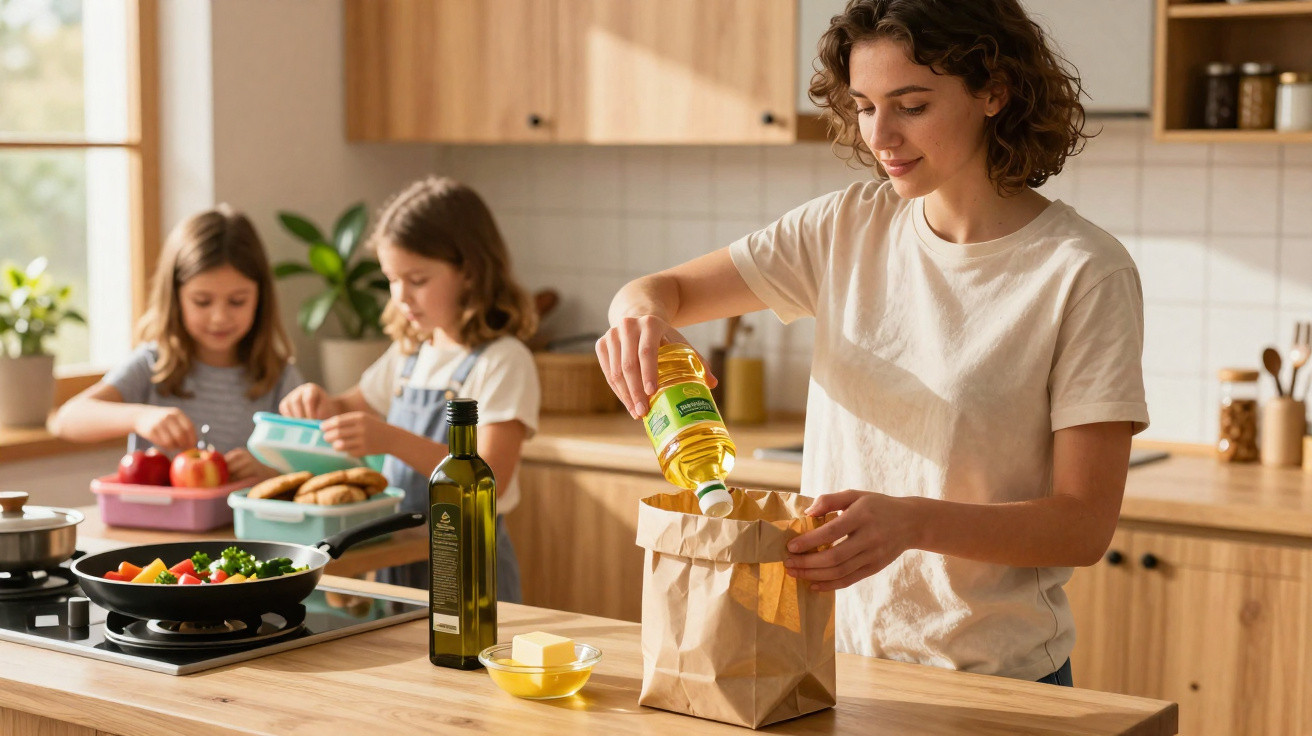
The lid squeaked as a narrow stream of oil landed in the pan, its familiar shine spreading over the metal like sunlight. The children were arguing over homework, the oven was humming and the radio was mumbling traffic updates. Like most of us, I thought it was “just vegetable oil” and carried on making dinner. A sweet, faintly plastic smell filled the kitchen, although I only registered it later, once the dishes were piled up and a slightly chemical headache had arrived. That bottle has been used for thousands of meals: an unseen fixture of family life. But what if the ingredient you rely on to feed your family is quietly contributing to feeling inflamed, foggy and unlike yourself?
The quiet villain in the yellow bottle
“Vegetable oil” brings to mind a summer-garden salad. The name sounds gentle, straightforward and even healthy. Yet the inexpensive bottle on a supermarket shelf is seldom made from carrots or peas. More often, it contains a blend of industrial seed oils-sunflower, soybean, rapeseed and sometimes corn or cottonseed-extracted from tough seeds that nature never intended us to drink by the pint.
We have all glanced at a label, noticed that it says “light” and “for frying”, and shrugged. That response is built into the product. These oils are produced in enormous refineries, with their flavour removed and deodorised until they taste of almost nothing. It is clever for profits and shelf life. It is rather less clever once the oil reaches a hot pan, and then your bloodstream.
Perhaps you have heard friends talk about “seed oils” as though they are sharing a secret code. The concern is not snobbery; it is chemistry. These oils contain high levels of delicate omega-6 fats, which oxidise readily. They do more than go brown or develop an unpleasant smell: they create reactive compounds that carry their trouble beyond the frying pan and into your cells.
What “vegetable oil” really is
Here is the less attractive reality. Seeds are blasted, milled, solvent-washed, heated, bleached and deodorised to produce that neutral, free-flowing liquid. It is not a process taking place on an idyllic farm. Picture pipes, steam and a great deal of stainless steel. It is efficient and legal, but it also leaves oil with reduced stability from the outset.
This is why a newly opened bottle can sometimes give off a slight nail-varnish smell when sniffed closely. We do not tend to sniff; we believe the marketing instead. The issue is not one burger night. It is the everyday stream of unstable fat at the centre of family meals: subtle, cumulative and easy to overlook.
What happens in the pan-and in you
As these oils heat up, they do not merely become hotter. They break apart, reconnect and produce tiny troublemakers known as aldehydes and other oxidised fragments. Your pan becomes a physics club. Those compounds travel on steam and through the air, settle into curtains and make their way into the food served onto the children’s plates. Smoke does not need to be visible before damage begins.
There is a reason the smell left after frying clings to your hair with a persistence that survives shampoo. Your nose is a capable scientist. That lingering scent points towards persistent molecules in the body as well: the sort that may irritate your gut, push your immune system towards a low-level flame and disrupt the delicate fat balance in your brain.
Realistically, nobody stands over a pan in a lab coat, thermometer in hand, on a school night. We pour, sizzle and serve. The problem is that oils promoted as “good for high heat” often are not, at least in the form and quality most of us purchase. Physics cannot be solved through deodorisation.
The smoke point trap
People often discuss smoke points as though they mark a finishing line. “It doesn’t smoke, so it’s fine,” is the usual reasoning. Yet smoke is a late cry for help. Oxidation starts well before oil resembles a nightclub. It makes more sense to consider stability: oils richer in monounsaturated fats, such as extra virgin olive oil and quality avocado oil, generally retain their structure better under heat.
That is the detail many of us were never taught. Extra virgin olive oil-the one in the dark green bottle-is remarkably robust for daily cooking. Its antioxidants act like tiny bouncers when temperatures rise. It does have a flavour, of course. That is precisely the appeal. Food ought to taste of something.
The rancid clock
Often, deterioration has begun even before the oil reaches the pan. Clear plastic bottles beneath supermarket lights, months in transit and a warm kitchen shelf beside the hob: this is how oil ages in dog years. Every pour lets in oxygen. Heat reaches the bottle. Time handles everything else. You may not detect rancidity because deodorisation conceals it, but your body does.
Notice the ring around an oil-bottle lid. Is it sticky, slightly tacky and difficult to wash away? That is polymerised oil: a small sign that molecules have begun weaving themselves into gum. It is an excellent science experiment. It is less appealing as an everyday ingredient for growing children and exhausted adults already balancing stress like circus professionals.
A small kitchen confession
Last month, I fried chicken goujons for a Friday film night. The oil had already been used twice. It was pale, produced barely any smoke and seemed economical. After we ate, the children became pink-cheeked and noisy, then sluggish, then unexpectedly thirsty. I strained the oil through a sieve and told myself I would use it one more time for chips. By morning, the bowl smelled awful.
I could smell it before I tasted it.
What to throw out today
Before you think I am judging, I am not. I am standing right beside you with the sticky bottle near the kettle. Even so, a few changes are easy wins. That large clear plastic container of “vegetable oil” bought for the cost of a bus fare? The old sunflower-oil bottle balanced beside the oven, with a cap crusted like a sugar rim? The grapeseed oil marketed as “clean” because it is light? They need to go.
Take five minutes for an audit. Does the label say “refined”, “deodorised” or simply “vegetable oil”, with no pressing or harvest date? Is the bottle clear, is the oil extremely pale, and has it been open for over two months in a warm place? Throw it away. Rapeseed oil is more complicated: ordinary inexpensive rapeseed oil behaves like other seed oils, while “high-oleic” varieties are somewhat more stable. If you do not know which type you have, the price normally gives you a clue.
Vegetable oil is not a vegetable.
Better fats that behave
The encouraging news is that you do not need a chef’s budget or a Michelin-star strategy. Keep a dark bottle of extra virgin olive oil on the counter for nearly everything. It roasts vegetables beautifully, fries eggs brilliantly and suits courgettes, tomatoes and fish. The Mediterranean did not get it wrong; they were being practical. For more intense searing, a fresh bottle of avocado oil or a block of ghee copes with heat like a grown-up.
Butter is wonderful in small, cheerful quantities. Ghee is effectively butter’s superhero relative, with the milk solids removed so that it does not burn as quickly. Coconut oil is stable as well, although it tastes of coconut, so save it for dishes that welcome a beach holiday. When frying something larger than a pancake, use fresh oil and then discard it. Reusing it may look thrifty on paper but prove costly in your bloodstream.
Heat, oxygen, and time turn cheap oils into something your body reads as stress.
Real-world swaps
Olive-oil roast potatoes become crisp when they have room on the tray and time in the oven. Fry chicken thighs in ghee, then finish them with lemon; the skin sings. Choose mayonnaise made with olive or avocado oil, or make your own in five minutes using an egg yolk and a quiet Saturday. Store nuts in the fridge, where they remain sweet and calm.
For a speedy stir-fry, cut everything thinly, keep the heat energetic rather than wild, and cook confidently in olive oil. If the pan seems dry, add a splash of water. Use toasted sesame oil at the end for flavour instead of frying in it. You keep the pleasure and lose the smoke.
Kids, lunchboxes, and the sneaky oil problem
The fats used for home cooking are only half the picture. Seed oils are hidden in crisps, crackers, granola bars, plant-based milks, supermarket hummus and even “baked not fried” snacks that wink from the school aisle. It is difficult. I am not claiming that your child should never have a crisp again. I am saying that you can shift the balance.
Replace a packet listing sunflower oil first with one using olive oil or “high-oleic” sunflower oil, which is less delicate. Pick peanut butter containing only peanuts and salt. Pack leftovers cooked in decent fat: a cold chicken leg, a wedge of Spanish tortilla, carrot sticks and a pot of olive-oil hummus blended on Sunday. The lunchbox can become an ally rather than a minefield.
Children do not need lectures. They need enjoyable food that does not leave them rummaging through cupboards an hour later. Salt their vegetables. Drizzle olive oil over their soup. Let them see the change as abundance rather than punishment. Food is culture, comfort and a secret handshake passed across the table.
Eating out without the panic
Restaurants and takeaways frequently cook with the least expensive oils available. That is not malicious; it is about margins. You cannot change their fryers, but you can make different choices on a Tuesday when your energy has gone limp. Grilled, roasted and steamed dishes generally contain less industrial oil. Request dressings on the side and use them sparingly. Chips are lovely occasionally; let them remain a treat.
When ordering a curry, choose tomato-based dishes rather than creamy ones and spoon off the glossy oil on top. At the chippy, share a portion and take the longer route home. Life is not a laboratory. A small amount of planning softens the edges without making dinner feel like a diagnosis.
But isn’t olive oil only for salads?
This is a myth that refuses to disappear. Extra virgin olive oil has long been used to fry fish, sear aubergines and cook beans in countries where people live long lives and laugh loudly. Its antioxidants support it when the pan gets hot. The fruity aroma released by heat is part of the magic, not a danger signal.
If you described your Nan’s Sunday roast as “a salad”, she would laugh you out of the kitchen. Do a blind test: fry two eggs, one in inexpensive vegetable oil and one in good olive oil. Taste them side by side with a pinch of salt. The egg cooked in olive oil tastes like breakfast on holiday. The other tastes like cardboard with a hangover.
Money, myths, and the middle ground
Yes, a quality bottle of olive oil costs more than a large container of vegetable oil. The answer is that you use less of it and it achieves more. You are paying for something pressed rather than chemically bullied. You are buying flavour, meaning there is less need for bottled sauces, “finishing oils” and imitation butter sprays. Fewer bottles, better bottles, more flavourful food.
Choose smaller bottles and keep them away from light and heat. Use the good oil every day for ordinary meals, not only when guests arrive. Roast once and eat twice: make extra olive-oil vegetables, then reheat them gently for lunch. The budget begins to make sense when the bin no longer swallows half-used bottles of rubbish.
Throw the bottle out today and start fresh.
Your kitchen, reset
There is a small ritual I enjoy. I clear the worktop, wipe the oil ring from the hob, open a fresh bottle with a tiny pop and breathe in its grassy, peppery scent. A pan heats. Garlic meets the oil with a modest sizzle. Tomatoes soften into sweetness. The room smells of food again, rather than a chip shop on a quiet day.
You do not need to be perfect. You only need to tilt the scales in your own favour. Replace the one bottle causing the most harm with one doing the most good, then allow that single change to draw others along. Your family will not notice a “diet.” They will notice a dinner that tastes like care and mornings that feel slightly clearer.

















Comments
No comments yet. Be the first to comment!
Leave a Comment