The chicken was beautifully browned, the kitchen immaculate, and dinner guests were sharing photos before anyone had tasted the food.
Every worktop shone beneath the LED spotlights. The chopping board had been cleaned, the knives washed off and the bin emptied. It had the polished look of an Instagram “dream kitchen”.
Then, almost without noticing, someone reached for the oven handle. Twenty minutes earlier, tiny invisible traces of raw chicken juice had been left on it. That same hand then handed round the bread basket, adjusted a napkin and rested on a child’s shoulder.
There was no spectacle and no immediate bout of food poisoning. Only an unnoticed, silent chain of contamination. Nobody would spot it that night, the following day, or perhaps ever. But the true vulnerable point in kitchen hygiene was sitting directly beneath their fingertips.
On the handle.
The dirtiest place you touch without a second thought
When food hygiene comes up, most people imagine raw chicken, questionable leftovers or a mysterious tub hidden at the back of the fridge. Hardly anyone thinks of ordinary handles: oven handles, fridge doors, cupboard pulls, drawer knobs or the small grip on a bin lid. They are all things we touch automatically.
This is where kitchen hygiene can quietly unravel. You wash your hands and then open the fridge. You cut raw meat before taking hold of the oven door. You clean the worktop, then lift the bin lid. Each action feels minor and harmless, yet every one can leave another microscopic trail of bacteria behind.
The especially deceptive thing is that handles almost never look unclean. Your brain therefore categorises them as clean.
Researchers who watch people in real domestic kitchens are acutely aware of this. One UK study of food preparation in the home used cameras to follow people making a straightforward chicken-and-salad meal. Participants assumed the chopping board was the main danger area. The recordings revealed something else.
Hands moved from raw chicken to the fridge handle, from the fridge handle to the spice drawer, from the drawer to the tap, and from the tap back to salad leaves. It all happened in under five minutes. The chopping board was scrubbed; the handles were not.
A public health laboratory swabbed frequently touched kitchen areas in typical homes. Chopping boards, sinks and sink taps contained germs, but so did kettle handles and fridge doors. In certain cases, samples from handles were as contaminated as those from the bin. That is not what people generally envisage when they think of “a dirty kitchen”.
Once you have noticed it, it becomes impossible to ignore. Every gleaming bar and small round knob starts to look like a busy interchange where hands, food and habits converge. It is neither dramatic nor revolting, but it does carry a quiet risk.
The reasoning is starkly simple. Bacteria do not somehow jump into food: they travel between surfaces, often on your hands. And hands are constantly reaching for handles. Handles are easy to grip, positioned at the right height and used with no real conscious thought. As a result, they pick up whatever arrives during the day: raw meat juices, soil from potatoes, egg residue, sneeze droplets and toaster crumbs.
Because handles rarely become wet or visibly covered in crumbs, they tend to escape the usual cleaning routine. You wipe crumbs from the counter, rinse the knife with soap and may bleach the chopping board after preparing raw meat. Meanwhile, the handle remains in place, quietly accumulating evidence of the week’s meals.
Food-safety training often refers to the “hand–surface–mouth” triangle. Handles sit right at the centre of it. Touch one after dealing with raw food, then rub your eye, adjust your glasses or pick up a slice of cucumber, and the triangle is complete. There is nothing visible or theatrical about it, but the pathway is there.
How to interrupt the hidden contamination chain
The aim is not to make your kitchen resemble a laboratory. Instead, break the invisible chain at its easiest point: your everyday routine. One small adjustment can have a substantial effect: clean handles deliberately rather than incidentally. Choose two or three “priority handles” - the oven, fridge and bin, for example - and connect them to tasks you already complete.
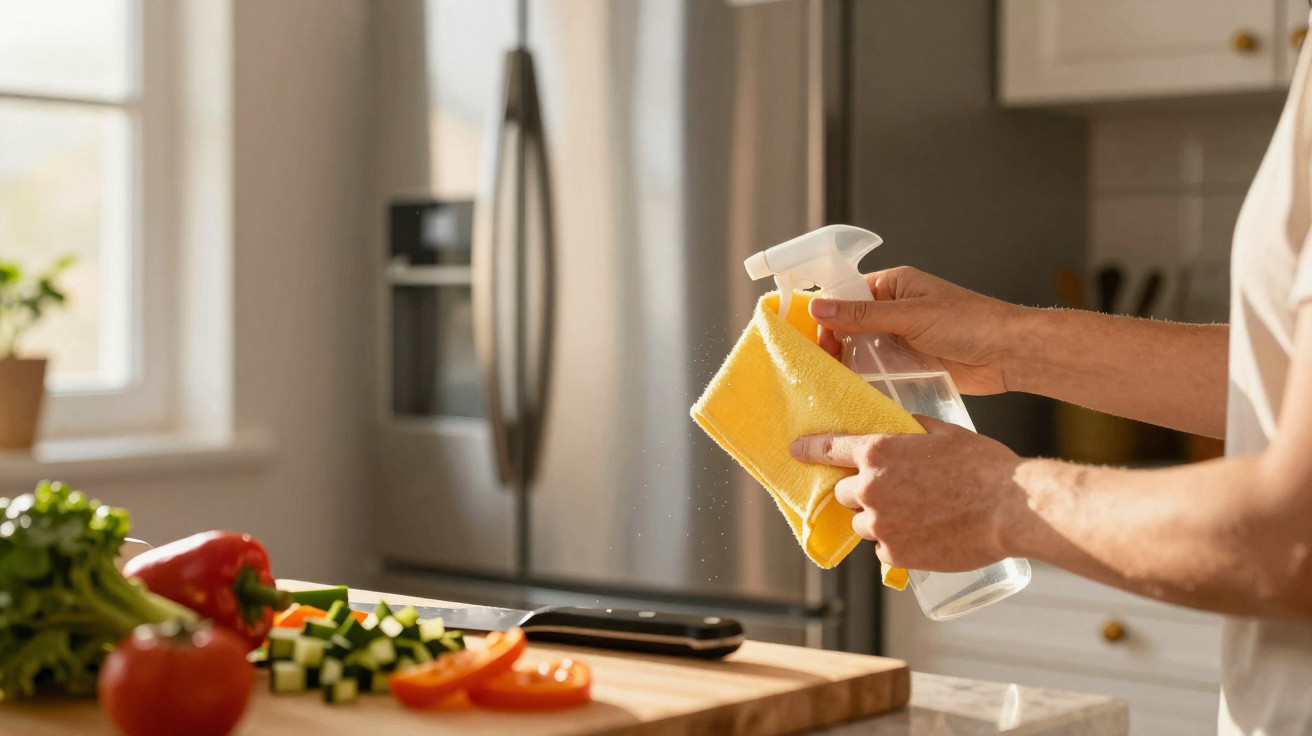
Whenever you wipe down the worktop after cooking, for instance, use the same cloth or wipe on those three handles. It is quick, follows the same movement and needs no thought. Alternatively, create a small ritual: before preparing raw meat, take a clean cloth, apply one spray and quickly wipe the handles and taps. It may take 20 seconds, and becomes surprisingly satisfying once it is habitual.
There is no need to scrub obsessively. Warm soapy water or an ordinary kitchen spray is sufficient on most days.
The first common mistake is only giving handles a “deep clean” once they visibly appear grimy: sticky children’s fingerprints or sauce smears after baking. At that point, bacteria may already have been present for hours or days. Gentle routine cleaning is consistently more effective than an occasional heroic scrub.
The second mistake is treating antibacterial wipes as though they are magical shields. One wipe across ten surfaces, and the task is supposedly complete. In practice, the wipe becomes dirty after its first few passes. Moving it from the bin lid to the fridge door merely spreads everything around. It is better to deal with a limited area and then dispose of it.
There is also a human issue: guilt. You read advice telling you to disinfect every surface after every use, then feel you have failed if you do not manage it. Let’s be honest: nobody really does that every day.
“Most domestic kitchens don’t need hospital-style protocols,” says one food microbiologist I spoke to.
“Where things go wrong is when people underestimate small, repeated contacts. Handles, light switches, the kettle - those are the commuter trains for bacteria.”
She recommended viewing handle hygiene as “micro moments” rather than household chores. Ten seconds while the kettle boils. Five seconds before cracking an egg. It is less about cleaning products than timing. The aim is to clean before contamination can move from a handle to food.
Keep it straightforward with this mental checklist:
- Identify your hotspots - fridge, oven, bin, tap and kettle.
- Connect cleaning to actions - after cooking, before handling raw meat and after unpacking shopping.
- Use what is already available - specialist sprays and gadgets are unnecessary.
- Change cloths regularly, so that you are not redistributing yesterday’s germs.
- Explain the “handle habit” to children and housemates in one short sentence.
The small kitchen hygiene change that protects everyone at home
Once handles are on your radar, you begin noticing them everywhere: in your own home, at your parents’ house, in shared student kitchens marked by unexplained stains, and in rented flats where the oven door always feels slightly tacky, however often it is wiped. At first, that awareness can be mildly unsettling.
Then the shift happens. You give a handle a quick wipe while talking on the phone. You put an extra cloth in the wash. You catch yourself before opening the fridge with hands covered in chicken juices. The practice no longer feels like “extra cleaning”, but more like a quiet form of self-respect. It is not perfection; it is simply care.
At a deeper level, this neglected detail reflects much about modern life. Kitchens are more open, sociable and visible than they have ever been. We fixate on colour schemes, islands and pendant lights, and there is nothing wrong with wanting rooms that feel good. Yet the real life of a kitchen takes place in these small, repeated actions that never appear in photographs.
We bring food, germs and concerns from the outside world directly to those smooth metal bars and wooden knobs. Then, amid all this, we serve plates, pour coffee and slice birthday cakes. That is the odd combination contained in a kitchen: risk and care, disorder and ritual, the roughness of daily life sitting alongside the people we love.
| Key point | Detail | Why it matters to the reader |
|---|---|---|
| Handles are hygiene blind spots | They are handled continually but seldom cleaned deliberately. | It helps you focus on the genuine weak points in your kitchen. |
| Small habits outperform major deep cleans | Brief, regular “micro cleans” while cooking reduce contamination routes. | It makes hygiene achievable in a busy everyday routine. |
| Prioritise hotspots, not every surface | Fridge, oven, bin-lid, tap and kettle handles receive the most hand contact. | It provides a simple, realistic routine that anyone can maintain. |

















Comments
No comments yet. Be the first to comment!
Leave a Comment