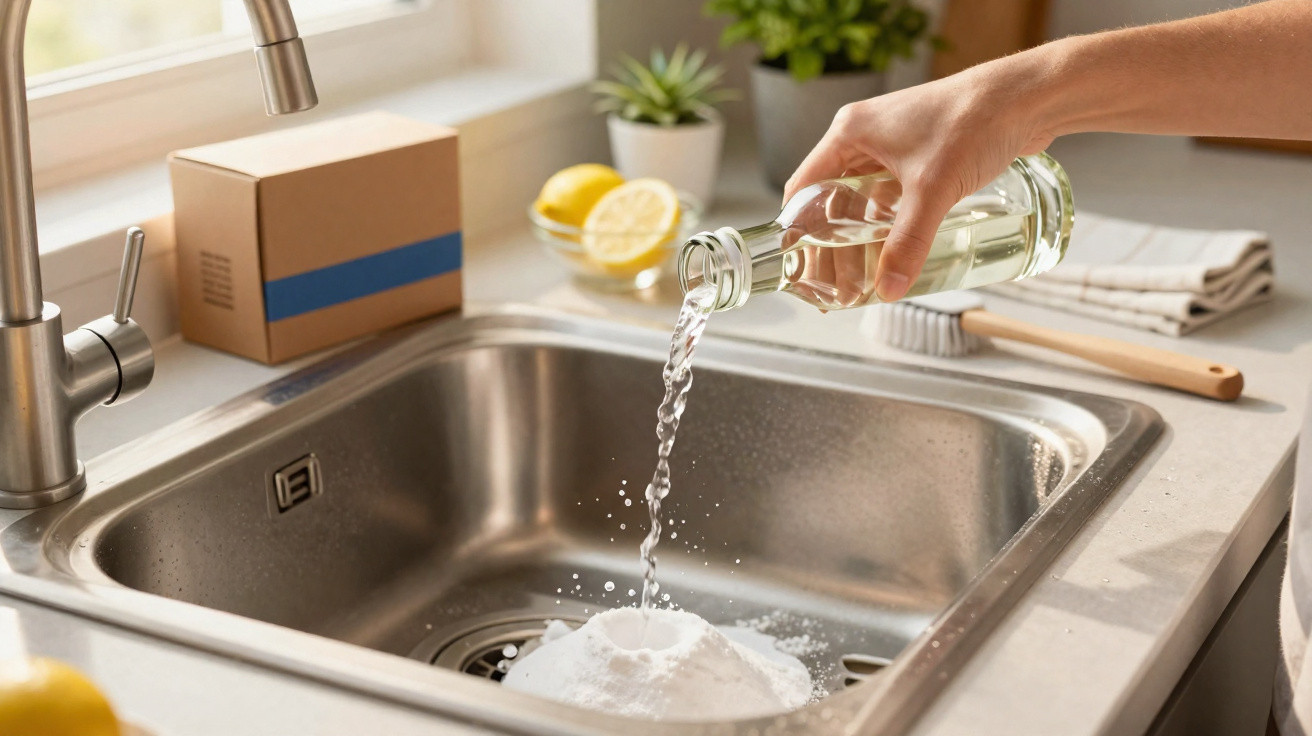
Getting rid of a bad smell from a drain is a task that raises questions in many households. The issue often appears without warning and can spread through the kitchen or bathroom, making everyday life uncomfortable. In most situations, however, it can be managed through straightforward care, using everyday products and a few small changes in routine.
How can you identify and understand the source of a bad smell from a drain?
A bad smell from a drain is commonly caused by a build-up of food scraps, hair, grease and soap inside the pipework. These deposits provide food for micro-organisms, which release strongly unpleasant-smelling gases.
The problem frequently develops gradually: it may begin as a faint odour and become worse over time. A faulty trap, poor room ventilation or defects in the property's drainage system can also contribute.
How can you eliminate a bad smell from a drain with bicarbonate of soda and vinegar?
A straightforward way to tackle the odour is to combine bicarbonate of soda with white vinegar, two products commonly found in Brazilian kitchens in 2026. Bicarbonate of soda works as a mild cleaning agent that helps loosen deposits, while the acidity of vinegar supports disinfection.
When the two ingredients are combined, they create a fizzing reaction that can help dislodge grime stuck to the inside of the pipes. Although this approach is useful for routine care, it does not replace professional plumbing maintenance where there is a serious blockage.
- Gather the ingredients: set aside approximately 1/2 cup of bicarbonate of soda and 1 cup of white spirit vinegar.
- Dry the drain area: where possible, use a cloth or paper towel to remove excess water around the drain cover.
- Add the bicarbonate of soda: pour it straight into the drain, aiming to distribute it around the inner edges.
- Pour in the vinegar: slowly add the vinegar over the bicarbonate of soda and allow the foam to work.
- Leave it to act: let the mixture sit for 20 to 30 minutes without running water into the area.
- Rinse with hot water: finish by pouring in hot, but not excessively boiling, water to flush away the loosened dirt.
What daily habits help prevent a bad smell from a drain?
Alongside cleaning with bicarbonate of soda and vinegar, a few everyday habits can lower the likelihood of strong odours developing in the pipework. They are particularly important in older properties or homes with more delicate plumbing.
These measures act as a form of “invisible maintenance”, preventing dirt from building up over time while keeping drainage effective and the room more pleasant.
- Do not pour oil and grease into the sink drain: these substances solidify inside the pipe and trap other debris.
- Fit a drain grate or protective mesh: these accessories catch food waste, hair and small items.
- Put food leftovers in the bin: remove excess residue with kitchen roll before washing dishes and pans.
- Flush periodically with hot water: do this at least once a week to help dissolve grease.
- Keep the trap in good condition: it holds water, which creates a barrier against odours from the drains.
Preventive measures to stop a bad smell from a drain returning
In addition to using bicarbonate of soda and vinegar, simple routines can help prevent the bad smell from returning. These include disposing of cooking oil correctly, using protective grates to catch food scraps and hair, and regularly checking traps and connections beneath sinks and washbasins.
If the odour remains very strong and persistent even after these measures have been applied carefully, there may be a structural issue, such as a defective trap, an incorrectly sloped pipe or a deeper blockage. In these circumstances, an assessment by a qualified professional is the safest way to establish the cause of the bad smell and prevent damage to the home's internal drainage system.

















Comments
No comments yet. Be the first to comment!
Leave a Comment