The mistake is made hours earlier.
When bread is left over, reaching for the freezer is an obvious choice. It sounds like a reliable way to prevent food waste. Yet the moment you freeze it determines whether it later tastes like it has just come from the bakery – or more like chewy bread with a crust. Getting freezing right involves more chemistry than most people expect.
Why bread starts going “stale” as soon as it leaves the oven
Bread seems fresh while it smells soft and has a crisp bite. Chemically, however, its ageing process starts immediately after baking. Specialists call this “starch retrogradation”.
During baking, the starch molecules in the dough absorb water, swell and rearrange themselves. This creates an airy, elastic crumb. Once the loaf cools, the starch begins returning to its original, firmer structure. Its molecules pack more closely together, leaving the crumb less springy and progressively drier and more crumbly.
If you freeze bread only once it has noticeably firmed up, you are no longer preserving freshness but an existing loss of quality.
This is also why defrosted bread can so often turn rubbery or crumbly: the freezer preserves the condition the bread was in when it went in. It cannot make stale bread fresh again.
The best time to freeze bread
One straightforward rule applies: freeze bread as early as you can – ideally on the day you buy it, while it is at its freshest. From a sensory point of view, waiting until you have leftovers is already too late.
The following are particularly sensitive:
- white loaves and baguettes made from highly refined flour
- especially airy breads with a large, open crumb structure
- bread rolls with a very thin crust
These varieties lose moisture and structure more quickly. If they are frozen only when they already feel slightly tough or dry, defrosting will usually be disappointing.
More substantial breads, such as wholemeal or mixed-grain loaves, are more resilient. Their higher fibre content and denser crumb allow them to retain moisture more effectively and cope better with freezing.
Freezing bread whole or sliced: what works best day to day
Before freezing, there is one practical decision to make: should the bread go in as a whole loaf or pre-sliced? Each option has advantages and drawbacks.
Freezing a whole loaf
- retains internal moisture more effectively
- often keeps the crumb a little more succulent
- takes a long time to defrost, up to overnight at room temperature
- is not very flexible when only a small amount is needed
Freezing sliced bread
- suits single-person households and small families
- lets you defrost only the amount you actually need
- slices can go straight from the freezer into the toaster
- offers better protection against an overall rubbery texture
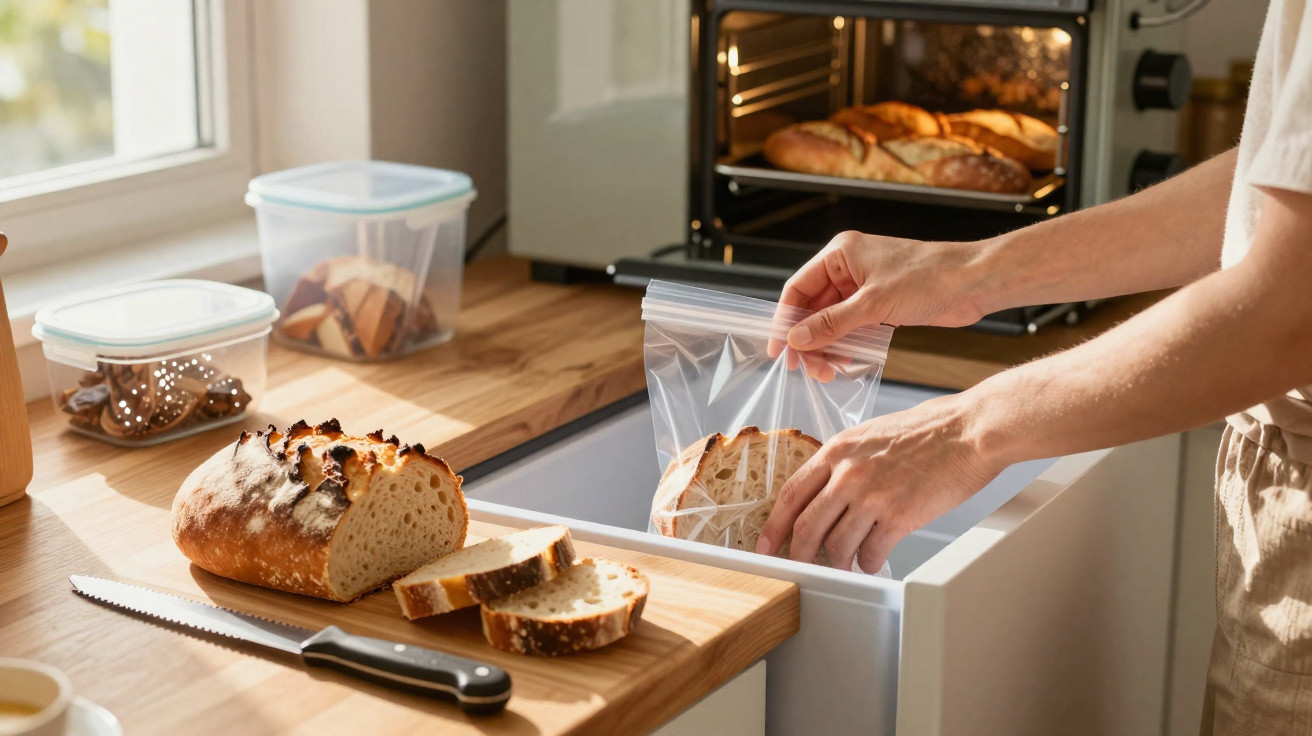
For many households, freezing sliced bread is the most practical approach. Ideally, slice the loaf as soon as you bring it home and pack it in portions. This keeps quality loss manageable and ensures you have bread ready for impromptu breakfasts or evening meals.
How to pack bread correctly for the freezer
A freezer dries out food that is stored without protection, and bread is no exception. The packaging will often have more influence on the result than the type of bread itself.
The less air that enters the freezer container, the better the bread retains its moisture and flavour.
Reliable methods include:
- press freezer bags flat by hand and seal them with as little air inside as possible
- pack bread slices in small stacks rather than putting everything into one bag
- use freezer containers with tightly fitting lids, filling them as close to the top as possible
- freeze different breads separately, rather than mixing white rolls with robust wholemeal bread
If you freeze bread regularly, a small vacuum sealer may be worth considering. It removes air far more effectively, helping to reduce ice-crystal formation.
How to defrost bread successfully
Simply leaving bread at room temperature rarely gives the best result. The texture often remains dull and the crust becomes soft.
Defrosting and reviving bread in the oven
The crucial step is giving it a short spell in the oven:
- Allow bread to begin defrosting at room temperature; slices can often go straight into the oven.
- Preheat the oven to 150 to 180 °C.
- Heat the loaf or slices in the oven for 5 to 8 minutes.
Lightly dampening or spraying the surface with water before baking creates steam around the crust. This helps it turn crisp while the crumb stays soft inside.
An oven will not make frozen bread as bakery-fresh as a loaf from a stone oven, but it brings out considerably more flavour and texture than defrosting it on the kitchen worktop alone.
White marks on frozen bread: mould or freezer burn?
Many people are alarmed by pale patches or spots on bread taken from the freezer. In numerous cases, they are not mould but a typical form of cold damage, commonly known as “freezer burn”.
| Feature | Cold damage / freezer burn | Mould |
|---|---|---|
| Colour | paler, slightly greyish or whitish | often greenish, grey, black or bluish |
| Surface | dry, slightly hard, with no coating | fluffy, furry or powdery |
| Smell | neutral to slightly “stale” | unpleasant, musty or pungent |
Freezer burn develops when bread is not packed tightly enough or when the freezer undergoes major temperature fluctuations. Water moves from the crumb to the surface and freezes there as crystals, while the affected areas of the bread dry out.
Such patches are generally not a health concern, although they often taste dry and tough. If preferred, remove the affected outer sections before eating. Mould, by contrast, should never be served – discard the entire product in that case.
How long bread can stay frozen
Bread keeps far longer in the freezer than in a bread bin, but it does not last indefinitely. In many homes, very old leftovers are eventually thrown away because no one can remember when the packet was frozen.
- white breads and bread rolls: around 1–2 months
- mixed-grain breads: up to 3 months
- robust wholemeal breads: around 3–4 months
After these periods, it is rarely unsafe, but the quality noticeably deteriorates. Flavour fades and the crumb becomes drier. A small date label on the bag avoids frustration and prevents forgotten freezer relics at the back of the drawer.
Everyday tips for using the freezer more effectively
A few simple habits can help you make the most of bread rather than throwing it away after a few days.
- When buying from the bakery, consider realistically how much will be eaten over the next 1–2 days.
- At home, separate the amount needed for today and tomorrow straight away, then freeze the rest early.
- Freeze frequently eaten loaves in slices, while keeping speciality breads whole where appropriate.
- Check the freezer regularly and use older bread supplies first.
Anyone who often has visitors or makes sandwiches at short notice can benefit from a small bread store in the freezer: several varieties packed in small portions, clearly labelled and ready to use.
Why the starch in bread matters so much
The term “starch retrogradation” sounds technical, but it describes exactly what people recognise in everyday life as bread going “stale”. Starch consists of long sugar chains that swell in the oven and bind water. As the loaf cools, they arrange themselves more tightly again, water leaves these structures and the crumb loses its elasticity.
The freezer slows and stops this process, but it does not reverse it. That is why freezing as early as possible is worthwhile: the fresher the state of the starch when the bread is frozen, the better it will feel when you bite into it after defrosting.
Used with this understanding, the freezer becomes more than a place for leftovers: it is a genuine tool against waste, keeping bread enjoyable to put on the table days or even weeks later.

















Comments
No comments yet. Be the first to comment!
Leave a Comment