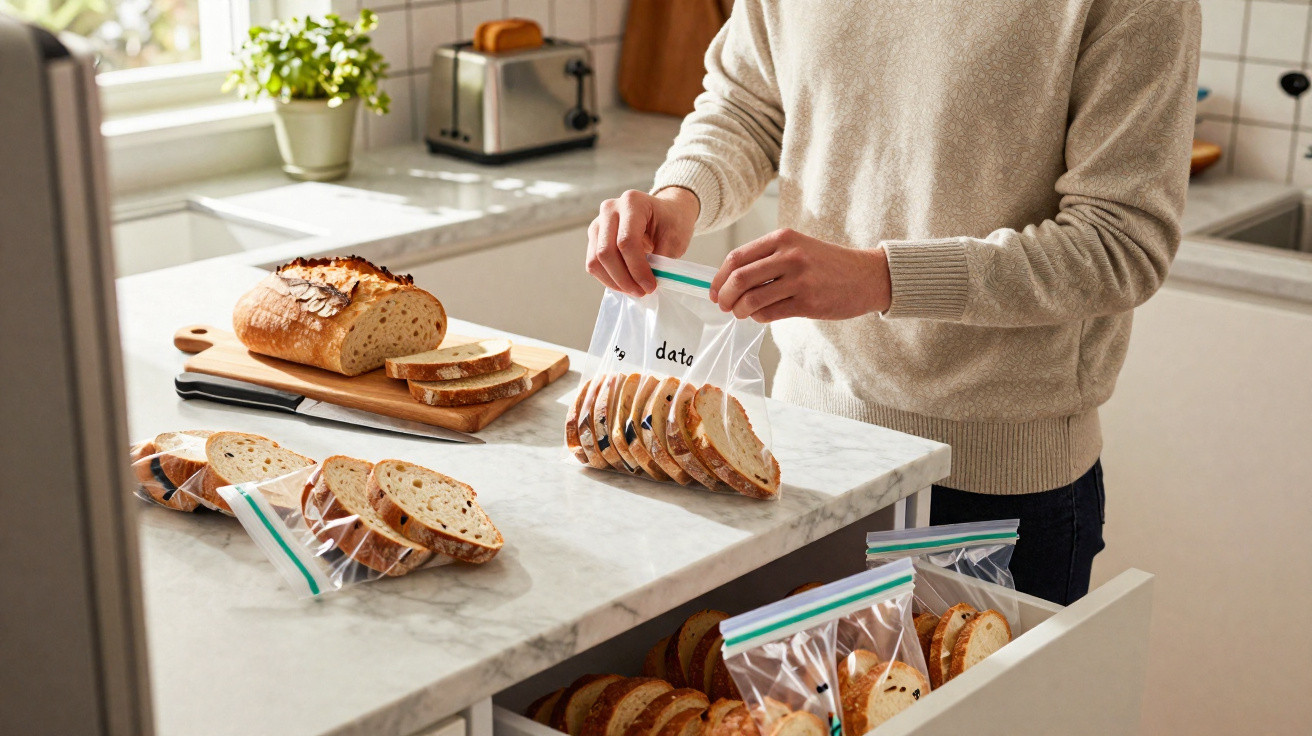
If you put bread in the freezer, the aim is to save leftovers rather than bite into a tough slice the following day. The key is not some “secret method”, but a straightforward question: when should bread go into the freezer, and how should it be packed and reheated?
Why fresh bread goes stale in the first place
Bread starts losing freshness well before it has turned rock hard. From a chemical perspective, this happens much earlier. As soon as it comes out of the oven, a process known to specialists as “starch retrogradation” begins inside it.
“From the moment bread leaves the oven, the ageing process has already started inside – long before we perceive it as dry.”
During baking, starch molecules in the dough absorb water and swell. This creates the soft, springy crumb. As the loaf cools, that structure gradually rearranges itself; the starch partly crystallises again, making the bread feel drier and less elastic.
Importantly, this has little to do with drying out in the sense of water simply escaping from the outside. Much of the change takes place within the bread’s internal structure. Freezing a loaf only once it has become noticeably firmer therefore preserves a condition that has already deteriorated.
The best time to freeze bread
The simple, though perhaps unfamiliar, rule is this: put bread in the freezer as early as possible, while it is still genuinely fresh. Do not wait until the evening, when the day’s remaining bread already feels slightly dry.
- Best: a few hours after buying or baking it, while the crumb remains moist and springy.
- Acceptable: until the bread first begins to lose freshness, provided it is not yet clearly hard or crumbly.
- Too late: when slices already taste dull and the crumb has become crumbly or rubbery.
A little everyday planning is worthwhile here. If you know that a whole loaf is more than you need, divide it up as soon as you get home. Keep one portion in the bread bin and place the rest straight into the freezer.
White or wholemeal bread: which type copes better with freezing?
Different breads do not all respond in the same way to moving between room temperature, the freezer and the oven.
| Type of bread | Typical characteristics | Response to freezing |
|---|---|---|
| White wheat bread, baguette, ciabatta | Large air pockets, airy crumb, thin crust | Sensitive; if frozen too late, it can become rubbery or crumbly after defrosting |
| Wholemeal bread, mixed rye bread | Dense texture, high fibre content | Retains moisture more effectively and often keeps a more stable texture after freezing |
| Sliced white loaf | Soft, fine crumb, usually holds its shape well | Freezes well by the slice and can be toasted straight from frozen |
Light, airy white breads are particularly sensitive to mistakes made during freezing and defrosting. Wholemeal loaves are slightly less likely to develop a “rubbery crumb”, but the same rule applies: freezing early pays off.
Freezing bread properly: whole, halved or sliced?
Before putting bread in the freezer, there is a practical decision to make: should it be frozen whole or sliced? Both methods work, depending on your household and routine.
Benefits of freezing sliced bread
- You can remove only the amount you need at the time.
- Slices can usually go straight into the toaster or briefly into the oven.
- It is ideal for one-person households or families with different eating habits.
Cut slices as evenly as possible, then stack them loosely or arrange them slightly offset in a freezer bag. This prevents them from sticking together too firmly.
When freezing a whole loaf makes sense
A whole or halved loaf protects moisture inside the bread more effectively. The crumb at its centre will generally stay moister. However, defrosting takes considerably longer: for an even result, allow a good eight to twelve hours at room temperature.
A practical middle ground is to cut the loaf into halves or quarters, depending on the size of your household. This preserves the structure relatively well while keeping defrosting time manageable.
Packaging bread to avoid freezer burn
Many people notice white, dry patches on frozen bread and wonder whether they are seeing mould. In most cases, it is a different issue: cold burn, or freezer burn.
“White, dry patches on frozen bread are usually a sign of freezer burn – not automatically mould.”
Freezer burn occurs when the bread’s surface becomes dehydrated in the freezer. Leaky packaging or major temperature fluctuations in the appliance are common causes. Typical signs include:
- Affected areas look paler and drier than the rest.
- They smell neutral rather than musty or sour.
- There are no greenish, grey or “dusty” coatings like those associated with mould.
A reliable packing approach helps prevent this from happening in the first place:
- Let bread cool fully before packing it, so that condensation does not form inside the bag.
- Use sturdy freezer bags or containers with secure lids.
- Squeeze out as much air as possible before sealing the bag.
- Avoid opening the appliance constantly, which can cause pronounced temperature changes.
Slightly dried-out areas caused by freezer burn are not dangerous, though they often taste less pleasant. You can spray them with a little water before reheating, or trim them off thinly if necessary.
Recognising mould: when bread belongs in the bin
Unlike freezer burn, mould makes bread inedible. Trying to save it is a false economy. Clear warning signs include:
- Patchy coatings in shades of green, grey or black.
- A musty, “cellar-like” smell.
- A crumbly, slightly dusty surface where the bread is affected.
If this happens, dispose of the entire loaf rather than merely cutting away visible patches. Mould spores may already have spread through the inside without being visible.
Defrosting and reheating bread for a crisp crust
Simply leaving bread to defrost on the worktop rarely produces a truly satisfying result. The crucial step comes afterwards.
“For a crisp crust, bread needs heat once more after defrosting – briefly, but deliberately.”
For most breads, a short refresh in the oven is enough:
- Preheat the oven to around 150–180 degrees.
- Lightly spray the bread with water, or moisten the crust very sparingly.
- Bake for 5–8 minutes depending on its size; allow a little longer for larger loaves.
The water creates steam on the surface, helping to revive the crust. Meanwhile, the crumb becomes pleasantly warm without drying out too much. For individual slices, a toaster is often sufficient, perhaps followed by a very brief extra spell in the oven for more crust.
How long can bread stay in the freezer?
Frozen bread keeps for longer than many people assume, although its flavour and texture decline over time. The following are useful general guidelines:
- White bread and bread rolls: around 1–2 months for the best quality.
- Wholemeal and rye breads: relatively stable for up to 3 months.
- Sliced white loaf: often remains good to use for up to 3 months when tightly packed.
After this, bread does not automatically become unsafe to eat, but it often tastes noticeably drier and flatter. A small label showing the date on the bag makes it easier to keep track.
Why freezing bread early genuinely reduces food waste
When bread is frozen while it is still in good condition, it will also come back out in good condition later. That means less ends up in the bin because no one wants a tough leftover. Families with changing eating habits benefit particularly: one portion stays fresh in the bread bin while the rest waits in the freezer until needed.
Practical everyday examples include:
- After the weekly shop: halve the loaf, use one half over the next one or two days, and put the rest straight into the freezer.
- Sunday bread rolls: freeze them immediately after breakfast rather than waiting until the evening, when they have already become stodgy.
- Home-baked bread: portion it after it has cooled completely and freeze it, ideally on the day it was baked.
By following these few basic rules, you can use the freezer as an ally rather than as a last resort for bread that nobody wants to eat anyway.

















Comments
No comments yet. Be the first to comment!
Leave a Comment