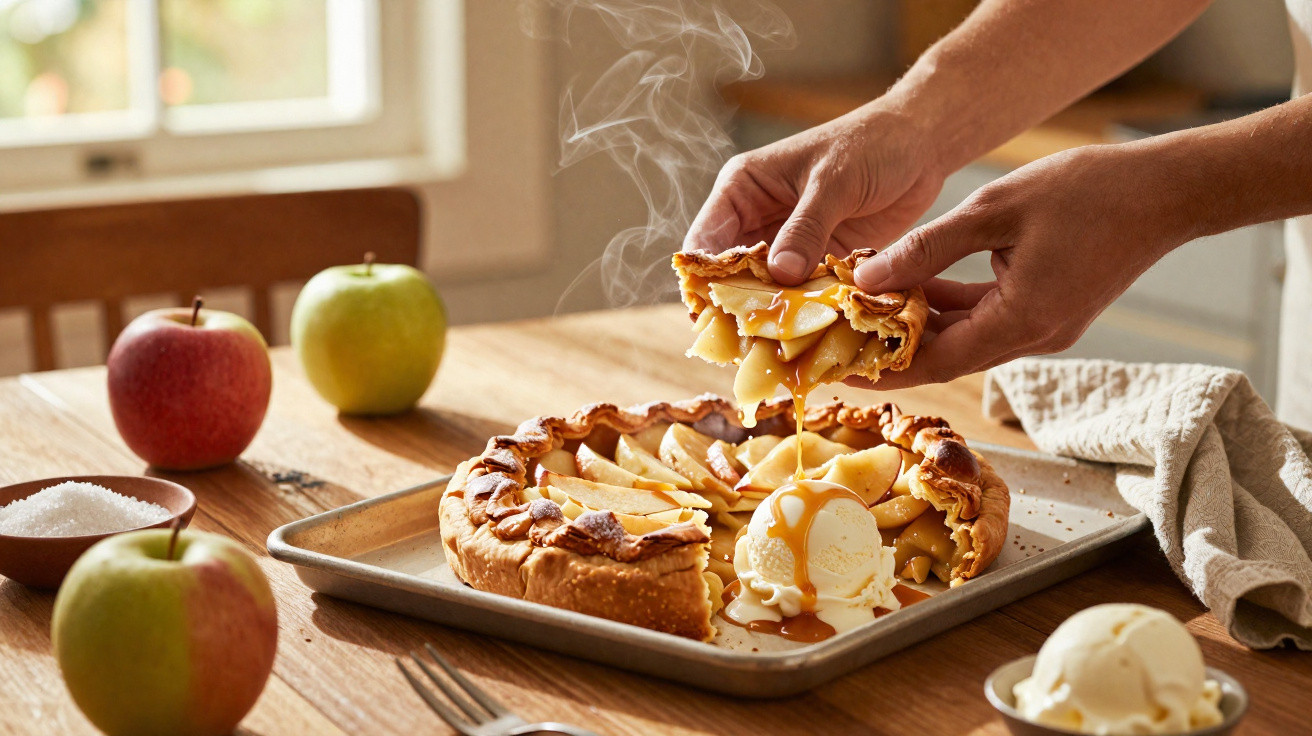
If apple desserts bring to mind only the familiar round tart with shortcrust pastry, you are missing a revelation. The “apple Croustade” from south-western France – often called Tourtière or Pastis Gascon – may look simple at first, but it soon changes everything you thought you knew about apple cake.
What makes this apple Croustade so special
Croustade has its roots in the medieval cooking of Occitania and Catalonia. Its name derives from the word for “crust”, and that crust is the star of the dish. Rather than relying on a thick pastry base, it uses numerous paper-thin, buttery layers that rise in the oven into a crackling, golden-brown blanket of pastry.
“Soft and juicy within, crisp outside like caramelised leaves – this combination of textures is what makes Croustade so appealing.”
Its defining combination includes:
- exceptionally thin pastry (usually filo today, traditionally hand-stretched)
- flavourful apples, often with a gentle tartness
- butter and sugar, which melt together in the oven to form a delicate caramel layer
- a splash of Armagnac, adding subtle warmth and depth of flavour
The result is somewhat reminiscent of a cross between strudel, baklava and apple cake, while remaining entirely distinctive in its own right.
Essential ingredients for a modern apple Croustade
An apple Croustade serving around four to six people requires only a modest shopping list:
| Ingredient | Quantity | Note |
|---|---|---|
| Filo pastry | approx. 250 g (12 sheets) | chilled or frozen |
| Apples | 2 medium | such as Golden Delicious, Elstar or Boskoop |
| Sugar | approx. 50 g | white or brown sugar |
| Butter | approx. 50 g | melted, for brushing |
| Armagnac | approx. 50 ml | optional, for flavour and depth |
That is essentially all that is needed to put a dessert on the table that feels as though it has come straight from an old country kitchen in Gascony.
How to make Croustade step by step
Prepare the apples
Begin by washing the apples well, removing their cores and cutting them into fairly thick slices. They should soften in the oven without breaking down completely. If using Armagnac, soak the apple slices in it for around 30 minutes so that they absorb its flavour. For an alcohol-free version, use a little orange juice or a light syrup instead.
Build the pastry layers
While the apples are soaking, melt the butter over a low heat. Brush each sheet of filo separately with butter, then scatter over a light dusting of sugar. The process may seem rather meditative at first, but it is what creates the Croustade’s characteristic crunch.
Arrange six buttered sheets, slightly offset from one another, in a round tin, allowing the edges to hang generously over the sides. These overhanging pieces will create the crisp folds that define the surface of the Croustade.
Fill, fold and bake
Spread the soaked apple slices evenly over the pastry base. Cover them with the remaining six sheets of filo, again brushed with butter and sprinkled with sugar. Fold the overhanging pastry edges inwards or loosely over the top, creating an irregular, almost floral finish.
Finally, dot the surface with a few small pieces of butter and add a pinch of sugar. Bake the Croustade in a preheated oven at about 180°C for 25 to 30 minutes, until golden, crisp and fragrant with warm apples and caramel.
Why many people no longer want “ordinary” apple cake after their first Croustade
Once you have seen the wafer-thin pastry layers shatter into tiny flakes of butter and sugar as the Croustade is cut, the usual dense apple tart can quickly seem rather dull. Croustade feels lighter despite being undeniably rich, and it offers far more contrast.
“The first bite is crisp, almost crackling, before giving way to soft, warm pieces of apple – that contrast is addictive.”
Many home bakers say that, after making a successful first Croustade, they reach for their older apple cake recipes far less often. It does call for a little more hands-on work, yet it can be prepared in advance and gives guests the impression that you have spent hours in the kitchen.
Variations: from pears to berries – what else works in Croustade
The classic version features apples, but the basic method is easy to adapt. Anyone who enjoys variety can experiment with:
- Pears: for a creamier, gentler sweetness
- Peaches or apricots: ideal in summer; choose fruit that is ripe but not mushy
- Berries: such as raspberries or blueberries, preferably combined with apples to balance their juiciness
- Dried fruit: finely chopped apricots or raisins, briefly soaked in liqueur or tea beforehand
There is flexibility with flavourings, too. If Armagnac is not to your taste, choose rum, Calvados or alcohol-free alternatives such as orange juice, apple juice or vanilla syrup. A hint of cinnamon, cardamom or vanilla completes the dessert without overwhelming its character.
Serving ideas for maximum impact
Croustade is best served slightly warm. Straight from the oven it is very hot and the sugar is still soft; after resting for ten minutes, it reaches the right balance.
Popular accompaniments include:
- a scoop of vanilla ice cream, slowly melting into the warm apple pieces
- lightly sweetened whipped cream
- crème fraîche for those who prefer a less sweet finish
To impress guests, drizzle a little Armagnac over the portions just before serving. The alcohol evaporates quickly, while the aroma remains.
Tips for reliably crisp pastry
Filo pastry is sensitive to air and dries out quickly. A few straightforward measures make all the difference:
- take the pastry sheets from their packaging only just before using them
- cover any unused sheets with a lightly damp cloth
- apply the butter thinly but evenly, otherwise the pastry may become soggy
- avoid adding too much liquid to the filling so that the base stays crisp
If filo pastry feels intimidating, use very thinly rolled strudel pastry instead. The texture will be slightly different, but it remains close to the original.
How to fit the recipe into everyday life
Croustade is an excellent way to use up fruit supplies. Two apples can almost always be found in the kitchen, while filo pastry keeps well in the freezer. As long as the pastry is thawed in time, you have an impromptu dessert ready for guests or Sunday afternoon tea.
It is also an interesting contrast to more rustic main courses: after a stew or roast, this light, crisp dessert feels like a fresh finish without being overly heavy. Baked in smaller tins, the recipe can be adapted into individual portions, making it practical for buffets or brunch gatherings.
Anyone willing to experiment a little with the ingredients and tackle the thin pastry will soon discover that this old recipe from south-western France becomes a modern favourite, easily outshining classic apple cake in everyday baking.

















Comments
No comments yet. Be the first to comment!
Leave a Comment