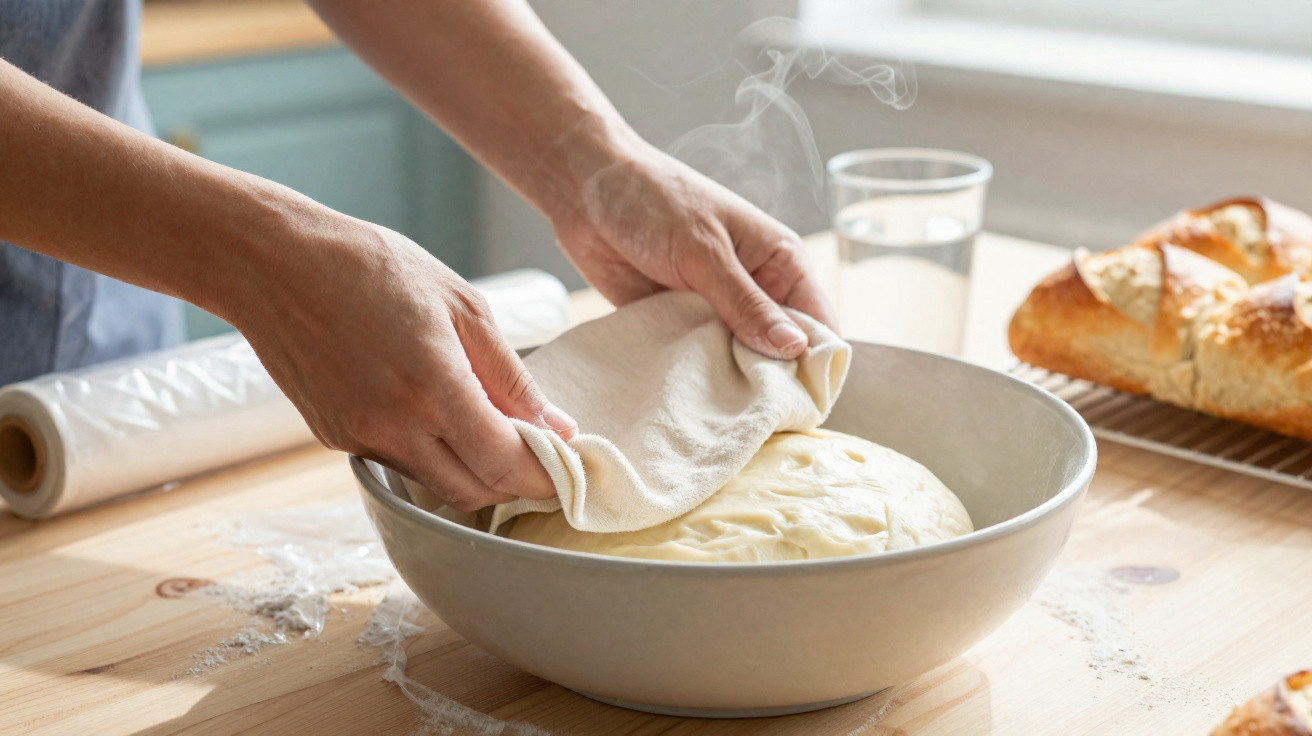
No need to abandon your baking plans.
Anyone who makes bread, pizza or sweet yeasted bakes at home knows the situation: the dough is resting, the yeast is doing its job, and the smell promises something wonderful – only for you to discover that the cling film has run out. That can feel stressful, but good dough mainly needs one thing: the right level of moisture. Keeping it protected is easier than many people realise, with one small step that makes all the difference.
Why dough needs extra protection while it rests
Dough may appear robust, yet it is sensitive at its core. Several processes take place as it rests: yeast creates gases, the gluten in the flour builds structure, and water distributes itself evenly. Together, these determine whether the oven produces fluffy brioche, airy bread or a disappointingly chewy result.
Moisture: the invisible shield for the dough surface
Moisture at the surface is crucial. If dough is left uncovered in a kitchen with dry central-heating air or a draught, its top layer starts to dry out. A thin skin then forms; it may look harmless, but it hinders the whole structure.
Anyone who does not protect dough from drying out risks a tough skin, poor elasticity and a chewy texture.
This dry layer splits during shaping, makes rolling difficult and stops the dough rising evenly in the oven. The moisture inside no longer has a “clear route” outwards, the crumb remains tight, and the finished bake seems dense.
What happens while different doughs rest
The importance of resting varies according to the recipe:
- Shortcrust pastry relaxes as it rests, helping to prevent shrinkage and cracking.
- Pizza and bread dough develop air bubbles and flavour, so they need both time and protection.
- Brioche and plaited yeasted loaves depend on a soft, moist crumb – drying out is particularly damaging here.
For longer proving periods of two to three hours, even just one hour exposed to the air can harm the surface.
Why cling film is no longer the best solution
Many home bakers automatically reach for cling film because they have seen it on television, in cookbooks or in bakeries. Yet it is neither essential nor the ideal choice in every situation.
The instinct to use cling film – handy, but often excessive
Cling film feels like a quick safeguard: stretch it over the bowl and the job is done. It seals the bowl and gives an impression of professionalism. Strictly speaking, though, dough does not need airtight wrapping; it simply needs a moist, balanced atmosphere around it.
For dough that rests only briefly or is intended to become crisp later, a fully enclosed environment can create too much condensation. This makes the surface slimy and alters the balance between a crisp base and a moist crumb – for example, with pizza or tarte flambée.
Where cling film falls short: waste, handling and texture
There is also the environmental issue. Cling film is thrown away after one use, and anyone who bakes regularly can quickly generate a considerable amount of plastic waste.
It can be frustrating in practical terms too: it sticks, tears, contracts and clings to your hand rather than the bowl. If the dough is still slightly warm, the film can distort or stick more closely than intended – hardly pleasant when it is time to remove it.
The overlooked kitchen tool: a lightly damp tea towel
The simpler answer is often already in the drawer: a clean cotton or linen tea towel. Lightly dampened, it becomes an ideal companion for any dough resting period.
How a tea towel creates the ideal environment for dough
A damp tea towel acts like a breathable cover over the bowl or directly on the dough. It retains moisture where it is needed while still allowing enough air to circulate. This creates a gentle microclimate that is neither too dry nor too wet.
A damp tea towel protects dough from drying out, avoids plastic waste and costs nothing extra.
Unlike cling film, a tea towel can be used again and again. Simply wash it, and it is ready for next time. Anyone who regularly works with yeast will save not only waste, but also money and frustration.
How to use the tea towel method without mishaps
- Choose a fresh, fragrance-free tea towel – strong detergent or fabric-softener scents can transfer to the dough.
- Dampen it with cold or lukewarm water, then wring it out thoroughly.
- Lay it loosely over the bowl, baking tray or dough itself, without pulling it taut.
- For very long resting periods, briefly check whether the towel is still slightly damp and moisten it again if necessary.
This straightforward method makes a noticeable difference, especially in winter when the air is dry and the heating is on: rolls, plaited loaves and pizza dough stay supple, can be shaped easily and rise evenly.
Practical alternatives when you have neither cling film nor a tea towel
Sometimes you are in a holiday let or a poorly equipped kitchen and have to improvise. That is perfectly possible as long as the basic principle remains the same: retain moisture in the surrounding space.
Lids, plates and covers: useful items with a second purpose
Plenty of things already in the cupboard work very well as dough covers:
- A plate that fits neatly over the bowl
- A glass dome or cheese cover
- A saucepan lid placed on loosely
- An upturned bowl or small saucepan placed over the dough on a board
None of these options seals the dough completely airtight, but they do prevent the surface from drying out unprotected. If you wish, place a small bowl of water beside it to raise the humidity in this small enclosed area.
Small tricks for extra moisture
A few simple measures can improve any makeshift arrangement:
- Put a small cup of water in the proving box, in the oven with only its light switched on, or beside the bowl.
- Place the dough in a lightly oiled glass bowl and loosely cover it with a suitable lid.
- Dampen baking parchment very lightly and lay it over the dough ball, then place a tea towel or plate on top.
This creates a kind of miniature proving chamber, which can make the difference between a chewy and fluffy crumb during long dough rests or in particularly dry indoor air.
What happens when dough is left uncovered
Almost everyone who bakes regularly has made this mistake: they mix dough, take a phone call, get distracted, and hours later find it in the bowl with its surface exposed. The effects are immediately visible.
Typical damage to poorly protected dough
The warning signs are clear:
- a cracked, dull skin across the surface
- hard edges that can barely be pressed in
- dough that turns brittle and breaks when rolled out
- in yeasted dough: a noticeably drier finished bake with less volume
Trying to correct this by adding extra water often changes the entire recipe. The flour-to-liquid ratio becomes unbalanced, the dough turns stickier, and its flavour may develop less well.
Rescue attempts: making a dry dough surface workable again
Dough is rarely completely beyond saving. With a little patience, some recovery is possible:
- Brush the surface with a small amount of cold water.
- Place a well-wrung damp tea towel directly on it and leave the dough to rest once more.
- Carefully knead the dry layer back in, keeping your hands slightly damp.
The structure will rarely return to perfection, but it is often still good enough for rustic pizza, flatbread or savoury rolls. It is far less stressful, however, to plan the protective cover from the outset.
The key rules for supple dough without plastic
Anyone who bakes regularly can remember a few basic principles and will not need disposable cling film or expensive specialist containers.
How dough stays in great condition almost every time
- Cover every dough during its resting phase, even for short breaks.
- Where possible, use reusable options: a damp tea towel, lid or plate.
- Do not leave dough directly beside a strong draught or radiator.
- During long proving times, occasionally check its moisture and elasticity.
These simple rules are especially helpful when children are baking too: nobody has to be upset by failed plaited loaves or rock-hard pizza edges, and they create a small ritual that naturally becomes part of baking.
Practical example: how the trick works with a simple yeasted brioche
A classic soft yeasted dough shows particularly clearly how much the right cover affects the result. If it is left to prove for two hours beneath a lightly damp tea towel, its surface stays plump; afterwards, the dough ball can be pressed gently and slowly springs back. The finished brioche does not tear, rises beautifully and has a delicate, light crumb.
Leave the same dough uncovered and it quickly develops a dry skin. It tears during shaping, unattractive patches appear, and the structure remains denser. This is exactly where the simple tea towel trick proves its worth, turning an average bake into a genuinely soft, aromatic result.
Once you have consciously tested these connections, you will automatically reach for the damp tea towel rather than cling film on your next baking day – saving waste, money and plenty of frustration at the baking tray.

















Comments
No comments yet. Be the first to comment!
Leave a Comment