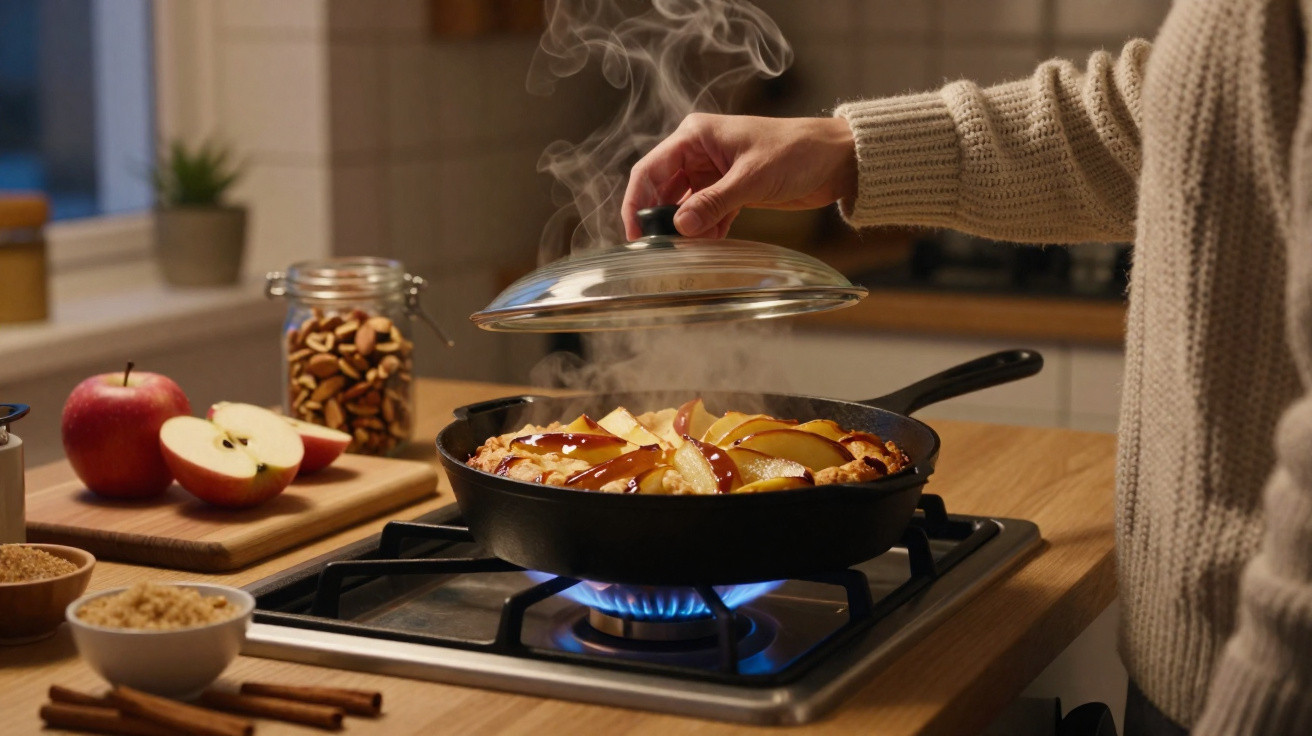
This easy pan apple cake turns leftover ingredients into a truly comforting treat.
Many people have neither the energy nor the time in the evening to preheat the oven or make an elaborate dessert. That is exactly where a trend that is gradually making its way from Polish kitchens to the UK comes in: apple cake cooked straight in a frying pan. No baking tray, no cake tin, hardly any washing-up – and within minutes, the home smells of caramelised apples and freshly made sponge batter.
Why apple cake from the frying pan is so brilliant
Pan apple cake works in any standard non-stick frying pan with a lid. Rather than heating the oven, the batter goes directly onto the hob. This saves time, electricity and effort – especially when unexpected guests arrive or a craving for something sweet strikes suddenly.
“A warm, soft apple cake in around 20 minutes – using only a hob and frying pan, with no oven required.”
The principle is straightforward: caramelised apples on the bottom and airy batter on top. Once turned out, the golden apple layer sits on the surface. Visually, it resembles a small tart; in flavour, it brings to mind the traditional little apple cakes from Grandma’s kitchen.
The basic ingredients – everything you nearly always have at home
The classic version needs only a very short shopping list. Most kitchens already contain everything required:
- 2–3 apples, preferably slightly tart varieties
- plain flour
- sugar
- 2 eggs
- butter
- a pinch of salt
- a little milk
- optional: baking powder, cinnamon, vanilla
Together, these ingredients make a dessert somewhere between a sponge cake and Kaiserschmarrn: soft, moist rather than dry, and packed with a thick, fruity layer of apple pieces.
The heart of the recipe: caramelised apples
The most important stage takes place in the frying pan right at the beginning. Peel the apples – or wash them thoroughly if leaving the skins on – then core and cut them into slices or wedges.
Melt a generous knob of butter in the pan. Add the apple pieces and sugar, together with cinnamon if desired. Cook the fruit gently over a medium heat until it softens and turns golden brown.
“Caramelised apples create that combination of crisp edges, a soft centre and an intense aroma that recalls classic apple cakes from childhood.”
The caramel forms a thin, syrupy layer that will later coat the cake like a glossy glaze when it is turned out. At the same time, there is enough fruit inside to keep it fresh and juicy.
How to make the quick batter – simple, fluffy and reliable
While the apples are sizzling away in the pan, prepare the batter in a bowl. The order matters here:
- Beat the eggs and sugar thoroughly until the mixture becomes paler and more voluminous.
- Add the flour, a pinch of salt and, if wanted, a little baking powder.
- Stir in melted butter that has cooled slightly.
- Adjust the texture with milk until you have a smooth, thick pouring batter.
The batter should be neither too thick nor too runny. It needs to pour easily, while remaining substantial enough to hold the apple pieces together afterwards. You will quickly develop a feel for it after the first attempt.
Baking without an oven: making apple cake in a frying pan
Once the apples are tender and lightly caramelised, spread them evenly across the frying pan. Slowly pour over the batter so the apple pieces do not shift, then put the lid on.
Set the hob to its lowest setting. This is the key point: excessive heat will burn the base before the batter has cooked through. At a gentle temperature, the cake takes about 18 to 22 minutes.
“The perfect moment has arrived when the surface looks set and a knife inserted into it comes out almost clean.”
Allow it to cool briefly, place a plate over the pan and turn everything over in one movement – much like turning a tortilla. The apples will now be on top and the batter underneath. If you like, finish with a dusting of icing sugar.
Creative variations: nuts, spices and a splash of flavour
The basic recipe is easy to tailor to personal taste. Popular ideas include:
- chopped nuts, such as walnuts, hazelnuts or almonds, in the batter or scattered over the apples
- raisins or other dried fruit for extra sweetness
- spices including cinnamon, cardamom, nutmeg or gingerbread spice
- a small splash of rum or Calvados added to the apples for a subtly sharp aroma
- a mixture of apples and pears for a milder fruit flavour
Vanilla also works exceptionally well, either mixed into the batter or added as vanilla sugar over the cake while it is still warm.
Vegan version: the same convenience, without animal products
Anyone avoiding eggs and dairy does not need to miss out on pan apple cake. Just a few small swaps are enough:
| Animal product | Plant-based alternative |
|---|---|
| Butter | Margarine or plant-based butter |
| Milk | Oat, almond or soya drink |
| Eggs | Apple purée, soya yoghurt or a ready-made egg replacer |
The batter becomes a little denser, but stays pleasantly moist because of the high fruit content. Apple purée is particularly useful, as its natural sweetness can reduce the amount of sugar needed.
Serving and storing: how to keep the cake delicious
Pan apple cake is best served warm, while the caramel and batter are still soft. It goes particularly well with:
- a scoop of vanilla ice cream for the classic warm-and-cold contrast
- lightly whipped cream
- yoghurt or crème fraîche for a touch of acidity
- icing sugar or cinnamon sugar for sprinkling
Leftovers will keep for a few hours at room temperature or for up to two days in the fridge. To reheat, warm the cake briefly in a frying pan over a low heat, restoring its aroma and softness.
Why this dessert suits everyday life so well
Pan apple cake meets a real need: little effort, little washing-up and a familiar flavour. Particularly in a busy everyday routine, it creates a moment of calm and comfort – with no planning and no complicated recipe book.
“Essentially, it is modern ‘comfort food’: quick, warm, familiar and made with ingredients people know and can pronounce.”
Apples bring a small nutritional bonus too: they provide fibre, vitamin C and natural fruit sweetness. For a lighter version, reduce the sugar in the batter, use more apple pieces and serve yoghurt instead of ice cream.
Tips for even better results and enjoyment
A few simple tricks will help make the cake a success from the first try:
- Heat the frying pan well before adding the butter and apples.
- When caramelising, allow a little more time rather than using too much heat.
- Open the lid as rarely as possible while the cake is “baking”, so the heat remains in the pan.
- Choose a variety carefully: lightly tart apples such as Boskoop or Elstar add more flavour.
- For crisp edges, raise the heat slightly for the final 1–2 minutes.
Once you enjoy the method, you can try other fruits using the same technique: peaches, plums and berries work in a similar way, although the amount of sugar should be adjusted to suit the fruit’s sweetness.
A simple frying-pan experiment soon becomes a small kitchen ritual: turn on the hob, slice the apples, mix the batter – and in less than half an hour, a fragrant cake is on the table, remarkably close to the flavour of “Sunday at Grandma’s”.

















Comments
No comments yet. Be the first to comment!
Leave a Comment