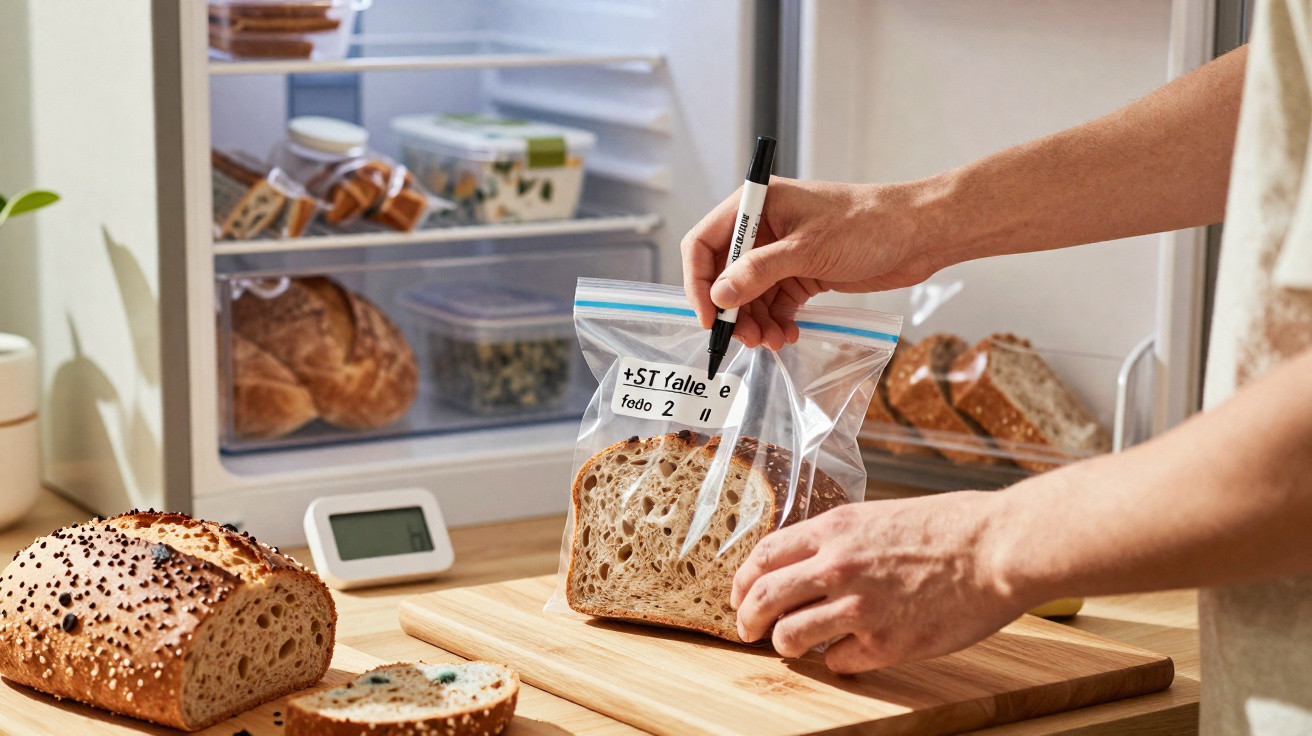
Freezing bread may seem like an innocuous way to save money, but it raises recurring concerns about microbes, nutrient loss and blood sugar surges. Scientists and bakers are now offering a more nuanced view of this everyday habit.
Freezing bread: from an anti-waste habit to a health concern
Throughout Europe and North America, bread waste is a largely unnoticed scandal. Households discard kilos of loaves and sliced bread each year. Freezing has become the go-to solution: make one purchase and keep bread for the whole week.
Bread is not nutritionally insignificant. It provides complex carbohydrates, some fibre, B vitamins and minerals including magnesium and iron. Wholegrain and seeded varieties offer even more fibre and micronutrients. Putting bread into a freezer at roughly −18 °C does not make those nutrients suddenly disappear.
Freezing mainly changes texture and shelf life; the core vitamins and minerals in bread stay largely intact.
The more important questions concern food hygiene, texture and the effect freezing has on starch – the component that influences your blood sugar response.
What happens to bread in the freezer
A loaf’s crumb contains countless tiny water pockets. At freezing temperatures, this water turns into ice crystals. The crystals redistribute moisture, occasionally drawing it out of the soft middle and towards the crust.
After defrosting, the displaced water does not always return evenly. Bread may therefore develop a slightly rubbery or “gummy” crumb, while the crust can lose its crispness. Commercial frozen breads are formulated to cope with this process, whereas a traditional baguette is often affected more noticeably.
Freezing, germs and the “filamentous” bread you must bin
Low temperatures prevent bacteria and mould from multiplying rapidly, but they do not destroy everything. For that reason, the condition of bread before freezing is particularly important.
- Bread left in a warm kitchen for several hours collects more microbes on its surface.
- If it is frozen late, those microbes merely enter “pause mode”.
- If the bread is thawed slowly somewhere warm, they can become active and multiply again.
In most households, bread remains frozen for between one and three months. During that period, provided it looked and smelt normal before freezing, deteriorating quality rather than hazardous contamination is the main concern. After three months, it can become dry and develop unpleasant flavours, while freezer burn becomes more likely.
There is, however, one unmistakable warning sign: “ropey” or “filamentous” bread. Its crumb turns sticky, pulls into threads and develops an unusual, sometimes fruity odour. Certain bacterial spores are responsible. The safest action is straightforward: bin it, whether it is frozen or not.
Any bread with mould, unusual filaments or a sour, odd smell should go straight in the bin, regardless of how you stored it.
Can frozen bread be easier on your blood sugar?
Freezing has an interesting effect on starch. Normally, starch in bread is broken down quickly in the gut, releasing glucose into the bloodstream and raising blood sugar. In certain circumstances, some of this starch reorganises into what researchers call “resistant starch”.
Resistant starch acts more like fibre. It is not digested efficiently in the small intestine, which can lead to a slower, lower rise in glucose. Studies, including small clinical trials, indicate that cooling and reheating starchy foods such as bread, pasta and potatoes may raise their resistant starch content.
The small study that got everyone talking
A frequently referenced experiment tracked a very small group of healthy adults who ate white bread prepared in different ways on separate days:
| Type of bread | Preparation | Effect on blood sugar |
|---|---|---|
| Fresh bread | Just baked, eaten once cooled | Reference peak |
| Frozen, then thawed | Bread frozen, then brought back to room temperature | Peak around 30% lower |
| Frozen, thawed and toasted | Frozen bread defrosted, then toasted before eating | Peak around 40% lower |
Results differ between individuals, and the study was small. Even so, the trend fits with existing knowledge about resistant starch: cooling followed by another heat cycle subtly changes the structure of starch.
Freezing and then toasting bread will not turn baguette into a health food, yet it may smooth the blood sugar spike after a meal.
For people with type 2 diabetes or insulin resistance, this could provide a small extra benefit alongside other dietary adjustments. It is not a substitute for medication or medical guidance, but it may be a useful practical change for anyone who already freezes bread.
Best practices: freezing bread safely and wisely
Health authorities and food scientists generally agree that frozen bread is safe for healthy adults when it is handled carefully. A few basic practices can make a meaningful difference.
Before freezing
- Freeze bread on the day it is bought or baked, after it has cooled completely.
- Slice it beforehand, allowing you to defrost only the amount required.
- Put it in airtight freezer bags, remove as much air as possible and mark the date.
- For the best flavour and texture, aim to eat it within one to two months.
Defrosting and reheating
- Thaw bread in the fridge or at room temperature, but do not leave it in a warm kitchen for many hours.
- Apply heat at the end: a brief spell in an oven, toaster or air fryer restores the crust and reduces pockets of moisture.
- Do not refreeze bread after it has fully thawed; repeated thaw–freeze cycles create hygiene and quality concerns.
- Inspect every piece: discard it if you notice spots, filaments or any unusual smell.
Pregnant women, older adults and people with weakened immune systems can take an additional precaution. Defrosting bread in the fridge and then reheating it thoroughly is the safest approach, as it shortens the period in which bacteria can multiply.
Choosing bread that freezes well
Some breads cope with freezing better than others. A classic French baguette, with plenty of crust and little moisture, generally stales more quickly and is more prone to freezer damage. Denser loaves and sandwich bread normally fare better.
- Sandwich and pan loaves freeze consistently and can be toasted well straight from the freezer.
- Wholegrain and seeded breads retain their structure, while their greater fibre content supports satiety.
- Very crusty artisan breads often require a blast in the oven to recover their appeal after thawing.
For anyone monitoring blood sugar, fibre is as relevant as freezing. A sliced wholemeal loaf, frozen in portions and toasted, brings together both potential benefits: slower digestion from fibre, plus a modest resistant starch increase from the freeze–toast cycle.
Freezing bread in real life: two scenarios
Imagine a busy family buying two large loaves on Saturday. They eat one over the weekend. The second is sliced, placed in freezer bags and labelled. Every morning, a few slices go directly from freezer to toaster. No loaf is left at room temperature for days, and breakfast blood sugar spikes are slightly less pronounced than they would be with fresh white toast.
Consider another routine instead. A baguette is left uncovered in a warm kitchen throughout the afternoon, partly eaten at dinner and then put in the freezer late at night inside a thin paper bag. A week later, it is left to thaw on the worktop all morning before being only lightly reheated. This sequence gives microbes greater opportunity to multiply, dries out the bread and undermines much of the benefit of freezing.
Key terms and hidden trade-offs
Two phrases often mentioned in this discussion are worth explaining.
- Resistant starch: a type of starch that resists digestion in the small intestine. It nourishes gut bacteria in the colon and reduces blood sugar peaks.
- Glycaemic response: the shift in blood sugar after consuming a food. Slower, flatter responses are generally easier for the body to manage.
Freezing bread lies at the intersection of these ideas and everyday practicalities. On the one hand, it reduces food waste and saves money. On the other, it modestly changes the way the body processes starch. When combined with considered bread choices – more wholegrains, reasonable portions and pairing bread with protein or healthy fats – a simple freezer habit can quietly support, rather than undermine, long-term health.

















Comments
No comments yet. Be the first to comment!
Leave a Comment